Jo Malone London is taking fragrance personalization beyond questionnaires and into the world of visual behavior.
The Estée Lauder Companies and Jo Malone London have launched Scent Scanner, a Pinterest-exclusive AI-powered experience that analyzes users' curated image boards and translates visual preferences into personalized fragrance recommendations.
The initiative represents an evolution of Jo Malone London's AI Scent Advisor, introduced in 2025. Rather than asking consumers to describe the scent they want, Scent Scanner interprets imagery, color palettes, textures, destinations, rituals and aesthetic themes saved on Pinterest to generate customized fragrance pairings.
For fragrance industry observers, the launch highlights a broader shift underway in digital scent discovery: moving from explicit consumer inputs to passive preference signals. Instead of relying on fragrance vocabulary—which many consumers struggle to articulate—the platform attempts to infer olfactive preferences from visual taste.
The strategy also gives Estée Lauder access to a rich source of high-intent consumer data. Pinterest users often curate aspirational lifestyle content months before making purchasing decisions, creating an opportunity to connect fragrance recommendations to established aesthetic preferences rather than stated scent desires.
"For years, personalization in beauty meant asking people what they wanted," said Aude Gandon, chief digital and marketing officer at The Estée Lauder Companies. "The bigger opportunity is to understand what they already love—and to meet them where their taste already lives."
The launch reflects a growing industry belief that fragrance discovery may be more accurately driven by emotional, cultural and visual signals than by traditional fragrance-family classifications. As AI tools become increasingly sophisticated at identifying patterns across images, brands are experimenting with new ways to bridge the gap between visual identity and scent preference.
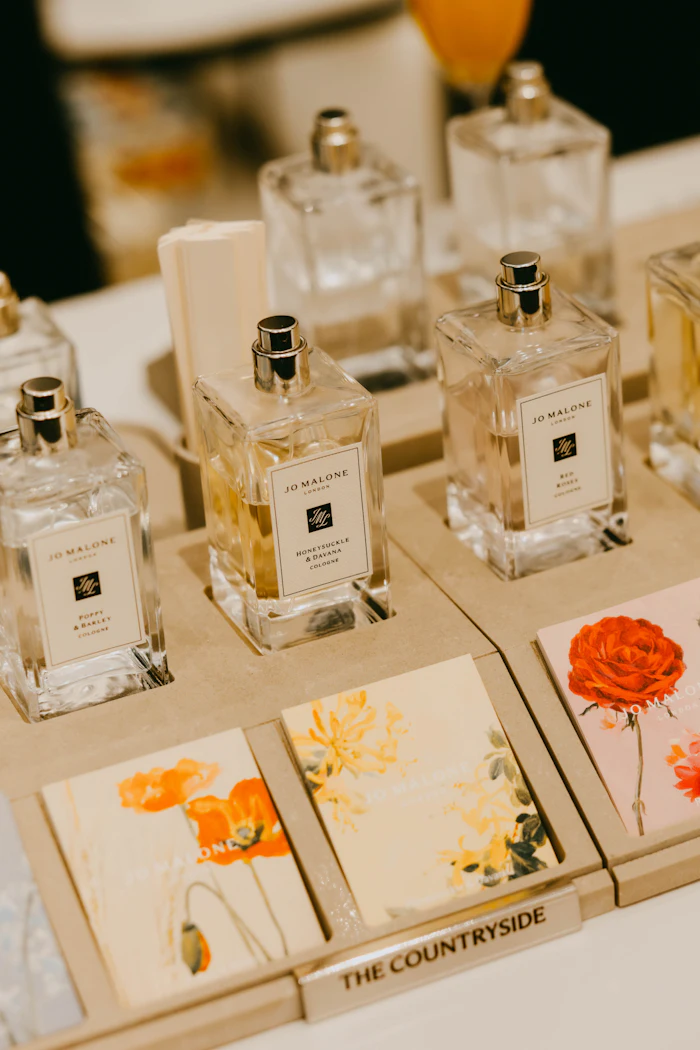
For Jo Malone London, whose portfolio is built around fragrance layering and personalization, the technology offers a new pathway to recommendation and conversion. For the broader fragrance sector, it serves as another example of how AI is reshaping consumer discovery—less as a search tool and more as an engine for predicting taste.
The companies plan to showcase the collaboration at the Cannes Lions International Festival of Creativity 2026, where executives from Pinterest, The Estée Lauder Companies and Jo Malone London will discuss the future of AI-driven personalization, visual discovery and digital commerce.
The bigger implication may extend beyond fragrance. If consumers increasingly reveal their preferences through images rather than words, platforms that can translate visual identity into product recommendations could redefine how beauty brands approach personalization across categories.