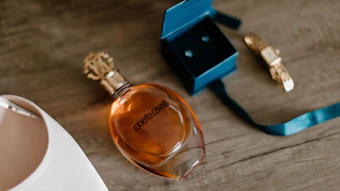
After years of exceptional expansion, the global fragrance market is entering a new phase defined by strategic execution. Interparfums' first-quarter 2026 results reflected that shift. Despite geopolitical disruptions, cautious retailer ordering and macroeconomic uncertainty, the company delivered sales growth on the strength of standout brands including Coach, Montblanc and Roberto Cavalli, while continuing to expand its direct-to-retail business and invest in a robust innovation pipeline.
For CEO Jean Madar, the next chapter of fragrance growth will be won by companies that combine strong brand equity with continuous innovation, platform-specific storytelling and closer consumer connections. In this exclusive Q&A, Madar shares why fragrance remains one of beauty's most resilient categories, how social commerce is rewriting the rules of brand building, what makes a successful licensing partner, and where he sees the industry's biggest untapped opportunities—from Gen Z male consumers to new fragrance formats designed for layering and everyday use.
"[W]e are in what could be considered a maturing growth phase which is different from the unprecedented expansion of a few years ago."
P&F+: Interparfums delivered record first-quarter results despite what you described as a "normalizing market" and significant regional headwinds. What do you see as the primary drivers of growth today—is it innovation, distribution, premiumization, brand equity, or something else?
Madar: It comes down to three things. First, when brand equity is strong, premiumization follows naturally. Second, when innovation is consistent, that equity stays relevant. Finally, when distribution moves closer to the consumer, the effect of both is considerably stronger.
Our direct-to-retail channel now represents 43% of sales and grew 16% in the quarter. That structural shift which is putting us in more direct contact with the end consumer is as strategically significant as any individual launch.
P&F+: The fragrance category continues to outperform many other beauty segments in 2026. Why do you think fragrance has remained so resilient, and are we still in a structural growth cycle or entering a more mature phase of the market?
Madar: Fragrance has established itself as a category and is no longer defined just as an extension of fashion or beauty. While we still expect healthy growth, we are in what could be considered a maturing growth phase which is different from the unprecedented expansion of a few years ago.
The category has remained resilient because of the ways in which the consumer has changed their relationship with fragrance. Rather than purchasing just one 'signature scent', they are building collections, layering, and exploring new olfactive families. That kind of behavior signals sophistication, not saturation.
Direct-to-consumer retail, Amazon, TikTok Shop—these are fast becoming the primary platforms for fragrance discovery and purchase.
P&F+: Coach, Montblanc and Roberto Cavalli posted particularly strong gains this quarter. What separates the brands that are thriving from those facing slower growth, and what lessons can the industry draw from those successes?
Madar: The formula is consistent across our portfolio, regardless of the brand or the market. When a franchise is built with intention and supported with sustained investment, extensions land with far greater impact. When innovation is timed thoughtfully it builds anticipation and deepens consumer loyalty.
But investment today means something broader than it did five years ago. Direct-to-consumer retail, Amazon, TikTok Shop—these are fast becoming the primary platforms for fragrance discovery and purchase. Each of those platforms has its own language, energy, and consumer expectation. Showing up effectively requires real investment in storytelling that resonates in each environment—not just a product listing, but a narrative that connects.
The brands that are building lasting momentum are the ones that get both right: a strong franchise anchor and the ability to tell that story wherever the consumer is, in the way they want to hear it.
P&F+: We're seeing growing discussion around fragrance as part of wellness, mood enhancement and emotional self-care. How much of fragrance's recent growth is being driven by changing consumer behavior versus traditional luxury and fashion-driven demand?
Madar: The inclusion of fragrance in a wellness and emotional self-care ritual is one we welcome, because it reinforces something we have always known: consumers wear fragrance to feel good. That is not new. That shift does not replace traditional luxury and aspiration-driven demand. It layers on top of it.
According to Circana, prestige fragrance remains the dominant force in the overall fragrance category, with premium and luxury products accounting for over 61% of global fragrance market value. This is a net positive for a portfolio like ours, which is built around designer brands with deep equity and established emotional worlds.
The partnerships that perform over the long term are those built on shared values and real creative ambition, where the licensor is engaged as a true collaborator, not simply treating fragrance as a revenue stream.
P&F+: Interparfums has successfully built a portfolio spanning heritage fashion houses, lifestyle brands and newer fragrance propositions. When evaluating future opportunities, what characteristics make a brand particularly attractive as a long-term fragrance partner?
Madar: Brand recognition alone is not enough to build a viable fragrance business. What matters most is the desirability of the brand and the emotions it creates, and that is where our evaluation begins.
First, the brand must have genuine cultural durability, one that can carry a fragrance franchise over a multi-year horizon.
Second, there must be a clear and compelling proposition to the consumer; strong fashion or lifestyle equity does not automatically translate into fragrance opportunity.
Third—and this is often underestimated—the brand organization has to be genuinely invested in fragrance as a strategic priority. The partnerships that perform over the long term are those built on shared values and real creative ambition, where the licensor is engaged as a true collaborator, not simply treating fragrance as a revenue stream. We work like an atelier which means every brand gets a strategy built around its own identity and consumer. That is why iconic brands keep choosing us.
Body oils, hair mists and layering systems represent significant untapped potential in licensed fragrance.
P&F+: You mentioned preparing for several major launches in 2027. Without revealing specifics, how do you see fragrance innovation evolving over the next five years? Are there white spaces in the market that the industry has not yet fully addressed?
Madar: We have publicly stated that all our major brands will introduce new franchise pillars in 2027, and that pipeline represents a meaningful step-up in innovation output. I see two interesting opportunities for growth.
The first is the young male consumer. Teen boys increased fragrance spending by 26% in 2024, and the number of male fragrance influencers on TikTok has grown twelvefold in just two years, according to Charm.io outpacing the growth of female influencer content by a significant margin. This is a generation that discovered fragrance through storytelling, not through a department store counter.
It connects directly to what we discussed earlier: the direct-to-consumer world is not slowing down, and the brands that win in it will be those that invest in authentic, platform-specific storytelling, not just as an afterthought. For us, that means meeting this consumer where he already is, in the language he responds to, with content that feels as intentional as the fragrance itself.
The second is format. Body oils, hair mists and layering systems represent significant untapped potential in licensed fragrance. The consumer has already signaled the appetite. The opportunity for us is to bring that format innovation to market supported by our strong brand equity and global distribution network.