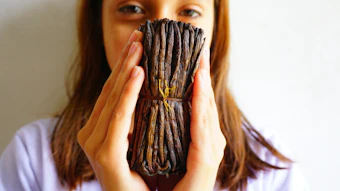
As demand grows for authentic, traceable natural ingredients, suppliers face mounting pressure to balance sustainability, regulatory compliance and commercial scale without losing the character that makes origin-derived materials valuable in the first place. In this Q&A, Avilan CEO Julio Quintero discusses how the company maintains consistency across wild-harvested materials such as tonka and copaiba, navigates the realities of traceability in remote sourcing regions, approaches evolving coumarin regulations, and embeds social impact directly into its supply chain. He also shares his vision for Avilan's evolution as a direct-origin sourcing partner built on long-term relationships, transparency and exclusive access to some of perfumery's most distinctive natural ingredients.
Q: How do you structurally maintain quality consistency and olfactive standardization across wild-harvested materials like tonka and copaiba while preserving regional variability?
Quintero: Wild-harvested materials carry the character of their geography, that's where their value comes from. Our approach to consistency focuses on physical and microbial quality: monitoring moisture levels, foreign matter, and coumarin content for every lot, with a certificate of analysis (COA) issued before any shipment leaves its origin.
The deeper layer of consistency comes from relationships. We work with the same collectors over many years, returning to the same trees and relying on the same drying practices. That continuity creates a form of repeatability unique to wild-harvested materials. Unlike plantation-based monoculture supply chains, which often eliminate natural variation, wild sourcing preserves the nuances that make each material distinctive in the first place.
Q: How is Avilan balancing full-chain transparency with the practical realities of informal harvest systems and remote Amazonian ecosystems? Where does digital traceability currently fall short?
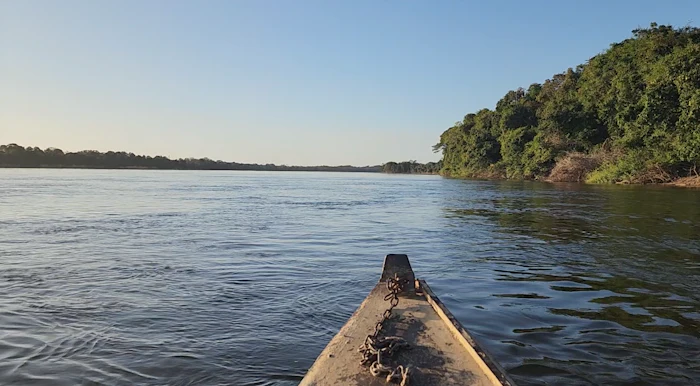
Quintero: Digital traceability has its limits, especially beyond major urban centers. In regions such as the Orinoco Basin, the Honduran highlands, and El Salvador’s balsam-producing areas, connectivity remains limited. Harvesters aren't holding smartphones for now, they're holding machetes, woven sacks and generations of local knowledge. While we expect technology adoption to accelerate in the coming years, the reality today is that much of the information entering a supply chain is recorded manually, often on paper, before it is eventually digitized.
Rather than relying on simplified “tree-to-bottle blockchain” narratives, we focus on traceability systems that reflect conditions on the ground. We maintain named harvester registers at the community level, use paper logbooks to document collections, record GPS coordinates for collection zones rather than individual trees, and assign batch IDs that follow each lot from origin to our Valencia warehouse. Equally important, I personally visit each sourcing region every year. Those relationships provide a level of accountability and trust that technology alone cannot replace.
At the same time, we are actively incorporating AI-powered tools to make digitization more efficient and accurate through improved training materials, standardized data collection formats, and photographic documentation.
Independent certifications, including FairWild and EU Organic, which are being implemented across 2026 and 2027, add an additional layer of verification to practices already embedded in our operations. These certifications help formalize and validate the supply chain, but they complement rather than replace the relationships and local partnerships that make the system work.
Q: Tonka bean sourcing from the Caura region is often cited as both biodiversity-positive and coumarin-rich. How are you navigating evolving regulatory scrutiny and IFRA-related constraints while still positioning tonka as a high-value perfumery material?
Quintero: Caura tonka is naturally high in coumarin because of the environment in which it grows. Sourced from regions south of the Orinoco within protected biosphere territory, it has no viable plantation-scale alternative under current ecological conditions. Wild harvesting is not a sustainability narrative we chose to adopt; it is the only model the ecosystem allows. The biodiversity value of the material is therefore inherent to its origin, not marketing.
The coumarin discussion is ultimately a matter of formulation. IFRA standards establish concentration limits for coumarin in fragrance applications, and we disclose coumarin content every lot through our COAs, enabling customers to formulate within applicable regulatory requirements. In fine fragrance, high-coumarin Caura tonka is typically used at low dosages, where its distinctive character remains evident even within permitted thresholds. In flavor applications, usage is governed by jurisdiction-specific regulations, and formulation approaches are adjusted accordingly.
The 2026 harvest is expected to remain limited due to a combination of climatic and ecological factors, making scarcity a genuine characteristic of the material. Rather than treating this as a challenge to be overcome through commoditization, we believe it calls for more intentional formulation practices.
Our work with customers' regulatory and compliance teams is ongoing. In this context, IFRA is not a constraint on tonka; it is a framework that supports responsible use while helping preserve the rarity and distinctiveness that make the material valuable in the first place.
Q: With increasing demand for origin stories in fine fragrance, how does Avilan ensure that social impact initiatives—such as community investment and women's inclusion—remain embedded in the commercial supply chain rather than becoming separate CSR narratives?
Quintero: The model itself is the impact. By sourcing directly from harvesters and communities at fair prices, value flows to the people doing the work rather than being absorbed by non-value-adding intermediaries. Multi-year commitments strengthen that impact by creating predictable income streams that communities can plan around, enabling household investment, long-term decision-making, and greater economic stability beyond immediate needs.
Community initiatives such as youth sports programs, educational opportunities, and women's inclusion training are supported within the sourcing relationship itself, not through a separate philanthropic or marketing budget. They are a direct outcome of how the model operates.
What we actively avoid is turning the women in our supply chain into an Avilan narrative. The women who lead these operations are not brand assets; they are business and community leaders in their own right. Their stories belong to them and to the communities they represent.
Our role is that of a sourcing partner. The most honest approach is not to tell their story on their behalf, but to be transparent about what we purchase, who we purchase it from, and the tangible impact that relationship creates. We believe accountability is demonstrated through clear, measurable outcomes; fair compensation, long-term partnerships, and the economic opportunities that result. Rather than through storytelling, that centers our role instead of theirs.
Q: Given your multi-origin footprint across Venezuela, Central America and Spain, do you see Avilan evolving more as a vertically integrated ingredient company or as a hybrid origin-to-market platform competing with traditional naturals suppliers on speed, exclusivity and creative co-development?
Quintero: Neither label fits perfectly. In the traditional agribusiness sense, vertical integration implies ownership of plantations. Our core materials, which are: Venezuelan tonka, Peruvian balsam from El Salvador, and Honduran styrax; are wild-harvested, and a plantation model would run counter to the principles that make our sourcing approach effective today. The “Hybrid origin-to-market platform” comes probably a bit closer without being it; our business is built on deep relationships rather than transaction volume.
The most accurate description is “a direct-origin sourcing house built on a foundation of sustainability and traceability, working in close creative and technical partnership with a select group of customers.”
Speed comes from managing the supply chain from origin to delivery, eliminating intermediary layers and allowing us to move as quickly as nature permits. Exclusivity is created through the pre-allocation of lots within our annual forecasting model. Co-development is an increasingly important part of our work, whether through technical collaboration with customers’ laboratories, sharing harvest insights before they become market events, or exploring formulation opportunities around emerging materials. These are the areas where we create the greatest value.
Over the next five years, our focus is to deepen our work with Honduran styrax, complete FairWild and EU Organic certification across the portfolio, and selectively introduce new materials (potentially one every 18 months) where the direct-origin thesis applies. The goal is not to become a large-scale commodity supplier. Our competitive advantage lies in the combination of traceability, sustainability, and the strength of our relationships across the supply chain.