Benzyl butyrate, sometimes known as phenyl methyl butyrate, (FEMA GRAS #2140, CAS #103-37-7, COE #277) is found widely in nature, notably in papaya, passionfruit, plum, tea and vanilla, often at very modest levels. The aroma is clearly a close relative of benzyl acetate, with more noticeable substantivity and taste contributions.
This article is only available to registered users.
Log In to View the Full Article
Benzyl butyrate, sometimes known as phenyl methyl butyrate, (FEMA GRAS #2140, CAS #103-37-7, COE #277) is found widely in nature, notably in papaya, passionfruit, plum, tea and vanilla, often at very modest levels. The aroma is clearly a close relative of benzyl acetate, with more noticeable substantivity and taste contributions.
The two benzyl esters can often work very well in partnership, particularly when benzyl acetate is added at a significant level. Cost sensitive flavorists (which includes pretty much all of us) may shy away from benzyl butyrate because it does not seem to add as much “bang for a buck” as benzyl acetate. There is some truth to this sentiment, but it should be tempered by an obvious level of synergistic effect between the two chemicals. This does not make benzyl butyrate a cost saving addition, but it does eliminate the cost penalty.
Note that the dose rates given throughout this article are the levels suggested for use in flavors intended to be dosed at 0.05% in ready-to-drink beverages or in a simple bouillon.
Berry Flavors
Blackberry: Moderate levels, around 100 ppm, add attractive depth and taste characteristics to the more obvious impact of benzyl acetate.
Blackcurrant: This flavor category exhibits the same type of variability as other berry flavors. Simplistic, traditional flavors that rely heavily on buchu oil can benefit from levels of addition of benzyl butyrate as high as 200 ppm, but more realistic flavors are very different. Here levels nearer to 20 ppm function much better.
Blueberry: Blueberry and bilberry (wild blueberry) flavors are relatively subtle and the best level of addition of benzyl butyrate is a little lower, around 30 ppm.
Cherry: Cherry flavors with a heavily dominant benzaldehyde character can benefit from significant additions of benzyl butyrate, up to 200 ppm. More subtle and authentic flavors are better served by more moderate additions in the region of 50 ppm.
Cranberry: Fifty ppm of benzyl butyrate deepens and adds authenticity to the background berry character. It also significantly adds to the taste impact.
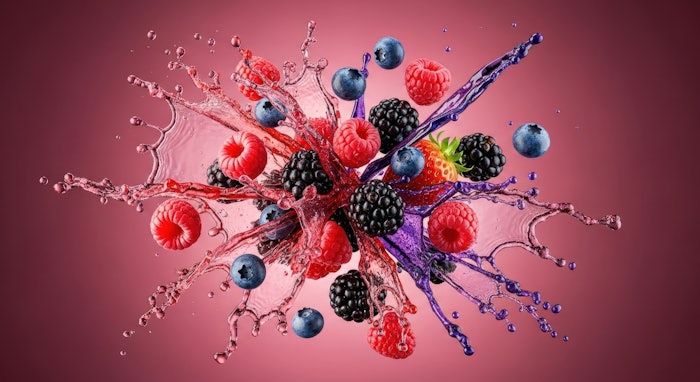
Raspberry: Levels of use of benzyl butyrate in raspberry flavors are linked to the level of benzyl acetate. A ratio of ten-one works well, typically leading to a level of 100 ppm of benzyl butyrate.
Strawberry: The ideal balance in strawberry flavors is similar, leading to 50 to 100 ppm of benzyl butyrate. Much higher levels, up to 1,000 ppm, can be effective in more traditional style flavors.
Tropical Fruit Flavors
Guava: Benzyl butyrate partners well with methyl cinnamate to add complexity and authenticity to guava flavors. Fifty ppm is a good starting point.
Mango: The deep berry character of benzyl butyrate adds complexity and The deep berry character of benzyl butyrate adds complexity and authenticity to all styles of mango flavors.Serhiy Shullye at Adobe Stock
Papaya: Three hundred ppm of this ingredient can have a real impact on authentic papaya flavors. Higher levels can also be interesting, particularly for confectionery applications, but 300 ppm is ideal.
Passion Fruit: Passion fruit flavors can tend to be dominated by ethyl butyrate and other related aliphatic esters, in combination with lower levels of benzyl acetate. Benzyl butyrate works well to deepen the flavor at 20 ppm.
Other Fruit Flavors
Apricot and Peach: Benzyl butyrate is very helpful in all the many different styles of apricot and peach flavors, adding useful depth and fruit character. The ideal level of addition varies but can be relatively high, around 1,000 ppm.
Damson: Damson flavors typically work well with significant additions of benzyl butyrate. Five hundred ppm is ideal.
Fruit Punch: Benzyl butyrate is a very attractive, albeit second tier, raw material for fruit punch flavors, enhancing the depth of taste at around 200 ppm.
Plum: In the average creative career we probably see relatively few projects for plum flavors, but it is an interesting and challenging category. Benzyl butyrate is helpful, at levels ranging from 500 to 1,000 ppm.
Rhubarb: The addition of around 200 ppm of benzyl butyrate adds complexity to the, sometimes overdone, impact of methyl phenyl carbinyl acetate.
 Benzyl butyrate can help with the attractive fruity note of mature vanilla bean extracts.Image stock at Adobe Stock
Other Flavors
Brown Sugar: This heated sugar profile should have a distinct fruity component, but that is normally perceived as more closely related to rum than berries. Benzyl butyrate is effective at deepening the fruity note at levels of addition around 500 ppm.
Hazelnut: A little of this chemical can be interesting in all nut flavors but it is especially useful in hazelnut flavors. It can add depth and complexity at levels around 50 ppm.
Hibiscus: Hibiscus flavors are a minor, but interesting category. The profile can be quite complicated and this ingredient can be very helpful at levels of addition in the region of 50 ppm.
Jasmine: Benzyl acetate is central to all jasmine flavors and can be used at levels where it begins to become very obvious. The berry effect can be maintained by dialing back the benzyl acetate and adding a little benzyl butyrate to keep complexity and realism. One thousand ppm of benzyl butyrate works well.
Tea: Black tea flavors are predominantly floral, but there should also be a subtle fruity background. This raw material contributes to that effect at around 100 ppm.
Vanilla Bean: The quest to create a realistic vanilla bean flavor is normally the search for numerous minor ingredients that will only really function effectively in combination. Benzyl butyrate can help with the attractive fruity note of mature vanilla bean extracts at around 100 ppm.