There are several consumer trend reports that come out this time of year, each with their own insights into what will drive purchases in the flavor and fragrance categories. But how do you distill that insight into a single flavor of the year?
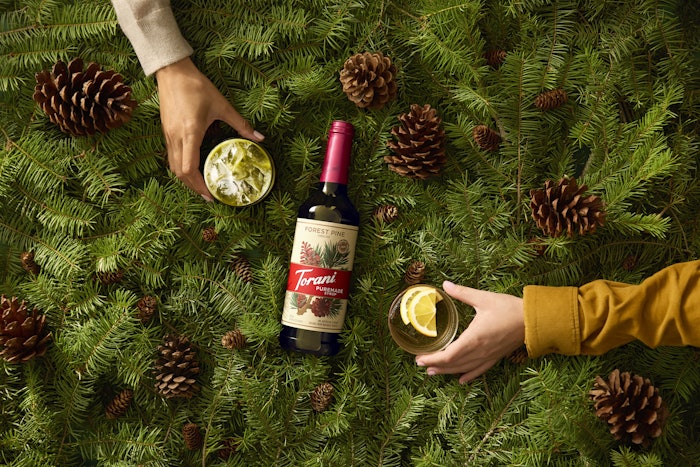
In November 2025, flavor company Torani announced Forest Pine as its 2026 Flavor of the Year. The “bold, balanced and delightfully unexpected” flavor joins the company’s lineup of over 400 sauces and syrups. Forest Pine is described as a fusion of pine, ginger and sage. The new flavor is part of Torani’s Premade syrup collection, made with pure cane sugar and colors from natural sources.
“Forest Pine isn’t just a breakthrough in flavor innovation,” said chief executive officer Melanie Dulbecco. “It also embodies our belief that flavor can create opportunity. Through this launch, every bottle sold helps open doors for people to build brighter futures.”
Perfumer & Flavorist+ spoke to Torani’s consumer and customer market insight manager Andrea Ramirez about the process for selecting a flavor of the year and other flavor trends she expects to see in the coming year.
How do you begin the process of selecting a “Flavor of the Year”? Does it start with consumer research or sales data?
Selecting Torani’s Flavor of the Year is a year-long, cross-functional effort rooted in Andrea Ramirez, consumer and customer insight manager, ToraniCourtesy of Torani
We continuously track emerging flavor signals across global menus, retail launches and adjacent categories like confection, pastry, frozen novelty, cocktails and wellness beverages. What first appears in one category often foreshadows what will take hold in beverages. This aligns with Step one of our four-step Gold Standard Flavor Development Process, which begins by identifying the behavioral “why” behind consumption.
Throughout the year, teams across insights, R&D, culinary and consumer engagement contribute ideas. We evaluate these against criteria such as:
- Consumer appeal and cultural relevance
- Connection to adjacent, fast-growing flavor spaces
- Menu versatility
- Operational usability
Once we’ve identified promising directions, we enter Gold Standard development. We identify a flavor “north star,” evaluate real products and define the descriptors that will guide R&D. Our scientists then iterate through 15–20 versions (sometimes far more) until the flavor meets our quality target and performs well across beverage platforms.
Why was Forest Pine the choice for 2026?
Forest Pine stood at the intersection of several macro-trends: the rise of botanicals and wellness ingredients, continued consumer love for lavender (70% awareness and steady growth), growing interest in foraged and nature-derived flavors and a cultural pull toward sensory wellness and outdoor escapism. Its grounded, resinous, calming character felt both adventurous and deeply familiar, and its versatility across coffee, tea, matcha and refreshers made it a strong candidate for real-world adoption.
By the time we choose a Flavor of the Year, the concept has undergone months of trend evaluation, cross-team vetting, sensory refinement, operational testing and narrative development. Forest Pine rose to the top because it captured a story, a signal and a moment in consumer curiosity.
The press release mentions the rise of botanical flavors. How do you see this trend continuing over 2026?
Botanical flavors have become one of the most emotionally resonant territories in beverages, and all signs point to continued acceleration into 2026. The appeal stems from their unique ability to deliver both novelty and comfort. Lavender, for example, has grown 42% over the last 3.5 years within our own portfolio because it offers a calming, artisanal, sensorial experience while remaining familiar.
We’re now seeing a shift within botanicals—from florals into more grounding, earthy, nature-evoking profiles. Forest Pine represents this next evolution. It carries recognizable herbal qualities found in sage, thyme and rosemary, but it also invites consumers into new sensory territory.
This progression is supported by broader cultural patterns:
- A growing fascination with foraged and wild ingredients
- Desire for sensory wellness and moments of calm
- Increased comfort with botanical flavor vocabulary due to adjacent categories like craft beer and non-alcoholic spirits
- Younger consumers actively seeking artisanal, nature-connected flavors
Pine feels meaningful precisely because it is still novel on U.S. beverage menus. It signals where botanical exploration is headed: toward flavors rooted in the outdoors, grounding and sensory escape.
Can you describe, in your own words, the Forest Pine flavor?
Forest Pine is a crisp, aromatic botanical profile anchored by pine as the hero note. What makes it distinctive is the way complementary botanicals enhance and balance it. Ginger brings a warm, gentle lift and subtle spice, while sage adds an earthy, herbaceous depth that strengthens the flavor’s connection to nature.
Together, these notes create a profile that is refreshing yet grounding—invigorating but still soothing. It performs beautifully across hot and cold formats: coffee, tea, matcha, sparkling refreshers, lemonades, mocktails and craft cocktails. In colder months, it adds cozy, woodsy character; in warmer seasons, it offers a clean, crisp freshness. This year-round versatility is a hallmark of the flavor.
 Torani’s Forest Pine syrup can be used in a variety of applications, including cold and hot coffee, tea, mocktails, cocktails and sparkling refreshers.Courtesy of Torani
How can product developers use a flavor like Forest Pine to add an unexpected twist to their formulations?
Forest Pine is both adventurous and approachable, making it ideal for creators who want to innovate without overwhelming consumers.
A great introductory approach is toppings, such as Forest Pine cold foam or whipped cream. Dairy softens the pine’s resinous edges, making it an easy bridge for consumers exploring botanical flavors for the first time.
Because Forest Pine shares a sensory lineage with lavender, it also functions well as a botanical swap in existing lavender builds—lattes, matchas, spritzes, and more.
Pairing it with creamy or sweet flavors can enhance balance:
- Vanilla, marshmallow
- Pistachio, almond, macadamia
- Cookie-inspired flavors like shortbread
These pairings soften the herbal qualities and create multi-layered, inviting beverages.
Its seasonal flexibility also opens strong menu opportunities.
- In cold months: baking spices, chocolate, caramel, toasted notes.
- In warm months: citrus, green tea, sparkling water, herbal refreshers.
For more adventurous developers, Forest Pine pairs beautifully with other aromatics like rosemary, thyme and juniper, and also with emerging citrus like bergamot, yuzu, kabosu or Seville orange. These create standout concepts in zero-proof cocktails, refreshers and modern craft coffee drinks.
What other flavors were in consideration this year? And how did Forest Pine rise above the rest?
We begin each Flavor of the Year cycle with 100+ submissions sourced from trends, cultural insights, operator feedback, and internal ideation. From there, we narrow to about five finalists that enter full Gold Standard evaluation.
 Selecting Torani’s Flavor of the Year is a year-long, cross-functional effort rooted in understanding how people are eating, drinking and discovering new experiences. Courtesy of Torani
For 2026 we additionally explored concepts tied to major cultural moments:
- U.S. 250th Anniversary — “Firework” (strawberry lemonade with Szechuan peppercorn), strawberry shortcake
- Milano–Cortina Olympics — saffron, panettone
- 2026 World Cup — maple–mango–orange, triple berry
While compelling, Flavor of the Year must offer something meaningfully new to the beverage world.
Forest Pine ultimately stood apart because of its depth and balance. During Gold Standard tasting, it quickly evolved beyond single-note pine into a dimensional, craveable profile thanks to the addition of ginger and sage. It felt adventurous yet approachable, grounded yet refreshing—a rare combination that made it the clear choice for 2026.
Any other major flavor trends that you foresee influencing consumers in the coming year?
Several powerful forces are shaping how consumers will drink in 2026:
- Broader Flavor Exploration Through Global Accessibility: As global ingredients become easier to access, consumers’ palates have expanded dramatically. Our 2024 Dragon Fruit Syrup is a perfect example of how vibrant, globally inspired flavors can quickly become mainstream favorites.
- Personalization as a Core Behavior: Customization continues to surge, especially among Gen Z. “Dirty sodas” and build-your-own drink formats reflect this desire to craft highly individualized beverages. This drives demand for mix-and-match flavors, botanicals, playful pairings, and layered flavor builds.
- Elevated Seasonality and Limited-Time Exploration: Consumers want flavors that set a mood or tell a story: hygge, nostalgia, outdoor adventure, camping, wellness—not just traditional holiday markers. This shift is one reason Forest Pine resonates across both warm and cold seasons.
- Cross-Border Flavor Fusion: Today’s consumers are comfortable with globally influenced combinations. Flavors like Dubai Chocolate, citrus + spice pairings, and botanical + fruit hybrids reflect this cultural fluidity.
- Fruit Innovation Expanding Into New Categories: Fruits are moving into spaces where they historically weren’t common—such as coffee—while continuing to anchor refreshers, energy drinks, and sparkling beverages.
- Continued Demand for Cold Matcha Innovation: Cold matcha remains a fast-growing platform, and consumers want “news” in the form of new flavors, textures, and botanically driven pairings.
Across all these trends, the common thread is clear: consumers crave beverages that spark discovery but still feel emotionally resonant.
What’s on the horizon for Torani for the upcoming year?
We’re focused on understanding where consumer desires are headed and ensuring our innovation pipeline keeps pace and further helps guide the industry forward. Our recent launch, Torani Liquid Drink Enhancer, has been a standout success and reflects key themes shaping our future: personalization, portability, and creative empowerment.
Looking ahead, we’re investing in:
Breakthrough Flavor Innovation: Continuing to explore grounded botanicals, global fruits, and cross-category combinations that deliver emotional and sensory richness.
New Formats That Support Personalization: Developing products that make it easy for consumers to craft their ideal beverage - through concentrated forms, modular components, or new delivery systems.
Operator-Focused Versatility: Providing menu-flexible, season-agnostic, and flavor-forward products that help operators differentiate with minimal complexity.
Aesthetic and Emotional Flavor Experiences: Innovating around flavors tied to calm, nostalgia, nature, travel, and visual appeal.
Purpose Through Flavor: With Forest Pine, 100% of profits through 2026 support nonprofit partners preparing young people and adults with developmental disabilities for meaningful employment, a model we intend to continue and expand.
In short, Torani’s future is shaped by curiosity, empathy, and a belief that everyone should have the tools to explore and personalize great-tasting beverages.