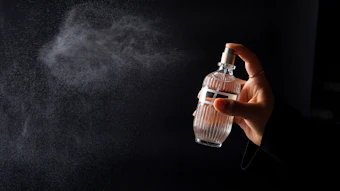
New findings from the World Taste & Smell Association’s (WTSA) How Taste & Smell Shape Our Stories report offer a revealing look at how scent influences mood, purchasing, memory and emotional connection. We spoke with Mindy Yang and Stephanie Feuer, co-founders of the WTSA, about what the findings mean for fragrance development—from designing around wellness and sensory experience to creating more personal, emotionally resonant products—and where the research still needs to go.
 "Labeling studies have shown that the same odorant gets rated as pleasant or unpleasant depending on the name it is given, and what we smell is shaped by physiology, prior exposure, memory, context and culture," says Mindy Yang, co-founder of WTSA.WTSA
More than half of survey respondents said scents can change their mood, while 85.4% believe scent can have therapeutic benefits. Where do you draw the line between a genuine sensory effect and consumer expectation or belief, and what kind of research is still needed before formulators can responsibly design around mood or wellness claims?
Yang: Expectation is part of the sensory signal. Labeling studies have shown that the same odorant gets rated as pleasant or unpleasant depending on the name it is given, and what we smell is shaped by physiology, prior exposure, memory, context, and culture. The experience people report is real. Belief alone still cannot substantiate a therapeutic claim.
Formulators can responsibly design for experiences associated with comfort, focus, energy, or relaxation, as long as experiential language stays separate from clinical outcomes. Stronger claims require controlled, replicated studies that account for expectation and that measure self-reported experience alongside physiological or behavioral response.
We need that work across diverse populations, fragrance concentrations, delivery methods, and repeated exposure. The useful question runs past whether a scent works. It asks for whom, under what conditions, and for how long.
 "Because smell perception is both personal and unique to each individual there’s a case to be made for giving the consumer a role in development—product personalization or choices of scent," says Stephanie Feuer, co-founder of WTSA.WTSA
Feuer: I’d like to add that packaging and product description has tremendous value on perception. As someone with impaired ability to smell—as 20% of the survey respondents replied—the presentation of the product is a tool to help me intuit what something is supposed to smell like and what the product is trying to evoke.
The study suggests that smell influences everyday product behavior: 53.6% of respondents say they sniff products in stores before deciding whether to buy, and 26.5% say they would buy a product they did not need because they liked its aroma. What should product developers take from this about fragrance's role beyond simply making a product smell good?
Yang: Fragrance operates as an interface between the product and the person. It carries identity, signals quality, sets expectations for performance, and suggests how the product might fit into someone's day. Decoration is the smallest part of what it does.
Scent belongs in development from the first brief. The aroma has to hold up against the product's purpose, texture, packaging and use ritual or application. It can earn trial and make a product memorable, and whatever it promises at first sniff has to be delivered during use. When that fails, attraction turns into disappointment. The opportunity is a coherent sensory experience that holds from shelf to last use.
Nearly half of respondents said they can recognize someone close to them by scent alone, and 42.8% find comfort in the scent of a loved one's belongings. Does this point toward an opportunity for fragrance to play a more deliberate role in products designed around identity, attachment and emotional connection? If so, how might that translate into a fragrance brief?
Yang: Yes. Smell is tied to recognition, memory and belonging, and these findings point toward briefs built around relationships and rituals. Demographics and abstract adjectives give a perfumer far less to work with.
A brief might start with a person, a place, or a ritual: the scent left on a borrowed sweater, a family kitchen after dinner, a familiar garden, clean skin, the inside of a childhood home. From there, it can name specific sensory anchors, the emotional distance of the scent (intimate or projecting), and how it should behave on skin or fabric over hours.
Co-creation and cultural context matter here. Attachment cannot be manufactured. The work is to build in enough specificity, and enough room, for someone to recognize their own life inside the fragrance.
Feuer: Because smell perception is both personal and unique to each individual there’s a case to be made for giving the consumer a role in development—product personalization or choices of scent.
Your report is careful to characterize the findings as a descriptive snapshot rather than a nationally representative study. What are the biggest questions this first survey leaves unanswered, and what would you want to investigate next to make the findings more actionable for perfumers, sensory scientists and product developers?
Yang: This survey captures what respondents report noticing, valuing, and doing. It does not yet tell us why they respond that way, or whether stated behavior holds up in a store, a kitchen, or a bathroom cabinet.
The next phase should examine differences by age, culture, health status, and sensory ability, with particular attention to people who have experienced smell or taste loss. We want to understand how sensory change affects purchasing, eating, safety, social connection, and appreciation over time.
On the industry side, controlled product studies could test how fragrance influences trial, repeat use, perceived efficacy, and emotional response across categories. A larger, more representative sample, paired with sensory testing, behavioral observation, and longitudinal follow-up, would turn this first map into something a formulator can design against.
Feuer: Mindy’s point about differences in sensory ability and change over time is so important and universal because as we age and as our environment changes we will all experience changes in the ways we perceive smell.