The distinction between natural and synthetic flavor and fragrance ingredients has historically been grounded in production route rather than molecular identity. However, the emergence of alternative manufacturing technologies, particularly enzyme-enabled transformations of renewable feedstocks, has complicated this framework. As equivalent aroma compounds become accessible through multiple production pathways, the industry is increasingly confronted with inconsistencies between regulatory definitions, manufacturing reality and market perception. This article examines how evolving production methods challenge established classification logic and why the concept of “natural” is becoming increasingly dependent on interpretation rather than chemistry alone.
Rethinking 'Natural'
For decades, the flavor and fragrance industry has operated within a relatively stable classification system. Ingredients were broadly categorized as natural extracts, fermentation-derived materials or synthetically produced molecules. These distinctions were largely sufficient when production routes were clearly separated and molecular identity aligned closely with manufacturing method.
However, these boundaries are becoming increasingly difficult to define.
Today, key aroma compounds can be accessed through multiple production pathways that converge on the same chemical structure. As a result, equivalent molecules may be classified differently depending on how they are produced, not what they are. This is placing increasing pressure on regulatory definitions that were not designed for convergent manufacturing routes.
When Definitions Begin to Overlap
Current regulatory systems define “natural flavoring substances” primarily based on source materials and permitted transformation processes. In the European Union, Regulation (EC) No 1334/2008 emphasizes both the origin of the starting material and the nature of the transformation used to obtain the final ingredient. Extraction from plant or animal sources, physical processing, and selected enzymatic or microbial transformations are generally compatible with natural designation, provided the resulting substance is identical to one known to occur in nature. In contrast, chemically synthesized compounds are excluded, even if molecularly identical to the natural substance.
The U.S. FDA framework, under 21 CFR § 101.22(a)(3), differs in emphasis, focusing more on the naturalness of the flavor-imparting constituent and qualified feedstock origin rather than strictly the production pathway. As a result, classification and labeling outcomes may diverge between regions even for structurally equivalent compounds.
This process-based logic works well in a linear production environment but becomes less clear when different technologies lead to overlapping molecular outcomes from different starting points.
Consequently, equivalent aroma compounds may be treated differently depending on whether they originate from extraction, chemical synthesis, fermentation or enzymatic transformation of renewable intermediates. This divergence increasingly forces companies to consider not only technical and economic factors, but also regulatory interpretation and labeling expectations across markets.
Biotechnological Routes and Convergence of Outcomes
Industrial biotechnology has significantly expanded the production toolbox for flavor and fragrance molecules. Enzymatic processes and engineered biocatalytic systems now enable selective transformations of renewable feedstocks such as fatty acids and related natural intermediates.
These systems often replicate biological transformations under controlled industrial conditions and can deliver high selectivity under mild reaction parameters, with reduced by-product formation compared to classical chemical synthesis.
The key implication is not the novelty of the chemistry itself, but the convergence of outcomes: overlapping molecular products can now be generated via fundamentally different routes, each with distinct implications for classification, cost structure and supply chain design.
Biocatalysis as a Route Design Strategy
Within this evolving landscape, enzyme-based transformations of renewable feedstocks are emerging as a relevant production strategy.
Rather than relying exclusively on extraction or multi-step synthesis, biocatalytic systems enable highly selective modification of naturally derived intermediates under mild conditions. In fatty acid chemistry, enzymatic oxyfunctionalization generates intermediates that can cyclize into structurally defined lactones.
A novel approach employs commercially available ketoglutarate-dependent oxygenases to catalyze regioselective oxidation of fatty acid substrates in aqueous media. From a process perspective, these systems combine high selectivity, compatibility with renewable feedstocks and a reduced by-product profile compared to conventional chemical oxidation methods. Recent advances in this enzyme class demonstrate that such precision biocatalysis enables exclusive, position-specific hydroxylation, overcoming the limitations of chemical synthesis, which typically yields racemic mixtures and reduced positional control.
By eliminating the formation of unwanted structural isomers, this route drastically reduces downstream purification complexity, addressing a historical bottleneck in biological ingredient manufacturing. Importantly, their relevance extends beyond sustainability or natural-grade positioning. By combining selective catalysis with controlled process design, biocatalysis increasingly serves not only as an alternative to established synthetic routes, but also to access structures that are difficult to obtain efficiently via conventional chemistry.
Lactones as a Representative Case
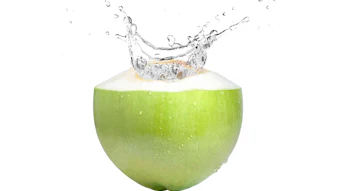
Fatty acid-derived lactones illustrate this convergence particularly well. These compounds are widely used in flavor and fragrance applications due to their fruity, creamy, coconut, peach or musky profiles depending on chain length, and several also occur naturally in food systems.
Traditionally, lactones have been sourced via extraction, chemical synthesis or fermentation. Each route has distinct strengths and limitations: extraction aligns with natural labeling but is constrained by agricultural variability; synthesis provides scalability and consistency but does not meet natural definitions; fermentation offers flexibility but remains system-dependent in outcome and classification.
Enzymatic transformation routes now add another option by enabling selective conversion of renewable fatty acid intermediates into defined lactones under controlled conditions. The ketoglutarate-dependent oxygenase approach enables, for example, the synthesis of highly defined δ-decalactone from decanoic acid and, unlike other enzymatic pathways, can be implemented either as an in vitro biocatalytic process or through in vivo microbial fermentation, depending on manufacturing requirements.
From a chemical perspective, the outcome is equivalent. From a regulatory perspective, classification depends on the full production history.
Where Classification Becomes Ambiguous
The diversity of production routes exposes a structural limitation in current definitions of naturalness. Classification frameworks assume distinct and non-overlapping pathways, an assumption that no longer holds.
In practice:
- extraction-derived molecules are generally accepted as natural
- chemically synthesized molecules are excluded
- fermentation- and enzyme-derived molecules are context dependent
This results in a system where structurally equivalent compounds can carry different regulatory identities based solely on production history.
It also introduces inconsistencies in how ingredients are communicated and perceived across markets.
The Role of Enzymatic Processes
Enzymatic transformations occupy a particularly relevant position because they combine biologically derived catalytic mechanisms with controlled industrial environments. As a result, classification is often determined less by the enzyme itself than by the broader production context, including feedstock origin, process design and downstream purification. This places enzymatic routes at the intersection of extraction-based logic and modern manufacturing strategies, highlighting both the flexibility and the limits of current definitions of naturalness. In effect, enzymatic systems do not redefine naturalness, but they clarify its boundaries.
Beyond Chemistry: Regulatory and Market Interpretation
As production technologies converge, classification is becoming less about molecular identity and more about interpretation. Regulatory frameworks remain structured around defined rules, while market expectations increasingly emphasize sustainability, traceability and supply resilience.
This creates a growing need for transparency in ingredient definition and communication. Detailed documentation of production pathways is becoming essential for regulatory compliance and consistent positioning across jurisdictions.
Companies must increasingly navigate differing interpretations between regions, customers and applications. A single ingredient may be viewed differently depending on whether the focus is regulatory classification, labeling strategy or consumer communication.
The New Rules of Ingredient Differentiation
The convergence of production routes has several implications for the flavor and fragrance sector.
First, traceability of feedstock origin and processing route is becoming central, as overlapping molecular outputs can arise from multiple pathways.
Second, regulatory alignment remains inconsistent across regions, even for structurally equivalent compounds.
Third, innovation strategies must integrate regulatory considerations earlier in development, as route selection is no longer purely technical or economic but also classification driven.
Finally, differentiation is increasingly shifting toward system-level attributes such as sustainability, supply security and lifecycle impact rather than molecular origin alone.
In practice, route selection now influences regulatory positioning, sourcing strategy, portfolio differentiation and supply resilience.
The End of the Natural vs. Synthetic Divide?
The flavor and fragrance industry is entering a phase where distinctions between natural and synthetic ingredients are increasingly difficult to maintain. Alternative production routes capable of delivering overlapping molecular outcomes have exposed limitations in process-based classification systems.
Rather than indicating a failure of regulatory frameworks, this reflects technological evolution beyond the assumptions on which those systems were built. As enzymatic, fermentative and synthetic routes converge on shared chemical space, the definition of “natural” becomes less absolute and more context dependent.
At the same time, increasing production complexity elevates the importance of transparency, traceability and cross-disciplinary collaboration across the value chain. Success will depend on closer co-development between technology providers, ingredient manufacturers and industrial flavor and fragrance players to align innovation, scalability and regulatory interpretation.
By moving toward transparent and well-documented enzymatic production pathways, the industry has an opportunity to ensure that “natural” continues to represent not only regulatory compliance, but also consistency, quality and authenticity for both manufacturers and consumers.
 Rainer Wardenga.Courtesy of the Author