From tightening naphtha availability and escalating intermediate costs to structurally reduced citrus yields, regulatory divergence and increasingly unpredictable climate impacts, global supply chains for flavor and fragrance ingredients are facing pressure from multiple directions at once.
Across key categories—from linalool and menthol precursors to citrus oils, vanillin pathways and botanical extracts—manufacturers are being forced to rethink long-established assumptions about stability, specification, and sourcing cadence. At the same time, geopolitical disruption, transport constraints, and evolving regulatory frameworks in major markets are compounding volatility and extending uncertainty across planning horizons.
In this Q&A, Oliver Henderson, commercial director of De Monchy Aromatics, discusses how companies can adapt procurement strategies, strengthen verification protocols and build resilience in an environment where supply risk is increasingly structural.
P&F+: With the Strait of Hormuz facing operational uncertainty, the international shortage of naphtha is reportedly crippling the solvents market and directly restricting propylene glycol volumes.
Given Kuraray’s announced 20% price increase for isoprene chemicals and the projected citral shortage this year, how can the industry best prepare for the inevitable knock-on effects on critical intermediate-dependent aroma chemicals like linalool and menthol?
Furthermore, how quickly can the market expect structural relief from BASF’s newly announced production plants in Ludwigshafen and Zhanjiang?
Henderson: The current disruption highlights how interconnected aroma chemical supply chains remain. The restriction of naphtha availability is impacting multiple downstream sectors simultaneously, from solvents such as propylene glycol through to key aroma chemical intermediates. As citral availability tightens and isoprene-derived materials become more expensive, manufacturers should anticipate continued pressure on products such as linalool, menthol and related derivatives.
The industry's best preparation is likely to focus on three areas:
- Earlier procurement planning and inventory management for critical intermediates.
- Greater supply chain diversification, both geographically and by manufacturer.
- Increased formulation flexibility where technically and regulatory feasible.
The recently announced BASF investments in Ludwigshafen and Zhanjiang are positive developments for long-term market stability. However, new capacity typically requires time to reach full operational efficiency and become fully integrated into downstream supply chains.
As a result, while these projects should improve structural resilience, the market is unlikely to experience immediate relief, particularly while logistics constraints and feedstock shortages persist.
The broader lesson is that the industry may need to adapt to a period where feedstock security becomes as important as production capacity itself.
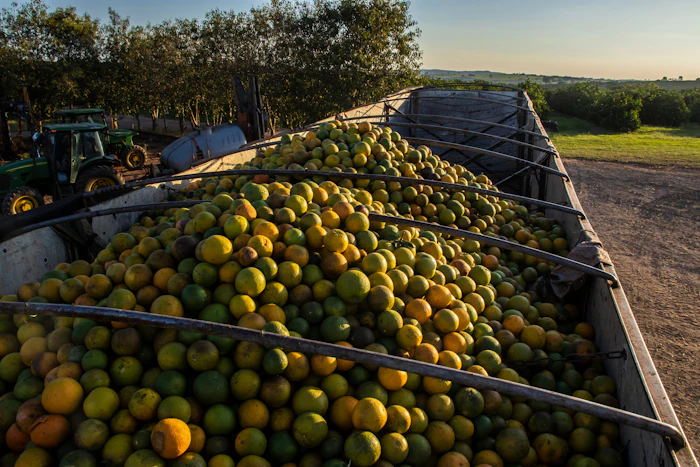
P&F+: The May 2026 forecast from De Monchy predicts a further 12.9% reduction in the Brazilian orange crop, marking the sixth consecutive small harvest heavily impacted by greening.
Given that shorter fruit maturation is structurally reducing oil yields and driving down aldehyde levels, how is the industry adjusting (ex: tweaking product specifications to accept lower aldehyde levels as the industry's new standard)?
With steady, high demand keeping d-limonene prices elevated, what can companies do to balance these quality shifts against rising production and global shipping costs?
Henderson: The Brazilian citrus industry is increasingly facing structural rather than cyclical challenges. Successive smaller crops, combined with the long-term effects of greening disease, are reducing both fruit yields and oil quality characteristics. The reported reduction in aldehyde content appears to be becoming an industry-wide trend rather than a temporary anomaly.
As a consequence, many companies are reviewing specifications and quality expectations to better reflect agricultural reality while still maintaining product performance requirements. This does not necessarily mean lowering standards, but rather recognizing a new natural baseline for certain analytical parameters.
To balance quality shifts against increasing production and logistics costs, companies are increasingly:
- Strengthening communication between procurement, technical and regulatory teams.
- Purchasing earlier where market visibility allows.
- Evaluating alternative citrus sources where appropriate.
- Taking a longer-term view of supply contracts rather than relying solely on spot purchasing.
With d-limonene demand remaining robust and crushing economics under pressure, volatility is likely to remain a feature of the market for the foreseeable future.
P&F+: In the wake of EU anti-dumping duties on Chinese synthetic vanillin, the natural vanillin market has grown increasingly complex. Low-priced material claiming "ex-ferulic acid" status is circulating in regions like the U.K. market, yet this uncompetitive pricing directly contradicts the high market cost of true ferulic acid.
In light of alternative, potentially non-compliant chemical routes entering the supply chain, what analytical verification protocols—such as IRMS and SNIF-NMR—do R&D departments need to ensure raw material authenticity and quality?
Henderson: As supply chains become more complex and pricing discrepancies emerge between declared production routes and underlying raw material economics, analytical verification is becoming increasingly important for both compliance and quality assurance.
Where questions arise regarding the authenticity of natural vanillin claims, particularly for materials marketed as originating from ferulic acid routes, companies should adopt a risk-based verification strategy. This may include:
- Comprehensive supplier qualification and traceability audits.
- Independent review of manufacturing route documentation.
- Routine use of advanced analytical techniques where warranted.
Techniques such as IRMS (isotope ratio mass spectrometry) and SNIF-NMR can provide valuable additional evidence when verifying production pathways that may not be distinguishable through conventional analytical testing alone.
Ultimately, authentication should not rely on a single test result. The strongest approach combines analytical verification, documentary evidence and supplier due diligence to provide confidence in both regulatory compliance and product integrity.
 How can companies insulate supply chains from the pricing rebound of eucalyptus oil globulus, where growers are actively holding back stock in response to Middle East transit disruptions?Ammak at Adobe Stock
P&F+: Tea tree oil prices are surging under the dual pressure of high global oil transport costs and the EU’s official reclassification of the ingredient as a CMR Cat 1B reproductive toxin.
With the SCCS imposing strict safe-use limits in cosmetics and the UK HSE notably diverging from this reclassification, how are regulatory compliance teams adjusting international portfolios?
Simultaneously, how can companies insulate supply chains from the pricing rebound of eucalyptus oil globulus, where growers are actively holding back stock in response to Middle East transit disruptions?
Henderson: The divergence between EU and U.K. regulatory positions creates a particularly challenging environment for multinational manufacturers. Regulatory teams are increasingly being required to manage region-specific compliance strategies, ensuring formulations, documentation and product claims remain aligned with local requirements.
For tea tree oil specifically, the emphasis is shifting towards:
- Continuous monitoring of regulatory developments.
- Regional portfolio reviews.
- Assessment of reformulation requirements where necessary.
- Enhanced communication between regulatory, technical and commercial functions.
From a supply chain perspective, the recent increase in eucalyptus oil pricing illustrates how geopolitical disruption can rapidly affect markets that have experienced prolonged stability. With growers reportedly withholding stock in anticipation of further increases, procurement teams may benefit from adopting longer planning horizons and maintaining greater visibility of inventory positions.
In the current environment, resilience is likely to come from preparation and flexibility rather than attempting to predict short-term price movements.
 De Monchy's recent supply chain report highlights that high-value botanical extracts are facing intense regional disruptions, from crop damage caused by wildfires in the Western Cape impacting buchu oil yields, to heavy rainfall delaying Argentina’s lemon oil season. Pancho Casagrande at Adobe Stock
P&F+: De Monchy's recent supply chain report highlights that high-value botanical extracts are facing intense regional disruptions, from crop damage caused by wildfires in the Western Cape impacting buchu oil yields, to heavy rainfall delaying Argentina’s lemon oil season.
Looking forward, with a super El Niño threatening the primary lime-producing regions of Mexico and Peru with severe weather, fertilizer shortages, and high production costs, how can companies adjust buying timelines to account for this prolonged price and supply uncertainty?
Henderson: The increasing frequency of weather-related disruptions across multiple producing regions suggests that climate risk is becoming a permanent consideration rather than an exceptional event. Wildfires, excessive rainfall and the potential impact of a super El Niño are affecting supply availability across a range of botanical ingredients simultaneously.
In response, companies are increasingly moving away from traditional purchasing cycles and adopting more proactive sourcing strategies. Key considerations include:
- Earlier engagement with suppliers regarding upcoming harvests.
- Greater use of forward purchasing where visibility permits.
- Building contingency plans around alternative origins.
- Maintaining closer monitoring of weather and crop developments throughout the growing season.
Perhaps most importantly, organizations should recognize that uncertainty itself has become a market driver. Procurement strategies that allow for flexibility and scenario planning are likely to be better positioned than those based solely on historical seasonal patterns.
With ongoing concerns around weather, fertilizer availability, production costs and logistics, supply conditions for key citrus-derived ingredients may remain volatile well beyond the current season.