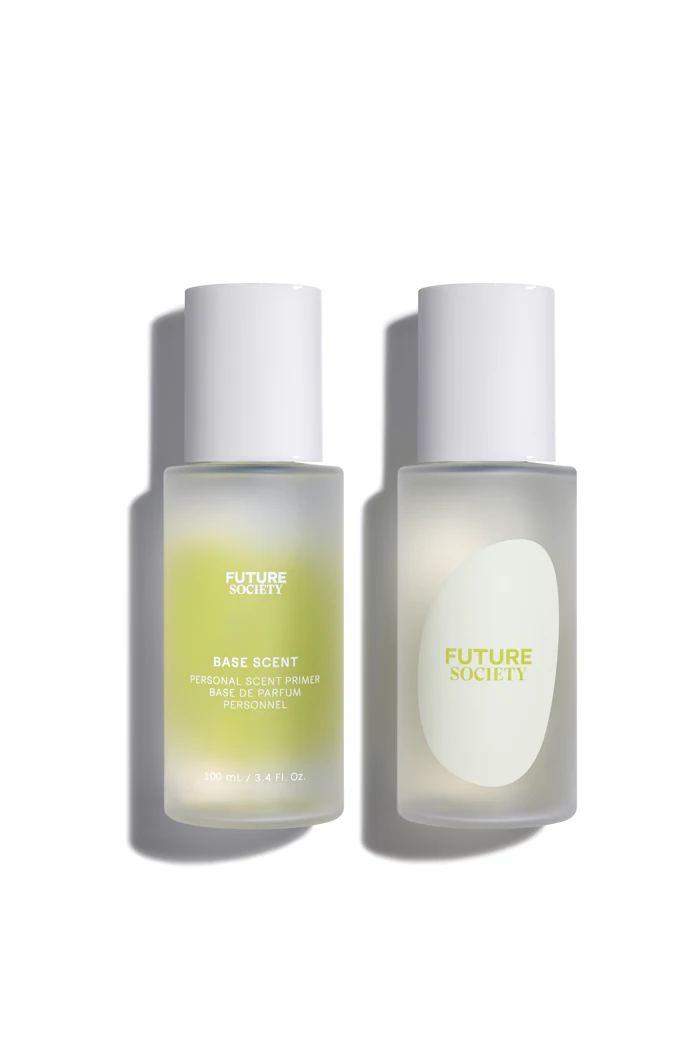
With Future Society’s Base Scent, Jasmina Aganovic is advancing a different approach to personal care, one that works with the skin microbiome to influence how the body naturally smells.
"Many people don't know how influential the skin microbiome is to the production of volatile compounds associated with our personal scent," the executive explains. "They are heavily influenced by things like pH, our lifestyle and other changes. Our research showed that we can influence these interactions in a way that gives us more control and expression over our scent without killing or removing it all."
In this Q&A, Aganovic discusses the research behind the concept, its implications for fragrance formulation and why the future of body care may be about scent care rather than scent suppression.
- Dive deeper into the science and technology: Future Society Targets Body Odor at the Microbiome Level With Base Scent
How did you determine which pathways or scent molecules to influence, and how do you measure whether the resulting change is actually more neutral or pleasant?
Aganovic: We did a high throughput screening program to understand how common skin microbes respond to different nutrients and environmental conditions. We then started building a bioinformatics machine learning model to predict which blends could create the outcomes we wanted.
We measured this by seeing how the microbial community would grow and change, but also by measuring the specific scent compounds produced by then via gas chromatography.
Were there any findings during your research that fundamentally changed your assumptions about how personal scent is generated or how it could be formulated for?
Aganovic: Absolutely. Seeing that there are actually fragrant molecules our skin produces (and a diverse set of them!) was very exciting and intriguing to us.
How do you see Base Scent interacting with conventional fragrance? Could this approach eventually influence how perfumers think about fragrance performance, drydown or personalization on skin?
Aganovic: I think perfumers already think about this. I do believe base scent will impact this slightly for people, but not much. I think in the future thinking about this interface as something else we can adjust and shape is very exciting. It is just another way we can think about our scent and how we show up in the world.
The two-week observations point to fewer scent fluctuations and a more neutral baseline; what does this suggest about the next generation of body care and fragrance products, and where do you see the biggest opportunities for further R&D?
Aganovic: I think the future will not have deodorants. I think the future will have scent care products that help us shape our scent the way we want (not just get rid of it). The biggest opportunities for R&D really are around the precision and control and how it adapts to different demographics given how unique everyone's microbiome is.