Reported in partnership between Global Cosmetic Industry and Perfumer & Flavorist+
The Estée Lauder Companies (ELC) has entered fiscal 2027 with credible evidence that its turnaround is translating into broad-based sales growth and materially better profitability.
- Wider perspective: Beauty’s 2026 Growth Story Is Strong, but Increasingly Selective
“I am incredibly proud of our team for delivering fiscal 2026 results ahead of the expectations we had to start the year," said Stéphane de La Faverie, president and CEO. "We reignited growth with organic sales rising 3%, driven by the breadth of growth across brands, and achieved significant operating margin expansion. We ended the year on a high note, as organic sales growth accelerated to 5% for our fourth consecutive quarter of growth and stronger profitability. We are delivering on all aspects of Beauty Reimagined. Our One ELC operating model is increasingly enabling the entire organization to move at speed and with discipline.”
The company reported fiscal 2026 net sales of $15.05 billion, up 5% from $14.33 billion a year earlier, while organic sales increased 3%. More significantly, fourth-quarter reported sales rose 6% to $3.63 billion, with organic sales up 5%, representing the fourth consecutive quarter of organic growth. Every geographic region grew in the quarter, as did every major product category except hair care.
For ELC, however, the most important number may be profitability. Gross margin expanded 150 basis points to 75.5%, while adjusted operating margin increased 320 basis points to 11.2%. Adjusted operating income rose 47% to $1.69 billion, and adjusted EPS increased 66% to $2.51. The improvement reflects both better sales and the company's aggressive cost-reduction program.
Fragrance Is the Clear Growth Engine
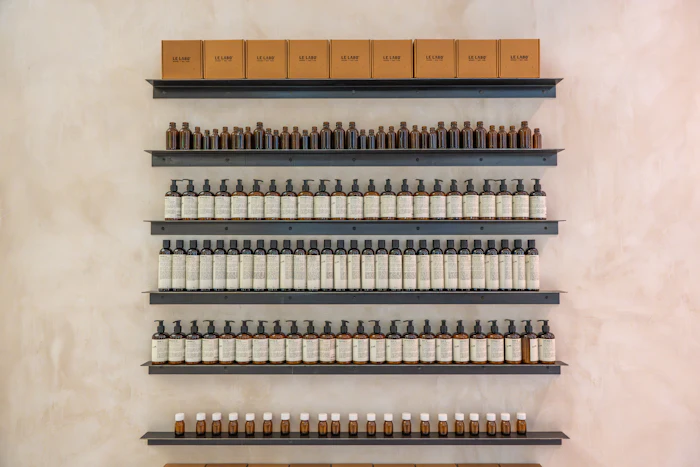
Fragrance was the standout performer, with fiscal-year organic sales growth of 10% and reported sales up 12% to $2.78 billion. Luxury fragrance was particularly strong, with double-digit growth across the portfolio led by Le Labo, Tom Ford and Kilian Paris. Fragrance adjusted operating income increased 27%.
That performance reinforces the strategic importance of Estée Lauder's luxury fragrance portfolio. Le Labo benefited from its core Classic Collection, new products such as Violette 30 and perfuming hand creams, and expanded consumer reach. Tom Ford generated growth through launches including Soleil Neige, Oud Voyager and Figue Érotique, which also helped lift existing Private Blend and Signature products. Kilian Paris benefited from both established franchises and new distribution.
The company is also physically expanding its fragrance footprint. It opened 33 net new freestanding fragrance stores globally during fiscal 2026, led by Le Labo and Jo Malone London. Jo Malone London and Tom Ford also became the company's sixth and fifth billion-dollar brands, respectively.
Skin Care Is Quietly Becoming the Other Pillar
Skin care remains Estée Lauder's largest category, generating $7.34 billion in fiscal 2026 sales. Organic sales increased 4%, led by La Mer, The Ordinary and Estée Lauder, while adjusted operating income increased 52%.
La Mer benefited from both innovation and established franchises, while The Ordinary gained from expanded reach and targeted campaigns. Estée Lauder's own skin care growth was driven by innovation and existing franchises such as Advanced Night Repair and Revitalizing Supreme+.
Makeup Has Improved, but Has Not Recovered
Fiscal-year makeup sales were essentially flat organically, despite an improvement of more than 500 basis points in the growth rate compared with the prior year. M·A·C and Tom Ford generated growth, but declines at Bobbi Brown and Too Faced offset those gains.
M·A·C offers one of the clearest examples of the company's strategy. Its expansion into select U.S. Sephora locations, Sephora at Kohl's and online distribution helped drive sales, while lip products remained a strength. Tom Ford benefited from innovation in eyes and complexion.
The company is forecasting a return to makeup growth in fiscal 2027. That will be an important test of whether the turnaround is genuinely broadening beyond fragrance and skin care.
Hair Care Is the Outlier
Hair care was the only major category to decline, with organic sales down 1% and reported sales essentially flat at $565 million.
The problem is concentrated in Aveda, where sales declined amid efforts to reduce online promotional activity, exit underperforming doors and address continued challenges in the salon channel. Those declines more than offset growth from The Ordinary, which benefited from expanded distribution and the success of its Multi-Peptide Serum for Hair Density.
That said, hair care profitability improved even as sales declined. Adjusted operating results moved into positive territory, reflecting expense discipline and benefits from the restructuring program.
That suggests Estée Lauder is prioritizing profitable growth over simply buying sales through promotions or maintaining distribution that does not generate adequate returns.
China Is Nuanced
Mainland China reported 12% sales growth and 9% organic growth for the year, with high-single-digit organic growth driven by innovation, existing products and major shopping occasions. Online channels posted strong double-digit growth. China also generated a 92% increase in adjusted operating income, although the profit improvement was partly helped by favorable timing related to local government subsidies.
The company also gained prestige beauty share in China during the fourth quarter and full year, driven by fragrance, skin care and makeup.
That is an important reversal from the prolonged weakness that has weighed on Estée Lauder. But it would be premature to interpret China as fully normalized. Travel retail remains uneven, and the company's outlook assumes continued improvement rather than a return to the rapid growth rates that once characterized the market.
Meanwhile, Asia/Pacific posted 4% organic growth, Japan gained share, and Korea returned to value share growth in the fourth quarter. Western Europe also returned to value share gains, led by skin care and fragrance.
North America Is the Next Big Test
Perhaps the most consequential element of the fiscal 2027 outlook is management's explicit emphasis on North America.
The company says fiscal 2027 growth will be more diversified geographically, with North America expected to accelerate. The Americas generated only 1% organic growth for fiscal 2026, although fourth-quarter organic growth accelerated to 5% as North America returned to growth.
Estée Lauder has increased consumer-facing investment 7% in both the fourth quarter and full year, while expanding distribution through Amazon, TikTok Shop and Sephora. It is also investing in physical stores and digital channels.
The Cost-Cutting Story Is Becoming a Growth Story
Estée Lauder expects the program to generate approximately $1.2 billion in annual gross benefits, at the high end of its previous target. It expects a net reduction of approximately 10,000 positions. The savings are being directed toward restoring operating margins while funding investment in marketing, innovation, distribution and consumer reach.
If sales accelerate while margins continue to expand in fiscal 2027, the company will have evidence that Beauty Reimagined is working as an operating model rather than merely producing a temporary earnings lift.
What Comes Next
Estée Lauder is forecasting 3% to 5% organic sales growth for fiscal 2027 and has raised its adjusted operating-margin outlook to 12.7% to 13.5%. Adjusted EPS is expected to reach $3.10 to $3.35, versus $2.51 in fiscal 2026.
The company expects stronger growth in the first half of the year, helped by earlier product launches and travel-retail shipments, while forecasting continued growth in fragrance and skin care and a return to growth in makeup.
The company's emerging model is focused on concentrated investment behind brands with cultural relevance, premium positioning or demonstrable innovation; expanded distribution where the consumer is moving; and using operational efficiencies to fund that investment.