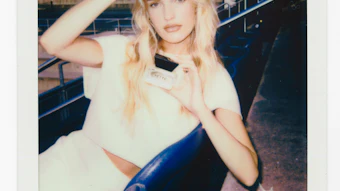
As technology continues to reshape perfumery, one truth remains: no innovation can replace the mind of a perfumer. This insight will be at the heart of a thought-provoking panel at the World Perfumery Congress (WPC) 2026, where moderator Emma Vernon, host of the Perfume Room, brings her podcast’s beloved "What’s That Smell?" segment to the global stage. Among the featured noses is Christine Hassan, who brings a unique sensory perspective shaped by her New York upbringing and a background in sculpture and cinematography. Known for her belief that fragrance is “a form of unconscious communication” and a powerful means of creating connection, Hassan has crafted iconic scents such as Anna Sui Fantasia Forever, Hollister Togetherness, Guess Bella Vita, Agent Provocateur Electric and Boy Smells Hinoki Fantôme. For her, every new creation is like unwrapping a present—layered, surprising, and intimately human.
In this exclusive Q&A, Hassan discusses how her New York upbringing, visual arts background and personal philosophy shape her perfume creation, emphasizing urban inspiration, storytelling through fragrance, maintaining human connection, discovering unexpected material nuances, and balancing technology with creative intuition.
 Us, from The Nue Co., formulated by Hassan. The Nue Co.
You grew up in New York and have spoken about the city’s vibrant urban culture and dynamic energy as a primary source of inspiration. When you are asked to interpret an abstract concept like sunshine or limerence, how does the gritty, high-energy landscape of New York influence the raw materials you choose over more traditional, pastoral inspirations?
Hassan: When New York inspires you, it comes at you hard—the art, the fashion, the food, the people. What moves me most are the unexpected combinations: high rises against Central Park, sweet and savory cocktails, a ballerina dress with sneakers. Those contrasts: tension, color, emotion, shape how I think about raw materials. Instead of leaning into something purely pastoral, I’m drawn to compositions that feel alive, layered, and a little unpredictable. It pushes me to create with a strong point of view.
 Mind Games' Playmate, formulated by Hassan.Mind Games
With a background in sculpture and cinematography, your creative process is rooted in visual and tactile arts. When building a fantasy accord for a brief that lacks a literal reference point, do you shape the fragrance in your mind as a 3D object or a cinematic narrative before you begin selecting your materials?
Hassan: For me, a fragrance always has dimension, texture and movement. It’s a form of storytelling. I often begin by visualizing it, sometimes as a scene unfolding, sometimes as a sculptural form you can almost touch. That mental image guides how I build the structure, layer materials, and create rhythm within the composition.
You have described perfume as a form of unconscious communication that creates an intimate bond between the wearer and the observer. How do you ensure that a conceptual scent, something intended to smell like a diamond, for example, it remains wearable and continues to facilitate that human connection rather than becoming a purely academic exercise?
Hassan: At the end of the day, fragrance is meant to be lived in and enjoyed. No matter how abstract the idea is, there’s always a person at the center of it. I’m constantly thinking about how it will sit on skin, how it evolves, and how it makes someone feel. That human connection keeps it from becoming too academic.
 Tory Burch Sublime, formulated by Hassan and Rodrigo Flores-Roux.Tory Burch
You’ve noted that every new formulation feels like unwrapping a present. In the context of this panel’s focus on the mind of the perfumer, what is the most surprising gift or unexpected olfactive discovery you’ve made when trying to translate an intangible emotion into a functional fragrance?
Hassan: There are materials I didn’t immediately love on their own, but once I worked with them in a composition, they completely transformed. Lavender is a great example, it revealed a depth and beauty I hadn’t fully appreciated until I explored it.
As technology and AI increasingly enter the lab, this panel reaffirms that no development can replace the creator's mind. Given your history with cinematography, a field also being transformed by AI, where do you draw the line between using technology as a tool for efficiency and protecting the personal connection that you believe is essential to your work?
Hassan: Technology can be an incredible tool for efficiency, but the starting point and end point will always be human—your experiences, your memories, your emotional connection to ingredients. That’s something AI can’t replicate. It’s similar to cinematography: CGI exists, but storytelling still depends on a human perspective. You have to have lived something to tell a meaningful story, and that’s what I try to project in my work.