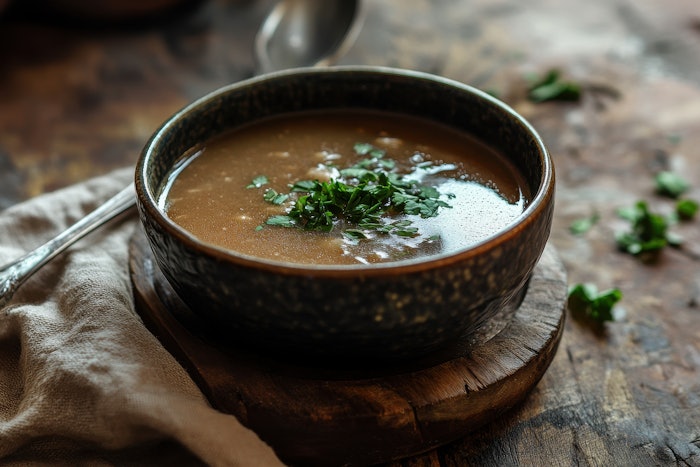
In a recent study, researchers from the department of food science of human nutrition and the K-Food Research Center at Jeonbuk National University in Korea examined how monosodium glutamate (MSG) and nucleotide-based seasonings influence the kokumi perception in doenjang soup. The findings were published in the October issue of the journal Food Quality and Preference.
Doenjang soup is a traditional Korean dish made from a fermented soybean paste. The soup’s flavor comes from the fermentation process with microbial cultures, which produce both umami and kokumi compounds.
The researchers tested various seasonings of the soup on a panel of 113 untrained consumers. The samp;es included a control group, 1% MSG, 1% disodium 5′-inosinate, 1% disodium 5′-guanylate and 1% disodium 5′-ribonucleotide.
According to the results of the study, MSG boosted both umami and kokumi tastes, but the nucleotide-based seasonings mainly increased umami alone. The researchers believe that these results demonstrate that the two types of flavor enhancers work differently, even within the same food system.
“Our results show that umami is a major sensory driver of kokumi perception – shaping how consumers experience depth, richness and lingering flavor in doenjang soup,” said Professor Mina K. Kim, director of the K-Food Research Center. “These insights offer a clear-evidence based direction for formulating more impactful seasoning systems and advancing premium doenjang-based product development.”
Further, the researchers believe that this methodology can be applied to other kokumi-rich foods, including aged cheeses, long-simmered broths and certain seafood dishes.
“Our research can help develop fermented foods that retain the complex flavors of traditional doenjang while meeting modern consumer expectations,” Kim concluded. “By showing how umami and kokumi interact in consumer evaluations, our findings support flavor-standardization efforts and the creation of healthier, more satisfying fermented products. As Kokumi research progresses, we expect the industry to adapt to more precise, evidence-based approaches to enhancing flavor depth and persistence.”