Log In/Register
Facebook icon
Instagram icon
LinkedIn icon
Twitter X icon
Flavor
Fragrance
News
Events
Leaders
Multimedia
Home
Search
Search Perfumer & Flavorist
Article
Company
Document
Event
News
Podcast
Video
Webcast
Flavor
Fragrance
Multimedia
Enter search phrase
Search
Ingredients
Flavor Bites: Nerol
Learn about the diverse range of applications for nerol.
Flavor
Flavor Bites: Nerol Oxide
This heat-stable ingredient is suitable for a wide range of mango and berry applications, especially in confectionery.
Ingredients
Geraniol
Geraniol is one of the most organoleptically complicated aroma chemicals found on the market today and shows its complex nature by tbe number of geraniol grades offered. The product we refer to as “geraniol” is in reality a mixture of two cis-trans isomers properly named geraniol (trans) and nerol (cis).
Beverage
New Techniques: the Future of Citrus
Developments in oil processing for citrus flavors and fragrances. Citrus oils are some of the most commonly used flavor and fragrance ingredients. Containing characteristic properties, citrus oils impart fresh, zesty notes to many types of foods, beverages, household cleaning products, toiletries and fragrances.
Fine Fragrance
Tetrahydrofuran and Tetrahydropyran Derivatives as Odor Substances
In summary, over the past few years many terpenoid THF and THP derivatives have been both synthesized and characterized in nature. Some of them have been shown to demonstrate unique sensory properties, and together with their stability, they have attracted the attention of even the most fastidious of perfumers
Ingredients
Fragrances Through Hydrochlorination of Terpenes
Among the reactions that have enriched terpene chemlstry, perhaps the simplest and one of the outstanding is hydrochlorination. This reaction has been used for structural elucidation, for derivatization to identify and/or purify terpenes and for synthesizing perfumery chemicals. How the application of hydrochlorination on terpenes has unearthed the treasure caves of fragrances is a vibrant chapter worthy of portrayal.
Ingredients
Detection of new trace constituents in the essential oils of Cymbopogon flexuosus
The essential oil of lemongrass is derived chiefly from two important species of Cymbopogon, C. flexuosus, which has been the subject of numerous investigations, and C. citratus, C. flexuosus (Stend.) Wats (sym. Andropogon nardus var. flexuosus Hack), is native to India. Its two strains, SD-68 and OD-19, which have been cultivated at our Kukrail Research Farm, Lucknow, were examined by gas chromatography and the presence of new trace constituents was established for the first time.
Fragrance
Progress in Essential Oils: Basil Oil, Part 2
The present article is part two in a series of two that provides the findings of various researchers on the chemical constituents in basil oil. Part 1 appeared in the May 2014 edition of Perfumer & Flavorist.
Ingredients
A New Method of Separation of Citral from Lemongrass Oil
Although many methods are known for the separation of citral from lemongrass (Cymbopogen flexuosus) oil, like fractional distillation, adduct formation and regeneration, the purity and the yield of citral as separated are not satisfactory. A new method for separation of citral in pure form and in near quantitative yield uses the column chromatographic technique. This method may also be adapted for large scale separation of citral and hence can be of commercial importance.
Trends
Flavorcon Highlights: Unusual Flavor Ingredients, Biotech and More
The debut of P&F ’s two-day flavor conference in New Jersey engaged all of the senses.
Beverage
Flavor Bites: Geraniol
The rose character of geraniol is very bright and fragrant but it also possesses considerable depth, which is especially helpful in flavors.
Trends
Progress in Essential Oils: Spanish Sage Oil
Sage has been used as a spice and medicine throughout history with its use, growing in a variety of flavor and fragrance applications. This month, we take a closer look at the chemical constituents of pure and hybrid Spanish sage oils.
Regulatory & Research
F&F Literature Review: Natural Progression in Extraction, Production and Research
A brief look at the literature gives some indication of health and wellness drivers, including natural extraction, production and modification processes; authentication techniques; and even biometric efficacy research.
Ingredients
Progress in Essential Oils: Ylang Ylang and Cananga oil
This month's column discusses the chemical compositions of ylang ylang and cananga oil.
Ingredients
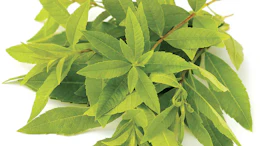
Progress in Essential Oils: Lemon Verbena Oil
This month's column discusses the chemical composition of lemon verbena oil.
Ingredients
Progress in Essential Oils: Grapefruit Oil
This month's issues discusses the chemical composition of grapefruit oil.
Ingredients
Flavor Bites: Citral in Citrus, Fruit and Other Flavors
Learn about the diverse range of flavor applications for citral.
Ingredients
Progress in Essential Oils: Myrica Gale
Adored by beavers, once found in beers of north western Germany during the Middle Ages and used as an effective insect repellant or a perfumery ingredient, myrica gale oil's constituents can shed new light to formulators on other ways it can be used in F&F.
Next Page