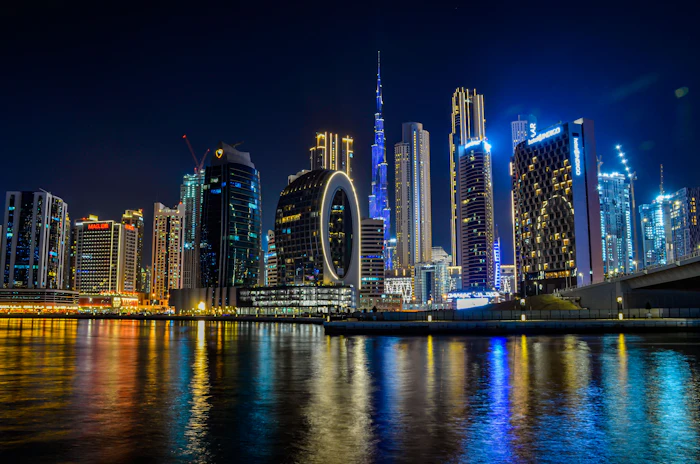
As the GCC shifts from a market global beauty brands sell into to a region increasingly shaping what gets developed, launched and scaled, Beautyworld Dubai 2026 (October 6-8, 2026 at the Dubai World Trade Centre) is set to spotlight a changing beauty landscape.
The numbers are stark: UAE perfume exports have increased nearly seven-fold in a decade, putting the country among the world’s top 10 perfume exporters; U.S. visitors to Beautyworld Dubai rose 60% year over year in 2025, while French visitors increased 70%; Saudi Arabia accounts for roughly 40% of GCC beauty spending, with a $2.9 billion fragrance market in 2025; and GCC male grooming reached $4.5 billion in 2024, projected to reach $7.8 billion by 2033.
 "The hard part of creator marketing here was never cost," says Ravi Ramchandani, event director of Beautyworld Dubai, Messe Frankfurt Middle East. "It was verification. You are choosing partners in a market you do not know, on the strength of follower counts you cannot audit. Licensing fixes that."BeautyWorld Dubai, Messe Frankfurt
In this Q&A, Ravi Ramchandani, event director of Beautyworld Dubai, Messe Frankfurt Middle East, discusses the forces reshaping the region, from the global rise of Gulf-born fragrance brands and the growing influence of Arabian perfumery to ingredient-savvy Gen Z consumers, science-backed wellness, localized product development and the push to build more resilient regional supply chains.
For global beauty companies, the message is clear: the GCC is becoming an innovation and influence hub in its own right.
What do you expect will be the biggest story coming out of Beautyworld Dubai 2026? With the GCC becoming an increasingly important growth market for global beauty, what developments or shifts do you think the international industry should be watching most closely?
Ramchandani: The biggest story is direction. When we published our first Middle East Market Report with BeautyMatter in 2024, international brands asked me whether the GCC was worth the complexity, and whether Gulf fragrance houses could travel. That report named Amouage as a house setting its sights on global expansion. Two years on, the GCC in Focus report for 2026 answers both questions. Amouage recorded $360 million in the first half of 2026, up 74%, with U.S. sales up 92%. The question now is whether the industry can keep pace with a region that is entering its markets.
Made in Dubai perfume stopped being a commodity and became a brand. A decade ago the fragrance manufacturers here ran on volume. Big runs, low prices, shipped mainly into Africa and other markets where price was the whole proposition, and the distributor carried the marketing on top of the margin. The same companies are still here. The brand does its own marketing now, through creators, and Gen Z buys more perfume than any generation before it, most of it online without ever smelling it first.
More fragrances launch every year than at any point in my time in this industry. Nobody buys Khamrah by Lattafa or Club de Nuit by Armaf on price. They buy it because they know the name. That is brand recall, and this region did not have it before. The UAE is now among the world's top 10 perfume exporters, with exports up nearly seven fold in a decade on UN trade data, and Lattafa was the top selling fragrance brand on TikTok Shop in the U.S. from January to May this year.
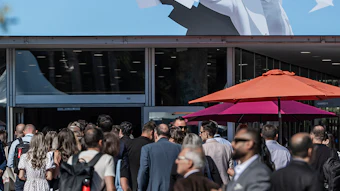
We see it in who walks through our doors. For 12 years our top 10 visitor countries did not move. In 2024 the United States and the United Kingdom entered the top 10 for the first time since 2012. In 2025 both held their place and the U.S. rose to sixth. Ten countries visited for the first time last year, six of them in Latin America. U.S. visitors were up 60%in a year, France 70%, Spain 46%. Those buyers did not start flying to Dubai to sell perfume. They started flying here to buy it.
In 2024 the question was how to enter the GCC. In 2026 the better question is how to respond when the GCC comes to you. The report's own summary puts it this way: the Middle East has moved from a market brands sell into to one the global industry is built around. Dubai is not a market anymore. It is a node. The next Huda Beauty is being built in Riyadh and Dubai right now, and it will be on your shelves before most of your competitors have a regional team.
How is the role of Dubai changing within the global beauty supply chain? What makes Beautyworld Dubai particularly important for companies looking to enter or expand across the Middle East, and how are regional brands increasingly influencing the global market?
Ramchandani: Dubai used to be a gateway. Product landed at Jebel Ali and went out to the region. It is now a headquarters. Huda Beauty and Kayali were built here. AÏZA was built here and took Peak XV's first consumer seed investment in the region. The big Gulf fragrance houses run global brands from here. The compound houses have moved creation here, not just sales. When I say Dubai is a node, that is what I mean: the place where a brand is designed, funded, filled and run before it goes anywhere.
Watch what Ulta did when it arrived. It opened Mall of the Emirates in January with a week of founder events built around regional entrepreneurs, Asteri, Bex Beauty, Vimi Joshi, Bassam Fattouh. Rosemin Beauty, a Dubai brand built on shade matching for Middle Eastern skin, signed exclusively with Ulta Middle East and became one of its top selling brands in under six months. A U.S. retailer landed in 2026 and built its shelf around brands born here.
That is why the show works as an entry point. The people who decide a brand's Middle East business, and increasingly its U.S. and European business, are in one building for three days. Our 2025 buyers from the Americas came with an average annual purchasing budget of $704,000, distributors $664,000 and Europe $538,000. Those are not regional buyers.
And the influence now runs outward. Brands born here travel, and they are worn everywhere in the world. Concentrated formulas, layering, gourmand oud, accessible pricing at high perceived quality. Global houses are adapting those ideas for their own markets.
What trends are you expecting to see move from emerging to mainstream at this year's show? Are there particular developments in fragrance, skin care, beauty tech, ingredients, wellness or personalization that you believe will define the 2026 edition?
Ramchandani: Proof. That is the trend, and it is the clearest change between our 2024 report and this year's. In 2024 we said Gen Z was looking beyond pretty packaging. Two years later clean is the floor, not the ceiling. This year's report puts it plainly: wellness has overtaken clean, and the next wave will be defined by what is proven, not by what is left out.
This region got there first. The Global Wellness Institute ranks the UAE and Saudi first and second in the world for wellness market growth over five years. In June, Dubai wrote longevity into law with the Dubai Longevity Authority. Life Pharmacy runs more than 600 outlets in the UAE and its newest concepts lean hard into supplements and beauty from within. For a brand entering the GCC, wellness is not a trend to market against. It is shelf space at a density that barely exists elsewhere, backed by pharmacists who sell well-being, not just medicine. And when your customer is already tracking their biomarkers, they can tell whether a product works.
That consumer cannot be sold a creatine gummy as longevity. When NOW Foods lab tested twelve creatine gummy brands, half failed their label claim and some contained almost no creatine at all, because the water used to make a gummy breaks the ingredient down. The clinical dose is 3-5 g a day, and the collagen studies that show skin results use several grams a day, not a fraction of one. A supplement in candy form is not wellness or longevity. It is a delivery format with a health claim on the box, and this consumer knows the difference.
So, first for your readers: in 2027 we launch a dedicated longevity and wellness section at Beautyworld Dubai. Not a supplements aisle. The bar is science: clinical data, published studies, measurable outcomes. The brands that take longer to launch because they are getting the efficacy right are the ones that will still be here in five years.
The same rule runs through skin care and hair. Skin care is 12-14% of the regional market against 30% in the U.S., and that white space will not be won by another cute jar, because 91% of Saudi Gen Z call themselves ingredient informed. Hair is moving the same way, on scalp science and clinical testing. And men are the majority customer here, not a niche. GCC male grooming hit $4.5 billion in 2024, heading to $7.8 billion by 2033, and men's fragrance alone is 47% of UAE fragrance spend.
The other thing that has gone mainstream is the story. Walk any hall at the show and the ingredients are good, the packaging is good, the certifications are in order. That is now the entry ticket. What separates the brand that gets picked up from the one that gets passed is whether it can tell you why it exists. Moonglaze, the first Saudi born brand at Selfridges and now at Sephora Middle East, built a house around a makeup artist who worked on real faces in real heat. Rosemin built one around the shades that global brands never got right for this region. Two years ago that was a forecast. Now it is the shelf.
There are too many products on the shelf. Sustainability is expected, not rewarded. A beautiful bottle no longer gets you picked up. A story does. Proof gets you bought twice.
Fragrance continues to be a major point of differentiation for Middle Eastern beauty. How is Arabian perfumery influencing global fragrance innovation, and what can attendees expect to discover through the Next in Fragrance Conference and other fragrance focused experiences?
Ramchandani: Arabian perfumery has changed the global brief. High concentration and long wear are now the expectation. Oud, amber and gourmand have moved from niche to mainstream. This summer, Dior put oud at the heart of Sauvage Extrait, the most concentrated version yet of the world's best selling men's fragrance. When the biggest name in the category adopts the Gulf's two signatures in one launch, nobody needs to make the case anymore.
Layering sells. Lattafa did $63 million on TikTok Shop in the U.S. in 2025 and, by one of the report's distributor sources, is now the number one selling fragrance on Amazon US. Kayali, the fragrance venture Huda Beauty launched in Dubai on the layering ritual, was spun out with General Atlantic last year and is now the top trending fragrance brand at Sephora US. As one of the report's contributors puts it, that is Gulf taste being exported, whether the industry says it out loud or not.
The assumption that Gulf fragrance is high volume but loose on standards is wrong. Several of the best selling Gulf mass fragrances carry SkinSafe certification, and Khamrah rates 91% free of the most common allergens. The consumer who found these brands on TikTok reads the ingredient list.
At the show, Next in Fragrance is where the market intelligence sits. Farah K. Ahmed, president and CEO of the Fragrance Creators Association, opens the first day with the global fragrance power map, and Aurélien Guichard, co founder of Matière Première, joins us for a fireside chat the same day. The program runs from how Gulf brands launch in the U.S., Europe and China to neo gourmand and the multicultural turn in global perfumery, with IFRA's president and the CEO of Ajmal on responsible fragrance and Harrods' head of beauty on prestige retail. Natural Notes returns for its second edition with Resperfuma, bringing seven producers of natural ingredients from Bulgaria to Sri Lanka to the floor at source. Buyers, perfumers and brand owners meet the people who grow and distill the raw materials in one place, and smell what is coming before it reaches the shelf.
Beautyworld Dubai brings together everyone from ingredient suppliers and packaging companies to finished brands, technology providers and startups. How do you see that increasingly interconnected beauty ecosystem shaping the kinds of partnerships and innovations that emerge from the show?
Ramchandani: The best example is happening right now. Amouage has partnered with IFF and its naturals arm LMR to create the world's first Omani rock rose ingredient for high perfumery, grown on the terraces of Jabal Akhdar. It follows their frankincense project at Wadi Dawkah with dsm-firmenich, where the oil was made available to other fine fragrance houses. Around 5,000 trees there are now geotagged, the first smart forest in the GCC.
A regional brand has become a raw material producer. A global compound house is building a supply chain on Gulf soil. Ten years ago the chain ran one way: naturals from Grasse and India, compounds from Europe, filling in Dubai. Now it runs both ways.
That is the ecosystem this show is built for. Natural ingredient producers sit in Natural Notes. Close to 100 compound houses sit in the same hall. Brands, packaging and contract manufacturers sit beside them. A founder can meet a grower, a perfumer and a filler in one afternoon. The brands winning on TikTok today spent a decade at Beautyworld Dubai building supply chains and distributor partnerships. TikTok sells the volume. The trade show work built the machine behind it.
Given that Saudi Arabia represents scale while the UAE operates as a capital and talent hub, how should global beauty groups restructure their organizational footprint away from legacy fly in managers from Dubai to true in country teams in Riyadh?
Ramchandani: Saudi is where the international beauty industry is now doing what it did in Dubai a decade ago: working out how to get in. The difference is scale, and the brands getting it right have stopped treating Saudi as a market they sell into and started treating it as a market they build inside. That means a Saudi based team in Riyadh, not a regional manager who flies in from Dubai once a quarter and calls it coverage. When a brand is flat in Saudi while growing elsewhere in the region, the cause is almost always organizational, not market driven.
The runway rewards it. Saudi is roughly 40% of GCC beauty spend, per capita beauty spending at $164.90, ahead of most Western European markets, and a fragrance market of $2.9 billion in 2025. Nice One, Saudi's leading online beauty retailer, listed in Riyadh last year at $320 million, and L'Oréal said it would double its Saudi workforce by the end of 2026.
Dubai keeps its role as the capital, talent and regional decision hub. The two are complementary but not interchangeable. The UAE rewards speed and visibility. Saudi rewards localization, education and consistency. The mistake is running Saudi as a satellite of the Dubai office.
With Saudi Arabia's Mawthooq and the UAE's expanded 2026 media laws enforcing strict liability, VAT thresholds and SASO product certification compliance, how will beauty marketers adapt creator strategies as the active commercial influencer pool contracts?
Ramchandani: The instinct is to read regulation as friction. I read it the other way, and the report lands in the same place: the GCC is ahead of most global markets in treating influencer marketing as a regulated commercial sector.
The hard part of creator marketing here was never cost. It was verification. You are choosing partners in a market you do not know, on the strength of follower counts you cannot audit. Licensing fixes that. A permitted creator has registered, met a content standard, and in Saudi is licensed as a commercial operator. The regulators have done the due diligence an international brand could never do for itself.
Yes, the pool contracted. The report cites Kolsquare's finding that Saudi's active commercial influencer base fell around 35% after Mawthooq. Yet Saudi still accounts for 40% of GCC influencer spend. The money did not leave. It concentrated on people treating this as a business. The licensed pool is smaller, more professional and carries lower compliance risk, and brands who treat compliance as infrastructure will activate the channel more efficiently.
Two practical shifts follow. Product registration moves onto the campaign critical path, because a compliant post about an unregistered SKU is still a liability. And the distributor holding the registered SKU becomes the natural hub for activation. Mandatory disclosure also protects the consumer, and in a market this discerning, trust is what makes a creator worth paying.
With more than 50% of the GCC population under 30 and 91% of Saudi Gen Z identifying as ingredient informed, how are brands adjusting communication from country of origin appeal, such as K beauty, to specific active ingredient rationale?
Ramchandani: K-beauty did something in this region that no marketing budget could. It taught the consumer to read the label. The report calls it the most significant structural change underway: GCC consumers are no longer asking for Korean skin care. They are asking for heartleaf, centella, rice ferment and niacinamide by name, and for the past year or more, PDRN. That ingredient started as an Italian wound healing drug in the 1980s. Korean brands put it in a serum, and now a consumer in Riyadh asks for it by its initials. Consumers are attached to the formulation, not the flag. The origin story opened the door. The ingredient keeps the customer.
The wave is not subsiding. The UAE ranked eighth in the world among Korean cosmetics export destinations last year, up from twelfth in 2023, with exports up 67% to $286.5 million. Sephora and CJ Olive Young open a dedicated zone in the GCC in 2027, and Korea Town plans 50 stores across the region by then. The consumer got there before the retail did.
That changes what every brand has to say, Korean or not. Communication built on where you come from is a one time introduction. Communication built on the active, the concentration, what it does and the proof survives the second purchase. The next layer is regional rationale: formulas built for Fitzpatrick IV to VI, heat induced hyperpigmentation, dust, air conditioned interiors, covered hair and scalp conditions. The brands winning here explain why the formula was built for this climate from the first brief, not translated into it afterwards. This consumer will embrace the best of both worlds, as long as the results live up to the hype.
How are regional beauty supply chains re engineering inventory buffers, nearshoring packaging and adapting to input inflation caused by regional trade route disruptions and volatile crude prices?
Ramchandani: The report does not dodge this. The regional conflict that broke out in February, the closure of the Strait of Hormuz and Brent above $100 tightened supply chains and raised production costs. The World Bank cut GCC growth to 1.3% for 2026 from 4.4%. Transport, ingredient and packaging costs rose at the same time. But the response is what matters. Businesses are talking logistics, freight and input inflation, not about pulling back or cancelling GCC expansion. 2026 is a stress test of the region's diversification model, and if non oil growth holds, it validates the long term case for beauty here.
The fundamentals are holding. Ulta has opened three Dubai stores since January, with Saudi next. Amouage's chief executive called the conflict a stress test and reported Middle East sales up 46% through it. Dubai Duty Free closed 2025 with record revenue of $2.36 billion, fragrance still its largest category, and Al Maktoum International is being built for 260 million passengers with a retail footprint twice the size of the current airport. While Western beauty retail debates which stores to close, Dubai is announcing the next mall after the world's biggest mall.
The manufacturing base is here, and you can see it in one hall at Beautyworld Dubai. Close to 100 fragrance and compound houses exhibit in the same room across 7,500 square meters. Givaudan, dsm-firmenich, Symrise, Mane, Takasago, CPL Aromas, alongside the regional manufacturers who turn their compounds into finished product. That does not happen in one hall at any other trade show. CPL has run compound manufacturing at Jebel Ali since 2015. IFF opened its Scent Dubai Creative Center last year as a local extension of its Grasse atelier. dsm-firmenich inaugurated a fine fragrance center in Riyadh this year. The finishing, filling, packaging and certification layer is regional. What still comes from outside is the compound itself, though more of the creative work behind it now happens here.
So this is where the region's supply chain is being rebuilt, and I will not pretend the manufacturers here had an easy year. A Gulf fragrance house pulls inputs from two directions: the compound from Europe, and the glass, caps and packaging mostly from China. At the volumes they produce, none of that moves by air. It needs a boat. Then the bottles are filled and the problem repeats in reverse. The demand is through the roof, and that is the point.
When a product goes viral in the U.S., South America and Europe at the same time, the question is no longer whether you can sell it. It is how you ship it. Luxury houses felt this least. Their volumes are small enough to fly, which is part of why Amouage could grow through the year. The pressure fell on the high volume houses, the ones whose success made the UAE a top ten exporter in the first place. For them, air freight bought the most viral SKUs a few weeks. It is a short term answer, not a model. When Hormuz closed, both ends of that chain were exposed at once, and the cost of everything from alcohol to cardboard went up in the same quarter.
What happened next is the part worth writing about. Within weeks, cargo was coming in through the Red Sea and overland across Saudi, through Fujairah and Khor Fakkan on the UAE's east coast outside the strait, and through Sohar in Oman. Slower, more expensive, and with delays that tested everyone's patience, but moving. This is an industry that has been finding its way around obstacles for decades, and it found one again.
It has also forced decisions that were overdue. Hold more compound and packaging in region than felt comfortable before. Qualify a second supplier for ethanol and glass closer to the fill line. Treat regional warehousing as insurance rather than cost. The houses that come out of 2026 stronger are the ones that took the shock as a design brief for the next decade, not as a reason to wait it out.