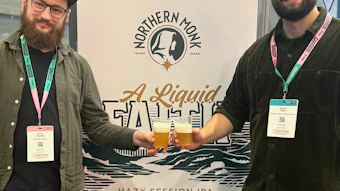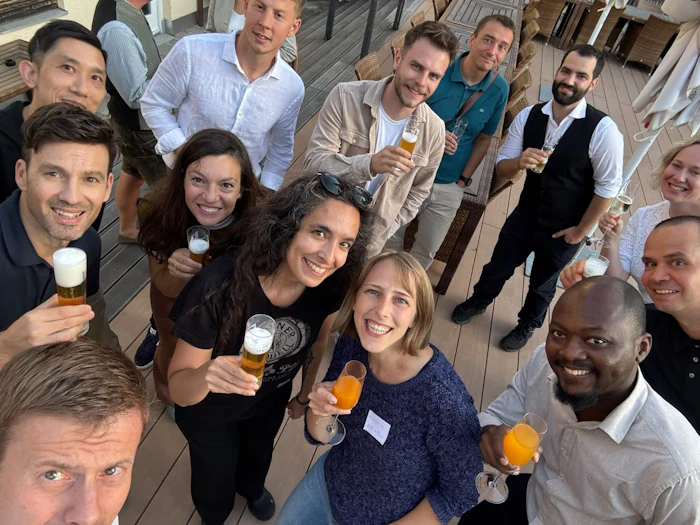
The British Society of Flavourists has built a reputation for creating highly focused technical events that bridge science, sensory analysis and commercial innovation. Following successful editions dedicated to coffee, chocolate and whisky, BSFocus on Beer brought the spotlight to one of the world's most complex and culturally significant beverages. Held in Freising, Germany, just ahead of Oktoberfest, the event provided a unique opportunity for flavorists, sensory scientists and ingredient specialists to explore the fascinating world of beer flavor, from raw materials through to the glass.
The three-day event was attended by 60 delegates from flavor houses, the brewing industry and academia, and was supported by BarthHaas, EPC Natural Products, Advanced Biotech and VCF-Online.
 Whether contributing bitterness, citrus notes, tropical fruit characters, floral elegance or resinous complexity, hops are critical to defining many contemporary beer styles. The symposium explored both the chemistry and the practical realities of hop utilization in brewing.BSF
For flavorists, beer represents one of the most intriguing flavor systems in food and beverage. Unlike many products, where flavor is primarily added or adjusted at the end of production, beer flavor is built layer by layer through the interaction of agricultural ingredients, fermentation biology, process engineering and maturation. Malt, hops, yeast and water each contribute their own sensory dimensions, but it is the connection among them that creates the extraordinary diversity of modern beer styles. This central theme ran throughout BSFocus on Beer: understanding the complexity of flavor generation and identifying opportunities for innovation and networking.
A Program Built Around Beer Flavor
One of the strengths of BSF events is their ability to bring together speakers from different disciplines and cultural backgrounds while maintaining a clear focus on flavor. Rather than treating beer merely as a beverage category, the program explored it as a living sensory system. Presentations covered beer styles, history, brewing raw materials, hop chemistry, fermentation, aroma generation and sensory perception, with a focus on the low- and no-alcohol trend and the growing presence of AI.
The talks collectively demonstrated that flavor creation in beer sits at the crossroads of agriculture, microbiology, chemistry and sensory science. For flavorists working outside brewing, the event highlighted how naturally occurring flavor-generation mechanisms can inspire flavor creation. For brewers, the presentations reinforced the value of understanding flavor at a molecular level while always keeping consumer perception at the center of decision-making.
The Speakers: Bringing Expertise Across the Entire Brewing Value Chain
A key feature of BSFocus on Beer was the caliber of its speakers. Experts from brewing, academia, ingredient suppliers and flavor science shared perspectives that ranged from fundamental science to practical application.
 Scott Lafontaine, assistant professor at the University of Arkansas.BSF
The speakers were:
- René Rehorska, senior lecturer at FH Joanneum University of Applied Sciences Graz
- Klaas Reglitz, senior research scientist in the Aroma Chemistry group, led by Martin Steinhaus, at the Leibniz Institute for Food Systems Biology at the Technical University of Munich in Freising, Germany
- Tony Moore, an independent flavor chemist and consultant specializing in analytical and applied flavor research for the beverage industry
- Martin Steinhaus, head of the Aroma Chemistry group at the Leibniz Institute for Food Systems Biology at the Technical University of Munich in Freising, Germany
- Pedro Oliveira, commercial director at EPC Natural Products
- Kenneth Ho, beer educator and consultant
- Dan Saladino, writer, food journalist and radio presenter
- Scott Lafontaine, assistant professor at the University of Arkansas
- Leandro Fedele, global sensory manager at FlavorActiV
- Ali Özseven, entrepreneur and food enthusiast
- Marco Cardin, postdoctoral researcher at the University of Copenhagen
- Katarzyna Wolinska-Kennard, R&D scientist and sensory manager at BarthHaas
- Damien Steyer, CEO at Twistaroma
- William Van Dongen, editor of Scents & Flavors and VCF-Online
- Trevor Groome, flavor technology consultant
- Spencer Hyman, founder of Cocoa Runners
Several presentations examined the relationship between raw materials and final flavor. These sessions highlighted how small variations in agricultural production can lead to significant sensory differences in finished beers. Such discussions resonated strongly with flavorists, many of whom routinely work with natural ingredients, where variability is a constant consideration.
Sensory science formed another major pillar of the program. Speakers discussed how analytical data and sensory perception must work together to provide meaningful insights. While instruments can identify and quantify flavor compounds, it is ultimately the consumer who determines product success. Several talks reinforced the importance of sensory methodologies and highlighted how flavor perception depends on complex interactions rather than individual molecules alone.
A highlight of the event was the visit to the iconic Bavarian State Brewery Weihenstephan in Freising, sponsored by EPC Natural Products. Widely recognized as the world's oldest continuously operating brewery, its brewing tradition dates back to 1040. During the tour, participants enjoyed a fascinating journey through nearly a thousand years of brewing history, witnessing how centuries-old traditions integrate seamlessly with state-of-the-art brewing technology. From the brewhouse and fermentation cellars to modern packaging facilities, the visit offered valuable insights into the craftsmanship, innovation and quality standards that have made Weihenstephan a global benchmark for brewing excellence.
If there was one ingredient that captured the imagination of delegates, it was hops.
Modern beer culture has elevated hops from a supporting ingredient to a central driver of flavor identity. Whether contributing bitterness, citrus notes, tropical fruit characters, floral elegance or resinous complexity, hops are critical to defining many contemporary beer styles. The symposium explored both the chemistry and the practical realities of hop utilization in brewing.
Presentations demonstrated how hop-variety selection influences flavor development throughout the brewing process. Discussions extended beyond traditional bitterness measurements and examined the contribution of volatile aroma compounds, biotransformation pathways and dry-hopping techniques. These topics are particularly relevant as brewers continue to push the boundaries of hop expression in a highly competitive marketplace.
What emerged clearly from the discussions was that hops represent far more than a source of bitterness. They are increasingly viewed as aroma ingredients capable of creating highly differentiated consumer experiences. This perspective naturally resonated with the flavor industry, where understanding the sensory attributes of natural ingredients is a fundamental skill.
The Hop Farm Visit: From Field to Flavor
For many attendees, the highlight of the event was undoubtedly the excursion to Bettis Hopfenstadel in Hallertau.
 The hop farm visit provided an opportunity to connect directly with the agricultural origins of beer flavor. BSF
Technical conferences often discuss raw materials in abstract terms. The hop farm visit provided something very different: an opportunity to connect directly with the agricultural origins of beer flavor. Delegates were able to see first-hand how hops are cultivated, harvested and processed before eventually finding their way into brewing applications.
Walking through the hop fields offered a vivid reminder that every flavor journey begins on a farm. Discussions that had previously centered on chemistry suddenly became tangible, as participants could see, smell and handle the raw material itself. The experience reinforced the fact that flavor is shaped long before brewing begins.
The timing of the visit was particularly important. Conducted in one of the world's most famous hop-growing regions, the excursion showcased the scale, precision and expertise required to produce high-quality hop crops. Participants gained a deeper appreciation of the many variables that influence flavor, including variety selection, climate, soil conditions and harvest timing.
Perhaps most importantly, the visit highlighted the crucial relationship between growers and brewers. Innovation in brewing often starts with innovation in agriculture. New hop varieties can create entirely new flavor possibilities, driving changes in beer styles and consumer expectations. For flavorists, this serves as a powerful reminder that innovation frequently begins at the source.
 Fresh hops provide an aroma experience that cannot be fully replicated in a conference room. Participants could directly observe the process of harvesting, sorting and drying the cones.BSF
The sensory dimension of the hop-farm trip was equally significant. Fresh hops provide an aroma experience that cannot be fully replicated in a conference room. Participants could directly observe the process of harvesting, sorting and drying the cones.
Beyond its educational value, the visit created opportunities for informal networking and conversation, which continued during the chocolate-tasting session led by Spencer Hyman.
Delegates were also invited to join the Beer Flavour Challenge, in which the task was to create a beer flavor using no more than 20 chemicals and without using flavoring preparations. Some of the chemicals were provided by Advanced Biotech, while VCF-Online provided the beer database, a comprehensive list of substances found in specific beer styles.
Fourteen entries were evaluated in a beer-simulating base made with malt extract, hops and ethanol by four judges: Tony Moore, Kenneth Ho, Nathan Rowland and Vanessa Robert, winner of the 2025 Whisky Challenge. The judges unanimously chose Niklas Pontesegger's creation as the most authentic beer flavor. Its fruity notes perfectly balanced the smokiness, creating a unique Weissbier profile. The winner received a bottle of Barrel-Aged Imperial Stout brewed by the Advanced Biotech team in New Jersey.
For attendees, BSFocus on Beer was far more than a conference. It was a celebration of brewing heritage, flavor science and the people who continue to push the boundaries of what beer can be. By bringing together outstanding speakers, thought-provoking topics and an unforgettable hop farm experience, the British Society of Flavourists delivered an event that successfully connected the past, present and future of beer flavor innovation.