Read Part 1 of this series, "Mapping the Global Senses: Ancient Rituals and Lab Innovations Shaping the Future of Flavor." Part 3 of this series will appear in the October edition of Perfumer & Flavorist+.
There is a contradiction at the heart of what we eat now. We have never had more access to the world's flavors—every spice, every technique, every fermentation protocol available on a shelf or a screen—and yet most of us, if we're being honest, still reach for the same things we reached for 10 years ago. The future of flavor is being built in kitchens and labs and cooperatives scattered across six continents, and most of it will reach you disguised as something familiar.
What follows is a road map of places where something is genuinely shifting, where the chemistry and the culture and the money are all moving in the same direction at once. Some of it is ancient. Some of it is happening this year. All of it matters if you work in flavor, fragrance, or the increasingly blurred space between them.
Vienna: the Pleasure of Bitter Things
There is a reason Austrians have been drinking bitter things after lunch for generations, and it has nothing to do with masochism. Gentian root, wormwood, angelica—these are the notes in Alpine digestive culture. Balanced, calibrated over centuries of practice, and austere in the way that good architecture is austere: almost sugar-free.
Underberg has been selling tiny bottles of concentrated bitters since 1846. The format is spreading. American producers like St. Agrestis and Apologue are making low-ABV and non-alcoholic aperitifs that lean entirely into bitterness, not as a challenge to be endured but as an experience to be savored. They are not trying to mimic alcohol. They are selling a sophisticated bitter experience on its own terms.
 Underberg has been selling tiny bottles of concentrated bitters since 1846. The format is spreading.AS Photo Family
The science supports them. The same research on bitter taste receptors and GLP-1 secretion that's reshaping how we think about yerba mate applies here. Bitter compounds do something measurable in the gut. They affect how full you feel, how your body manages glucose, per emerging researcha. This gives bitters a functional credibility in a wellness-obsessed market.
What's most interesting from a technical standpoint is that flavor houses are no longer focused solely on masking bitterness. They're developing enhancement systems—ways to make bitterness more present, more refined, to strip out the harsh metallic notes while preserving the clean, almost medicinal finish that consumers are increasingly reading as premium.
Reykjavik: Learning to Taste Mineral
Skyr went from nonexistent in the United States to a growing category in roughly a decade. Siggi's, the brand that led the charge, posted 120% growth in 2015 and built its entire identity on a single, counterintuitive proposition: not sweet. They use four times the milk of regular yogurt, carry significantly less sugar than Greek yogurt, and marketed both of those things as features rather than compromises. It worked, which told the industry something important about where at least a segment of the market was heading.
 Skyr went from nonexistent in the United States to a growing category in roughly a decade. Siggi's, the brand that led the charge, posted 120% growth in 2015 and built its entire identity on a single, counterintuitive proposition: not sweet.betzalitn at Adobe Stock
But the broader shift out of the Nordic countries has to do with a flavor note that is genuinely difficult to describe but increasingly easy to recognize once you know what you're tasting: minerality. It's in Icelandic spring water—a clean, almost metallic finish that has nothing to do with impurities and everything to do with the volcanic geology the water passes through. It's in sea salt from Saltverk, harvested from geothermal seawater, tasting sharper and more complex than anything from the Mediterranean. It's in seaweed—Akua makes kelp jerky and kelp pasta that manage to taste oceanic without being fishy, which is harder than it sounds.
 But the broader shift out of the Nordic countries has to do with a flavor note that is genuinely difficult to describe but increasingly easy to recognize once you know what you're tasting: minerality. It's in Icelandic spring water—a clean, almost metallic finish that has nothing to do with impurities and everything to do with the volcanic geology the water passes through.Gabriele Niek at Pexels
Chef Magnus Nilsson's work at Fäviken, before it closed, documented traditional Nordic preservation techniques with an almost obsessive attention to detail: salt-curing, drying, smoking over juniper. Juniper smoke has a piney, resinous quality that is showing up now in craft spirits and some meat alternatives, and the technique is being studied not as nostalgia but as a serious flavor development tool.
The Scandinavian concept of lagom—the idea that there is a "just right" amount of everything—is quietly influencing how product developers think about sensory design. Less aroma. Cleaner finish. Flavors that don't announce themselves but stay with you after you've swallowed.
Bangalore: Flavor as Mood or Medicine
India's functional beverage market is growing fast, and the innovation happening there is less about new ingredients than about a fundamentally different way of thinking about what a flavor is supposed to do. In the West, we've historically separated taste from function—food tastes good, supplements work. In India, that distinction barely exists. Ayurvedic formulations have always been about flavor and effect simultaneously, and modern brands are translating that logic into formats that Western consumers can actually integrate into their daily lives.
 Turmeric, ashwagandha, brahmi, tulsi—none of these are new. What's new is the precision with which they're being positioned. Indian brands are making adaptogenic coffee alternatives that taste nothing like coffee but deliver a similar ritual satisfaction.Amar Preciado at Pexels
Turmeric, ashwagandha, brahmi, tulsi—none of these are new. What's new is the precision with which they're being positioned: This drink is for calm. This one is for focus. This one is for energy at 2:00 p.m. when the afternoon collapse starts. Indian brands like Kapiva and Organic India are making adaptogenic coffee alternatives that taste nothing like coffee but deliver a similar ritual satisfaction, and they're doing it without the jitteriness that sends half the Western coffee-drinking population to their therapist.
From Pandan to Buldak: the Gateway Effect
Southeast Asia is contributing its own thread to this story. Pandan—a tropical leaf that tastes somewhere between vanilla, coconut and fresh-cut grass—crossed over from Thai and Vietnamese bakeries into mainstream Western markets quietly and suddenly. Trader Joe's carried a pandan waffle cookie that sold out before most people knew what pandan was. Thai tea, which used to be a restaurant-only beverage, is now a flavor that shows up in ice cream, cakes and cookies. Its profile—creamy, spiced, intensely black-tea forward—translates across formats in ways that surprised even the manufacturers.
 Pandan—a tropical leaf that tastes somewhere between vanilla, coconut and fresh-cut grass—crossed over from Thai and Vietnamese bakeries into mainstream Western markets quietly and suddenly. Dedi Kurniawan Mendrofa at Pexels
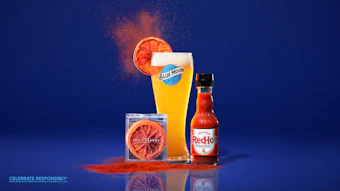
And then there's heat, which is undergoing its own evolution. Samyang's buldak ramen went viral not because it was simply hot but because the heat had structure: sweet first, then savory, then a burn that built over time instead of arriving all at once. The North American hot sauce marketb was valued at approximately $1,171.04 million in 2025 and expected to grow to $1,953.54 million by 2032. The companies pushing it forward are studying how to build heat that moves rather than just sits on your tongue.
 In the U.S. market, Sriracha started as a condiment on tables at Vietnamese pho shops, invisible to most of the mainstream food industry. Then it wasn't.Adriana at Adobe Stock
The gateway effect is worth understanding here, because it explains how flavors that once lived entirely within immigrant communities end up on supermarket shelves. Sriracha is the textbook case. It started as a condiment on tables at Vietnamese pho shops in the United States, invisible to most of the mainstream food industry. Then it wasn't. Huy Fong made over $85 million in revenue by 2013 without spending a single dollar on advertising. Datassential documented a 37% increase in sriracha menu mentions nationwide. Matcha followed a similar path—a 57% jump in menu mentions over a single year, driven by its translation from Japanese tea ceremony into lattes and desserts. Kimchi is moving now: U.S. imports surged 37.4% in 2023, and Cleveland Kitchen launched a kimchi pickle chip in July 2024 that sold through 1,050 stores including Walmart locations.
Each of these ingredients made the same journey. Niche to familiar. Immigrant kitchen to grocery aisle. And each of them got there the same way: by arriving inside a format people already trusted. A sauce on a familiar noodle. A flavor in a drink you already knew how to order. The unfamiliar became legible because it was wrapped in something emotionally safe.
The Comfort Layer: Why Familiar Still Wins
For all the innovation happening at the edges—the fermented cacao pulp, the fonio, the AI-generated cocktails—the center of mass in the food market barely moves. Most people eat on autopilot, between meetings and errands and exhaustion, and they reach for what they already know. This is not a failure of imagination. It is, as industry analysts have started calling it, defensive consumption: buying familiar foods as a form of emotional risk management. A disappointing meal wastes money. It wastes dinner. It wastes the mood you walked into the kitchen with.
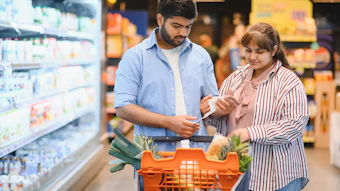
NIQ's 2024 Consumer Outlookc found that manufacturers who innovate are 1.8 times more likely to grow overall sales. But the same data makes clear that purchase behavior stays anchored in familiarity. Shoppers will try something new when it comes wrapped in something they already trust—a known brand, a familiar format, a recognizable base flavor. NIQ's beverage research documented this explicitly: traditional flavors like cola and lemon-lime are making room for dragon fruit, yuzu, and hibiscus, but only when those novel flavors arrive inside established product structures.
 Traditional flavors like cola and lemon-lime are making room for dragon fruit, yuzu and hibiscus, but only when those novel flavors arrive inside established product structures.VKPS at Adobe Stock
The psychology behind this is well-documented and worth taking seriously. Research published in Cognition and Emotion by Reid, Green and colleagues demonstrated that food is among the most powerful elicitors of nostalgiad, and that nostalgic food experiences elevated comfort by strengthening social connectedness.
Separate research published in Social Cognitive and Affective Neuroscience found that nostalgia activates brain structures involved in self-reflection, autobiographical memory, emotion regulation and reward processinge—specifically the medial prefrontal cortex, hippocampus, and ventral striatum. In practical terms: familiar flavors reduce cognitive load. They require less mental energy to process. They activate memory and emotion simultaneously. In an economy designed to exhaust your attention, that matters enormously.
This is why throwback products keep outperforming expectations. Why limited-edition revivals sell out. Why childhood flavors resurface every few years under new packaging. Research on the "Proust effect"—the phenomenon where memories triggered by taste and smell are among the most potent and emotionally charged—has shown that nostalgic food labels actually increase both purchase intention and consumption. The flavors themselves haven't changed. What's changed is how seriously the industry is studying why they work.
The market has effectively split into two parallel tracks, and both are growing. On one side: experimental, narrative-driven, globally influenced products aimed at consumers who actively seek out new experiences. On the other: reformulated classics designed for people who do not want to think about food at all. For them, innovation is invisible. A recipe shifts slightly. Sugar drops by three grams. Fiber goes up. The flavor stays the same. The moment it doesn't, they notice.
FOOTNOTE
a"Effects of Bitter Substances on GI Function, Energy Intake and Glycaemia-Do Preclinical Findings Translate to Outcomes in Humans?" https://pmc.ncbi.nlm.nih.gov/articles/PMC8072924/; "Bitter taste receptors: Key target to understand the effects of polyphenols on glucose and body weight homeostasis. Pathophysiological and pharmacological implications," https://www.sciencedirect.com/science/article/pii/S0006295224001758
bhttps://www.fortunebusinessinsights.com/u-s-hot-sauce-market-107592
dhttps://www.scribd.com/document/1060663703/Reid-et-al-2023-Cognition-and-Emotion