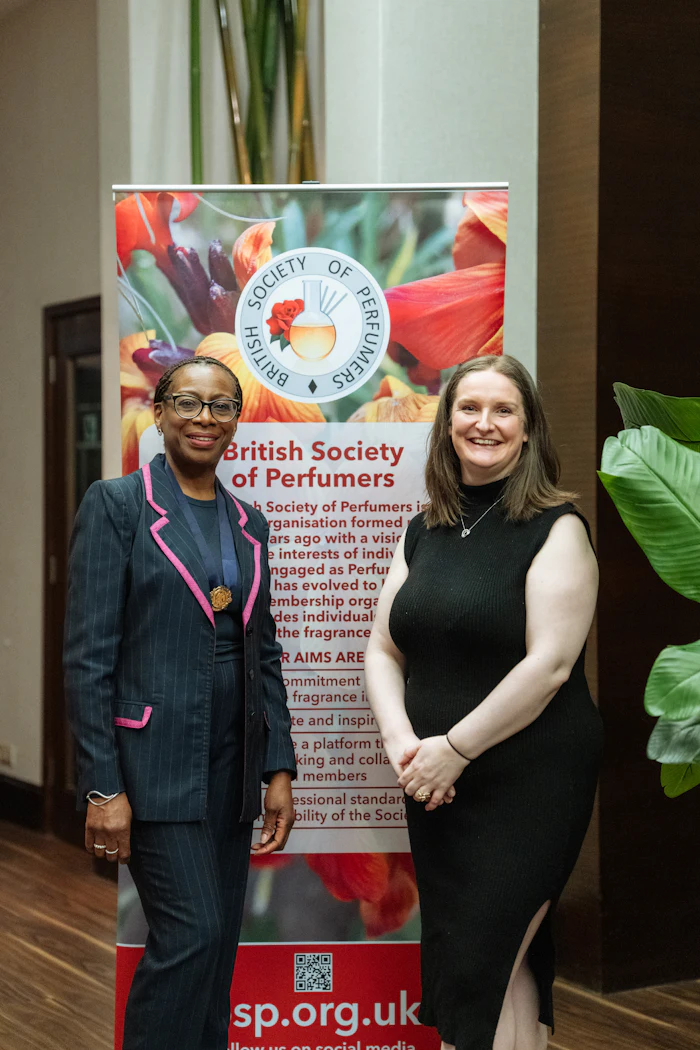
As the British Society of Perfumers (BSP) enters a new chapter, incoming president Hayley Forster and immediate past president Denise McLaverty discuss the society’s evolving role in a changing fragrance industry. From modernizing membership and opening doors for emerging talent to preserving creative instinct in an increasingly data-driven profession, they share their perspectives on where the BSP has been, where it’s headed and what the future holds for British perfumery.
Hayley Forster on Modernizing the BSP and Keeping Perfumery’s Creative Soul
 "Over the next two years, the focus is squarely on modernizing what we offer and making the BSP an active community for every stage of your career," says Forster.BSP
How do you plan to build upon the momentum Denise McLaverty established? Where will your strategic priorities lie over the next two years?
Forster: Having worked closely alongside Denise over the past few years—first on council, then as honorary secretary and vice president—I saw firsthand just how high she set the bar! Stepping into her shoes isn’t about changing what makes the BSP special; it’s about taking all that momentum and bringing the society firmly into the 21st century.
Over the next two years, the focus is squarely on modernizing what we offer and making the BSP an active community for every stage of your career.
First, we’re sorting out how we show up—being more present and more transparent. We’re giving our website, socials, and messaging a proper refresh so anyone landing on our pages instantly gets who we are, what we do, and what we offer.
Second, we’re shaking up the calendar to give people a reason to stay engaged all year round. That means more regular, engaging and relevant events - both in-person meetups where people can properly catch up and network, and online sessions so our overseas members don’t miss out.
Alongside that, we’re setting up an easy way for members to communicate and connect digitally, so people can talk to each other, share ideas, and stay in touch outside of scheduled events.
We want to broaden our membership, bringing in more independent creators and early-career talent alongside our core perfumer base.
Together with Will Andrews as vice president and our brilliant council, the plan is simple: keep the high standards and heritage Denise championed, but make the BSP accessible, modern, and genuinely useful for where the fragrance world is heading today.
How do you intend to leverage your background in education to expand the BSP's reach, demystify the industry, and inspire the next generation of creative noses?
Forster: Fragrance has historically been seen as this mysterious, closed-door world where you only get in if you know the right person or stumble into it by accident. Having spent years guest lecturing on Cosmetic Science courses and taking fragrance education into schools and interactive workshops, I’ve seen how transformative it is when you simply strip away the mystery and make scent approachable.
Leveraging that background with the BSP starts with demystifying the world of perfumery and talking about the industry in plain English. That means using our platforms and outreach to unpack how the industry actually works—from raw materials, evaluation and industry roles—so those aspiring to enter the industry, can see a clear, realistic pathway rather than an impossible secret club.
Instead of waiting for students and young creatives to find us, we also need to go directly to where the talent is. We want the BSP to show up in educational spaces by building closer ties with universities, cosmetic science programs, and STEM initiatives, showing young people early on that perfumery is a viable, exciting career mixing science, art, and business.
Finally, it comes down to mentorship and opening doors, because creative talent doesn’t just come through traditional pipelines anymore. Whether someone is studying chemistry or experimenting as a self-taught independent creator, we want the BSP to be the place where they can find real-world guidance, ask questions, and learn directly from established noses who’ve been in the industry and have the experience. If we make the learning curve less intimidating, we won’t just inspire the next generation—we’ll make sure the future of perfumery is richer, broader, and full of fresh perspectives!
In an era dominated by corporate brief requirements and data-driven formulations, how can perfumers preserve the artistic, emotional "heart" of their creations while meeting commercial demands?
Forster: It’s definitely a tension every perfumer feels today, and having been in the trenches as a fragrance development manager and evaluator, I’ve felt it firsthand.
When you're juggling complex briefs, strict regulatory rules, and endless consumer testing panels, it’s so easy for a fragrance to get designed by committee. It loses its soul along the way and ends up as one of those scents where people just shrug and say, “this smells familiar”—because it smells like everything else on the shelf. There’s an obvious reason for that: it’s safe. Management knows it won't ruffle feathers, consumers find it easy, and everyone knows it'll tick the commercial box.
Having worked for years within global FMCG companies, I know data and consumer insights are brilliant tools. They give you the sandbox to play in, and they ensure a product performs and sells. But data is historical; it tells you what worked yesterday, not what will move people tomorrow. The emotional "heart" of a fragrance comes from human instinct, memory, emotional connections, and gut feel—and nothing can replicate that spark.
Preserving that heart comes down to seeing consumer insights as the starting point rather than the ceiling. The best perfumers use data to understand the problem they’re solving, but then have the courage to inject their own point of view and signature into the bottle. It’s about fighting for that unexpected twist, the hook that intrigues, or the overdosed raw material that testing panels might initially question, but which ultimately gives a fragrance its identity and makes someone fall in love with it.
How have you seen the day-to-day job of the perfumer evolve? Is the modern perfumer required to be more multidisciplinary now than when you first entered the field?
Forster: The job has changed massively, but honestly, we started seeing the early cracks of this back when I entered the industry in 2005.
Back then, as a fragrance development manager, a huge part of my role was effectively being a shield for the perfumer. My job was to handle the project management, wrangle the commercial teams, decipher the briefs, and deal with all the noise so the perfumer had the headspace to sit at the organ and focus purely on creation.
Today, that protective buffer has largely disappeared. The idea of the perfumer tucked away in a quiet lab, just blending and smelling, is pretty much gone. They’ve had to become completely multidisciplinary.
On any given day, a modern perfumer isn't just creating—they’re navigating shifting regulatory rules, dealing with sustainability and green chemistry demands, interpreting consumer data, and often pitching directly to clients as the public face of the brand. You still need that raw, instinctive nose and technical mastery of ingredients, but now you also have to be a project manager, communicator, and problem-solver all rolled into one. It’s a lot more demanding, but it definitely makes the role far more dynamic.
How do you see the U.K. fragrance sector positioning itself within the broader global perfumery landscape over the next decade?
Forster: The U.K. has never been one to play it safe, and over the next decade, that’s going to be our best asset.
We’ve got such a great mix happening right now. We have world-class FMCG research hubs, top cosmetic science programs and amazing research programs, but sitting right next to that is this vibrant indie scene of people who just want to do things differently. We like pushing buttons, we embrace a bit of quirkiness, and we don’t take ourselves too seriously.
People are over generic, safe scents; they want real personality and stories they can actually connect with. I think the U.K. is brilliant at that. We move fast, we’re not scared to experiment, and we know how to make fragrance feel fun and culturally relevant without losing the craft behind it.
Over the next ten years, I think the U.K. will be seen as a top creative disruptor—the place people look to when they want bold ideas, fresh thinking, and fragrance with a bit of grit and soul.
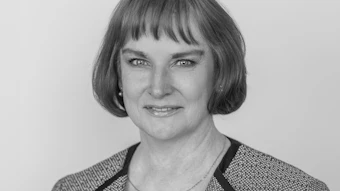
Denise McLaverty on the BSP’s Transformation and the Future of British Perfumery
 "Young perfumers and evaluators need connections and support to gain visibility, exchange ideas and discover different perspectives within the industry," says McLaverty. "The BSP has strong potential to develop this further by continuing to host events that address topics that are relevant to the whole industry and that encourage and facilitate exchanges across generations, companies and disciplines."BSP
Looking back, what do you consider the defining achievement of your presidency, and what foundational work are you most excited to hand over to Hayley Forster?
McLaverty: Looking back, I consider my presidency achieved positive transitional transformation and increased visibility of the Society. The values and ethos of the society (founded in 1963) remain the same but I soon recognized change was necessary for longevity, sustainability and relevance.
Understanding where we stood and where we wanted to go but most importantly understanding what our members wanted from us.
I believe that key achievement highlights include:
- Directed the Society's strategic development, working alongside the BSP Council to strengthen its position as a professional organization representing and supporting perfumers and the wider fragrance community.
- Supported membership growth and engagement initiatives, with a particular focus on creating opportunities for greater participation across career stages.
- Expanded the BSP's industry presence, establishing and strengthening relationships with international fragrance societies, fragrance houses and independent industry professionals.
- Developed collaborative relationships with sector organizations including the SFP, ISPC, ASP and DGP, helping create greater dialogue and connection across the global perfumery community.
- Raised the BSP's visibility at major international industry events, including the World Perfumery Congress, SIMPPAR and the Barcelona Perfumery Congress.
- Reimagined the BSP Spring Symposium, developing a refreshed program, format and location for the Society's May 2026 event.
- Championed early-career professionals, with the launch of the first BSP Fragrance Hub event for professionals under 30 at the Royal Society of Chemistry in 2025. The event was positively received and established the foundation for an ongoing series.
- Strengthened the Society's role in industry education and engagement, supporting programming designed to connect experienced industry professionals with emerging talent.
- Advocated for greater awareness and recognition of the fragrance industry, both within the wider scientific community and among the next generation of professionals.
- Led and supported a stronger volunteer council, bringing together industry professionals who contributed their expertise and time to the development of the society
Securing our foundations, introducing new members to council with fresh ideas and new ways to work together with well well-established experienced council members, has been part of that success.
In my role of immediate past president, I am very excited to continue working closely with president Hayley Forster and vice president Will Andrews. Hayley has a zest and a passion for getting things done. She will continue the momentum and also make her own mark as president. We are already seeing evidence of this through our social media channels and also from our calendar of events planned for the year ahead!
How has the profile of incoming fragrance professionals changed during your time leading the BSP, and what systemic support do young perfumers and evaluators need most today?
McLaverty: In general terms, the profile of incoming fragrance professionals (over the past few years) shows a marked increase in the number of independent perfumers with diverse backgrounds and learning pathways, entering the space. The BSP recognized this some time ago and therefore introduced the ‘Independent Perfumer’ level of membership at that time.
I’m also pleased to observe more female perfumers compared to years ago it was a predominantly a male profession.
One of BSP’s greatest strengths is the lasting professional network it builds through the continued involvement of its members. New members bring perspectives from their companies and different areas of the industry in which they work. The opportunity to connect with experienced perfumers, evaluators, marketing specialists and other industry professionals is particularly valuable.
Young perfumers and evaluators need connections and support to gain visibility, exchange ideas and discover different perspectives within the industry. The BSP has strong potential to develop this further by continuing to host events that address topics that are relevant to the whole industry and that encourage and facilitate exchanges across generations, companies and disciplines.
Today, with AI being interwoven into all our lives, some perfumers feel it’s even more critical to support the next generation of perfumers to know and understand but only to use AI as a tool. AI certainly has its place, but it can only do so much. The ultimate best learning is to keep smelling everyday and hold onto your creativity!
How have you seen the day-to-day job of the perfumer evolve? Is the modern perfumer required to be more multidisciplinary now than when you first entered the field?
McLaverty: The core of the job remains the same; creating fragrances. My understanding is that the profession now has stronger connections with other disciplines. New technologies and neuroscience research are broadening understanding of fragrance beyond its aesthetic qualities.
Marketing data, knowledge of international markets and globalization increasingly inform the creative process. Formulation tools and regulatory requirements have also become more important in the perfumer’s daily work, however, the degree of versatility required depends on the perfumer’s position.
In a composition house or an established brand, perfumers can rely on dedicated teams with specialist expertise. Independent perfumers, particularly those developing their own brands, often need to manage a much broader range of responsibilities.
If working in a smaller company you may need to be able to work cross-category and not just specialize in one application area. The role of perfumer has become more technical as regulations become more restrictive. I believe most perfumers are already multidisciplinary even more so now that customers may want one fragrance to fit every application!
How do you see the U.K. fragrance sector positioning itself within the broader global perfumery landscape over the next decade?
McLaverty: The U.K. market is one of the most commercial and diverse. Different parts of the world seem to influence our fragrance choices more at this stage, than us influencing theirs. This may be due to other countries having a more significant fragrance creation industry, compared to the U.K., not to mention countries like France who also had a strong history in couture, which would have helped to strengthen their position in the fragrance world.
Having said this, I believe British niche heritage brands in the U.K. such as Floris, Grossmith, Penhaligon’s (to name a few) should be highly celebrated and something we should be very proud of in the UK. They are rich in culture and history and have been around for generations–amazing.
"Made in England" surely carries some weight!
The recent past shows how popular fragrance choices in the U.K. can be influenced by overseas. An example would be the rise of oud style fragrances, which are rooted in the Middle East, and which are therefore aspirational for U.K. consumers, due to their perceived status. This would also apply to other fragrance materials found around the globe.
The desire for "comfort" in fragrances, including vanilla and other edible notes, remains strong in the U.K. This will likely continue, but from observation, moving into less "sugary" territory. We can already see vanilla characters being developed in new and interesting ways by perfumers. Creamy lactonic notes are also emerging in mainstream prestige fragrances, influenced by niche perfumery.
Fragrances and formats which offer excellent—cheaper alternatives (not dupes, I hope) will likely become more normalized in the U.K. market due to increased consumer cost of living and global economic uncertainty. This may be an opportunity for the U.K. to strengthen its position a global leader in innovation of the perceived high-quality, lower-cost formulas. If creative perfumers choose to focus some of their energies in this area, perhaps the more appealing it could become over the next decade.