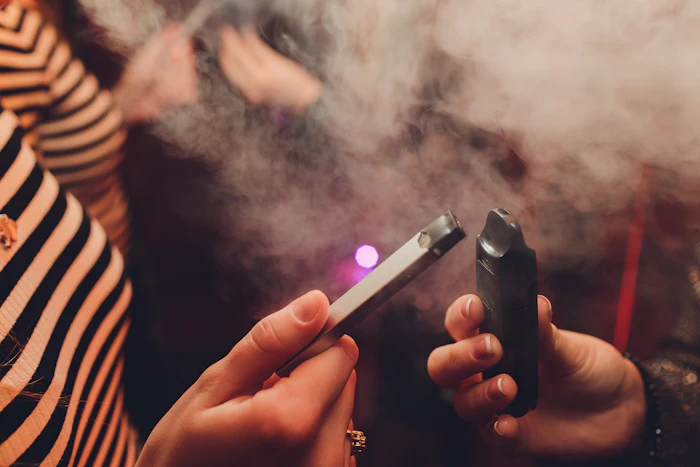
The U.S. Food and Drug Administration has authorized four flavored Glas electronic nicotine delivery system (ENDS) products through the agency’s premarket tobacco product application (PMTA) pathway, marking a potentially significant moment for the future of flavor innovation in the vaping category. The approved products—Classic Menthol, Fresh Menthol, Gold and Sapphire—are the first non-tobacco and non-menthol ENDS products to receive FDA marketing authorization in the United States.
For flavor industry professionals, the decision suggests that advanced age-verification and access-control technologies may begin reshaping how regulators evaluate flavored inhalation products long considered politically and commercially untouchable.
At the center of the authorization is Glas’s device access restriction platform, which FDA said played a critical role in mitigating youth access concerns. The Bluetooth-enabled system requires users to verify age and identity using government-issued identification and a paired smartphone before the device can function. The platform also incorporates periodic biometric authentication checks intended to ensure the registered adult user remains the active user.
FDA officials framed the authorization as a possible new pathway for flavored nicotine products seeking market legitimacy. Bret Koplow, Ph.D., J.D., acting director of the FDA’s Center for Tobacco Products, described access-restriction technologies as “a potential game changer” for balancing adult smoker harm reduction with youth protection.
The move could have broad implications for flavor houses, ingredient suppliers and inhalation technology developers that have watched the U.S. vaping market contract under intense regulatory scrutiny. While tobacco and menthol have historically dominated the list of FDA-authorized ENDS products, the inclusion of products like Gold and Sapphire may reopen conversations around how differentiated sensory profiles can support adult smoker conversion away from combustible cigarettes.
At the same time, the authorization arrives against a backdrop of ongoing scientific and public health debate surrounding inhalable flavor systems. Researchers continue to raise questions about the chemical complexity of vape liquids and the unpredictable interactions created when flavor ingredients are aerosolized and heated.
According to Michael Blaha, MD, MPH, of Johns Hopkins Medicine, the issue extends far beyond nicotine itself. Vape liquids can contain a wide range of additives, dyes, flavor compounds and other substances that may behave differently once inhaled. Blaha has warned that heating elements inside vaping devices can also release trace metals and generate new chemical compounds not originally present in the liquid formulation.
Public health researchers remain especially concerned about the unknown toxicological effects of flavor ingredients designed for ingestion rather than inhalation. While many flavor compounds carry established food safety profiles, inhalation toxicology remains far less understood. Johns Hopkins experts point to emerging evidence suggesting that flavor systems, when combined with solvents and exposed to heat, may create potentially harmful byproducts.
The youth appeal of flavor remains another flashpoint. Bubble gum, candy and fruit-inspired profiles have long drawn criticism from regulators and health advocates who argue such sensory experiences disproportionately attract younger users. FDA’s decision suggests the agency may now be willing to consider technologically enforced access barriers as part of the risk-benefit equation for flavored nicotine products.
The FDA emphasized that the authorization applies only to these four specific Glas products and warned that unauthorized ENDS products remain illegal to market in the United States. The agency also stated it will continue monitoring youth usage trends and may withdraw authorization if the products no longer meet public health standards.
!['[R]etaining this next generation will depend on continuing to position flavor science as a field where individuals can combine scientific excellence with creativity and real-world impact, shaping how consumers experience food in ways that improve both health and sustainability,' says John Savage, IOFI president and president and CEO of Taste at Kerry.](https://img.perfumerflavorist.com/mindful/allured/workspaces/default/uploads/2026/07/john-savage.Cws5vQDBLp.jpg?auto=format%2Ccompress&fit=crop&h=191&q=70&w=340)