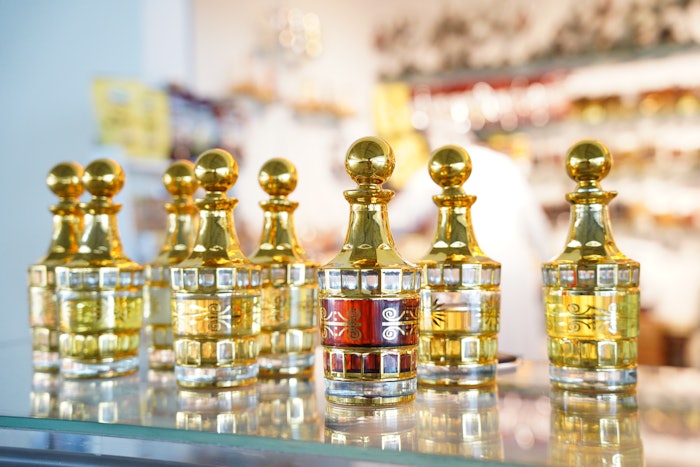
The Middle East, a sub-continent of Asia, has become a major regional market. The estimated population exceeds 300 million people, according to Indiana University Bloomington’s Center for the Study of the Middle East, and makes up about 6% of the world’s population. The area is known for its diversity: in language, in religion, in cultural traditions. And this diversity is making its way across the globe.
The Middle East is having its own moment in the fragrance space. Brands from the region are beginning to gain international attention, and industry leaders are opening labs and innovation centers to get closer to their customers. The Middle East’s influence on the fragrance industry shows the importance of historical and cultural considerations in formulations and maintaining authenticity when using these ingredients.
A Historical Scent Trail
The world’s first perfumer on record is a woman named Tappūtī-Bēlet-ekallim, commonly shortened to Tapputi. According to the Journal of the World Sensorium/Conservancy2, her work is referenced on a tablet, KAR 220, which outlines a formulae for perfumery and was housed in the ancient library of Assur, located in modern-day northern Iraq.
Tapputi’s formula included a mixture of the flowers of the calamus, myrrh oil, balsam and cyperus root, ingredients still used in perfumery today. And it was considered a perfume “fit for the king,” signalling a luxury status associated with fragrances (sound familiar?).
Research from the Journal of the Royal Asiatic Society3 suggests that fragrance materials were further brought to the Western world by the Arab conquests. About 20 common perfumes were brought to the medieval world, including agarwood, camphor, musk, frankincense and balsam.
 Research suggests that fragrance ingredients like agarwood were brought to the Western world during the Arab conquests.jbphotographylt at Adobe Stock
“Throughout history, the use of subtle perfumes increased and some of the exotic materials became expensive and valuable commodities,” Amar Zohar and Efraim Lev explained in their journal article3. “They were the source of wealth for cultures and rulers. Transformations in perfume fashion were in fact only part of a wider revolution of the Arabic material culture which the Middle East, the Mediterranean region and even many European countries experienced due to the Arab conquests.”
As fragrance brands began looking for bolder, more intense ingredients to meet consumer demand, they turned to this region for inspiration. Notes like oud, sandalwood and musk began to appear on the fragrance notes of new launches. In July 2022, Louis Vuitton released Fleur du Desert, a fragrance that perfumer Jacques Cavallier Belletrud described as a “tribute to Middle Eastern notes” with hints of jasmine, orange blossom and Damascus rose. Christian Louboutin worked with perfumer Fanny Bal to develop Loubiprince, an homage to Egypt after learning of Louboutin’s heritage.
And newer Middle Eastern brands are working their way into the conversation. KAYALI, founded in 2018, was launched by founder Mona Kattan to bring her cultural tradition of fragrance layering to more consumers. Lattafa was founded in the 1980s, but recently has been one of the top-searched fragrance brands on Amazon and TikTok.
This region’s rich history of fragrance isn’t just stuck in the past; rather, it’s helping shape the future of the industry.
A Cultural Boldness
I asked several experts what separates the fragrance preferences of Middle Eastern consumers from Western consumers. The consensus: Middle Eastern fragrance users prefer bold, complex scents.
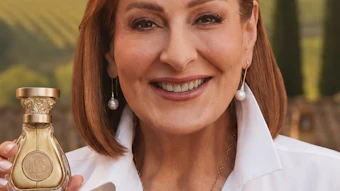
“Ingredients like oud, amber, musk and rose are not trends here – they are Amna Al Habtoor, founder, ArcadiaCourtesy of Arcadia
Fragrance is deeply ingrained in Middle Eastern culture. The use of perfumes was encouraged by the Prophet Muhammad in the Quran. He advocated for their use as a personal hygiene method and considered perfumes part of sunnah, or a guideline for the highest model of life for Muslims to follow.
At the grand opening of Intense Oud, a storefront in Skokie, Ill. specializing in Middle Eastern fragrance brands, I learned about bakhoor and its cultural significance. Bakhoor is made of wood chips that have been mixed with aromatic ingredients, such as frankincense, perfume oils and sandalwood. These blends are then burned like incense, allowing the scent to travel through the air and perfume the area. Some families have their own custom-made blends, allowing them to use fragrance as a form of self-expression and identity.
“Unlike many Western markets where lighter, skin-like scents and minimalism often dominate, Middle Eastern consumers seek fragrances that make a statement – intense, luxurious and expressive,” explained Abdulwahab AlRefai, chief technical officer and business development manager at CZAR Fragrances. “There’s also a cultural practice of scent-layering and generous application, which adds further complexity to the user experience.”
Scent-layering is still a relatively new trend in Western markets. Consumers are realizing that they can use different fragrances and concentrates to create their own distinct signature. Thanks to Gen Z and TikTok, the concept that began as a cultural tradition is now a distinct form of identity, with consumers collecting fragrances and discovery sets to try new combinations.
 “With Chocolate Oud and Milky Musk Oud, I wanted to show the full spectrum of oud," said KAYALI founder Mona KattanCourtesy of KAYALI
“Oudgasm is all about sensuality, individuality and storytelling through scent,” said founder Mona Kattan in a press release. “With Chocolate Oud and Milky Musk Oud, I wanted to show the full spectrum of oud – its ability to be both wild and warm, sweet and seductive, comforting and captivating. These two new juices are major steps in building the Oudgasm world with bold, unforgettable expressions that push boundaries and invite play. We want to continue redefining what oud can be, for every mood, every layer and every story.”
Authenticity in Innovation
Recently, leaders in the fragrance industry have opened new labs and innovation centers in the Middle East. The companies see this region as one of major potential, where heritage can meet creativity. Several major players in the fragrance industry, including Iberchem, IFF and Eurofragance have opened new innovation centers in the Middle East and are specifically focusing on this area in their new strategies.
“Fifteen to twenty years ago, the fragrance industry was desperately looking for innovation as well as different storytelling, and they found it in the Middle East,” said Oumayma Tabet, director of Eurofragance’s Creative Centers in IMEA. “The world started to discover a very different olfactive universe, where oud was the new king ingredient. The fabulous heritage of the Middle East is more than oud, and brands started to discover other olfactive notes, such as incense, amber and saffron. The Middle East became a gold mine for fragrance house perfumers, who could unleash their creativity with a new palette of raw materials and design bolder perfumes.”
And the consumer demand is clear and apparent. Market intelligence firm Spate NYC noted oud as one of the top trending search terms in the beauty category, with 676.6 thousand average monthly searches and 5.5 million average weekly views on social media platforms.
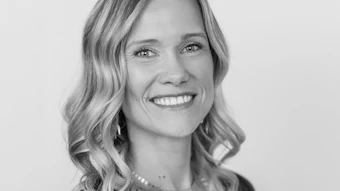
But many brands told me that it isn’t enough just to label your fragrance as Middle Abdulwahab AlRefai, chief technical officer and business development manager, CZAR FragrancesCourtesy of CZAR Fragrances
“It’s easy to fall into the trap of over-relying on cultural motifs without innovating,” AlRefai said. “This challenge also presents a tremendous opportunity – to educate, to inspire and to lead.”
“At Arcadia, we don’t simply use oud or bakhoor as ingredients – we honor them as storytelling devices,” Al Habtoor explained. “For instance, Edition 3: The Tribute Edition is our homage to the UAE, blending oud, amber and musk to reflect the soul of the region, past, present and future. Our Bakhoor ‘Spirit’ is a poetic celebration of growth and determination, crafted with oud, rose, saffron and musk. The way we use heritage notes is not nostalgic alone – it’s layered with contemporary narratives that allow global consumers to experience our cultural depth in a universally resonant way.”
Looking Ahead
I asked all of the experts I interviewed about their predictions for the Middle Eastern fragrance market in the next five to ten years. Almost everyone mentioned the blend of personalized fragrance technology with storytelling through ingredients and scent notes. Sustainability will also become a major focus, as companies shift priorities on ingredient traceability and ethical sourcing.
 Intense Oud, located in Skokie, Ill., features fragrance brands from around the East and Middle East to start a conversation around Eastern fragrance. Photo by Emily Little
“The next decade will likely see the rise of homegrown niche brands making international waves, a shift from global imports to regional exports,” Al Habtoor said. “Consumers are becoming more discerning, seeking authenticity, ethical production and personalization.”
This region has a clear influence on the fragrance industry, and fragrance houses and manufacturers alike are taking notice. They want to be in the room where it happens, where innovations and consumer preferences are shaping the market. The Middle East has become a hub of innovation, and it’s only going up from here.
“This is an exciting time for the Middle Eastern fragrance market,” said Rawya Catto, general manager at CPL Aromas in a 2024 interview with Perfumer & Flavorist+. “The world is in love with perfume, and the more intensity, punch and character, the better. Be it in terms of packaging, fragrance design, dosage and intensity, Middle Eastern brands are innovating in ways we’ve never seen before.”
References
- Our region. Center for the Study of the Middle East. (n.d.). https://csme.indiana.edu/about/our-region.html
- McBride, N. (n.d.). Tappūtī-Bēlet-ekallim, the oldest perfumer on record. World Sensorium/Conservancy. https://worldsensorium.com/tapputi-badakallim-the-oldest-perfumer-on-record/
- ZOHAR, AMAR, and EFRAIM LEV. “Trends in the Use of Perfumes and Incense in the Near East after the Muslim Conquests.” Journal of the Royal Asiatic Society, vol. 23, no. 1, 2013, pp. 11–30. JSTOR, http://www.jstor.org/stable/43307641. Accessed 15 Oct. 2025.