It started with a letter in 1964. A. L. Amerigen, board chair of International Flavors & Fragrances wrote to seven fragrance industry leaders requesting a meeting about fragrance safety. That meeting took place a year later, where key decision makers from across the fragrance industry discussed the potential to pool scientific resources for maximum safety impact. This meeting led to the founding of the Research Institute for Fragrance Materials (RIFM).
RIFM celebrates its 60th anniversary in 2026, with over 30 active member companies and a robust framework of safety guidelines. The organization’s data is open access, allowing more perfumers and professionals to learn about safe materials. Their mission is simple and clear: build international trust in an acceptance of the safe use of fragrance materials.
RIFM’s president Anne Marie Api spoke with Perfumer & Flavorist+ about the history of the organization, its milestones and how the organization is helping create innovative and safe fragrances for all to use.
For readers who may not know, what is RIFM, and how did it start?
The Research Institute for Fragrance Materials (RIFM) was founded in 1966 as an Anne Marie Api, president, Research Institute for Fragrance MaterialsCourtesy of RIFM
From the beginning, RIFM has led the way in fragrance safety, conducting and reviewing research, evaluating risks and making data accessible to scientists, regulators and industry partners worldwide. This work establishes the Maximum Acceptable Concentrations (MACs), which are published in all safety assessments for ingredients requiring risk management, and which form the scientific foundation of the IFRA Standards, providing evidence-based guidance for the safe use of fragrance ingredients.
This year marks RIFM’s 60th anniversary. What milestones have had the greatest impact on the fragrance industry?
Several stand out. The independent Expert Panel for Fragrance Safety, established in 1967, remains one of RIFM’s most important achievements. Composed entirely of academic scientists with no ties to the fragrance industry, the panel reviews all available data on fragrance ingredients, including toxicology studies, exposure assessment, and published literature, and provides independent, science-based conclusions about safe use.
Another major step was the development of the RIFM Database in the 1980s, now the world’s largest and longest-maintained repository of fragrance safety data. More recently, the adoption of realistic, aggregate exposure-based safety assessments has greatly enhanced accuracy and relevance by examining how fragrance ingredients are actually used in products.
Throughout its history, RIFM’s research program has been efficient, strategic, and adaptable, focusing increasingly on animal-free New Approach Methodologies (NAMs) that represent both scientific and ethical progress.
Which of these had the biggest impact on perfumers specifically?
Exposure-based safety assessments have made the biggest difference. By understanding how people use fragranced products in real life (how often, how much and where on the body) RIFM establishes Maximum Acceptable Concentrations (MAC values) that reflect actual conditions rather than theoretical extremes. These MAC values provide the scientific foundation for the IFRA Standards, ensuring that fragrance ingredients are safe, compliant, and available worldwide.
Because MAC values are based on decades of rigorous, peer-reviewed data and validated by independent experts, perfumers can rely on them with confidence. This science safeguards their palette, protecting access to both cherished naturals and innovative new molecules, and preserves creative freedom for generations to come.
How has RIFM’s mission changed as the science, regulations and fragrance industry have evolved?
RIFM’s mission, which is to build international trust in and acceptance of the safe use of fragrance ingredients through science and research, remains unchanged. What has evolved is the method by which that mission is achieved.
When RIFM began, safety evaluation relied largely on traditional animal studies. For more than 13 years, RIFM has not conducted any animal testing for human health endpoints. Today, its approach combines in vitro, in silico, and exposure-based methods that are more human-relevant and efficient.
RIFM has also expanded its focus on transparency and collaboration, publishing data and working closely with regulators and scientists worldwide. In doing so, its role has grown from evaluating safety to helping shape the science that underpins modern risk assessment.
 RIFM has expanded its focus on transparency and collaboration.Minerva Studio at Adobe Stock
Were there any turning points where RIFM had to rethink its approach?
Yes, two major ones. The first came as the scientific community and regulators began prioritizing alternatives to animal testing. RIFM anticipated this shift and invested early in developing reliable non-animal methods.
The second came with the move toward understanding real-world exposure. Earlier assessments often focused on what an ingredient could do at high doses in laboratory settings, without considering actual exposure in daily life. By integrating exposure science, RIFM made fragrance safety evaluations more accurate and relevant, ensuring that conclusions reflect how people truly use fragranced products.
What makes RIFM’s approach to fragrance safety different from other organizations?
RIFM uniquely integrates science, transparency and independent oversight. It focuses on real-world risk, specifically how people are actually exposed to fragrance ingredients, rather than on hazard alone. This distinction allows RIFM to develop practical, evidence-based conclusions.
Every RIFM safety assessment is reviewed and approved by the independent Expert Panel before publication in peer-reviewed journals. These assessments form the basis for IFRA Standards, which protect both perfumers and consumers. Without RIFM’s MAC values, there would be no IFRA Standards.
Built on decades of peer-reviewed data and expert evaluation, MAC values ensure that IFRA Standards remain scientifically robust and recognized by regulators worldwide. This structure maintains the independence of science while ensuring it guides responsible industry practices and consumer protection.
How does your work help perfumers push creative boundaries while keeping products safe?
RIFM’s science provides the framework that allows perfumers to create safely and confidently. By defining MAC values for each ingredient across various product types, RIFM provides perfumers with a scientifically grounded foundation that supports innovation and responsibility.
We also help ensure that long-used ingredients with important olfactory value remain available by generating new data and refining exposure estimates. In many ways, safety science and creativity are closely intertwined. The better we understand fragrance ingredients, the greater the freedom to use them effectively.
How do you measure fragrance exposure in the real world, and why does that matter?
We use the Creme RIFM Aggregate Exposure Model, which incorporates data from thousands of consumers and products to estimate daily exposure to fragrance ingredients. It considers product type, frequency of use, application area and population differences.
Understanding exposure is critical because it determines actual risk. Two ingredients with similar hazards may pose vastly different risks depending on their use. RIFM’s exposure-based approach reflects how people truly use fragranced products and shows that exposures are consistently low and risks are negligible. This real-world evidence underpins RIFM’s MAC values, ensuring accurate, protective conclusions while avoiding unnecessary restrictions. It also helps preserve both safety and creative freedom.
RIFM is a leader in avoiding animal testing. What new methods make that possible?
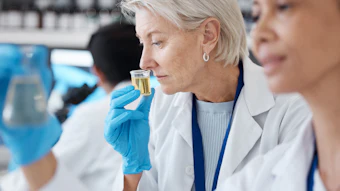
RIFM uses a combination of in vitro assays, computational modeling, read-across One key challenge Api mentioned will be achieving global acceptance of non-animal methods.AnnaStills at Adobe Stock
These tools allow RIFM to anticipate how ingredients behave in the human body and assess potential effects using human-relevant science. Many of these methods are now recognized by regulators as credible, and RIFM’s use of NAMs has saved more than half a million animals.
How do perfumers benefit from these new methods beyond meeting regulatory requirements?
New methods generate data more quickly and efficiently than traditional testing, helping bring new ingredients into use sooner and supporting the continued safe use of existing ones. They also deepen our understanding of how fragrance ingredients work at the molecular and biological levels. That insight helps preserve important ingredients, expand the creative palette, and strengthen confidence in safety decisions across the industry.
What are the biggest challenges for fragrance safety in the next 10 years?
One key challenge will be achieving global acceptance of non-animal methods, enabling modern science to be applied consistently across regions. Although fragrance exposures are known to be very low, ensuring that risk-based approaches are recognized worldwide remains essential.
Another ongoing challenge is building public understanding and trust in the science supporting fragrance safety. Clear and accessible communication, both within the industry and beyond, will remain vital to maintaining confidence in the safety of fragranced products.
If you could share one message with perfumers worldwide on RIFM’s 60th anniversary, what would it be?
As RIFM marks its 60th year, my message to perfumers is simple: The legacy of safety we have built together ensures that you can continue to create with confidence, knowing that fragrance ingredients are used safely and responsibly, today and for decades to come.