As China’s niche fragrance market matures, the conversation is shifting from established cultural symbols and familiar trend cycles toward more personal, exploratory forms of olfactory expression. That evolution is at the heart of Notes Shanghai’s 2026 autumn edition, themed “Another Way,” which will bring more than 200 brands from 30-plus countries and regions to Shanghai October 14–17.
The fair is also expanding its professional focus with the debut of Notes Materials, a dedicated ingredient area designed to put perfumers, evaluators and R&D professionals in closer contact with raw materials and suppliers. Alongside the new ingredient platform, the event will spotlight the five-decade career of Alberto Morillas through its Masters exhibition series, while more than 50 forums will explore the evolving fragrance landscape.
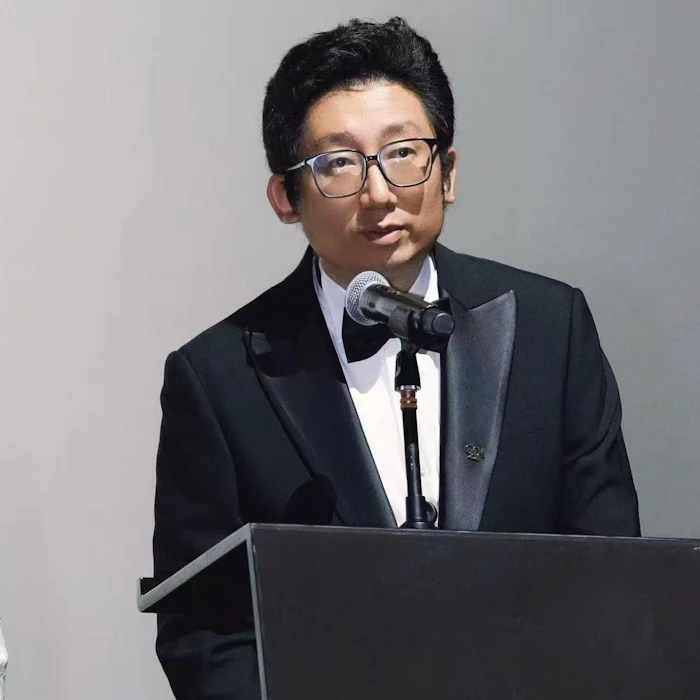
Here, Notes Shanghai founder Alex Wu discusses why the next generation of fragrance may be more about finding a new starting point, whether through an unexpected material, a personal memory, a new collaboration or a fresh perspective on familiar territory.
He also shares his views on the evolution of Chinese fragrance, the changing relationship between brands, perfumers and suppliers, and what international companies need to understand about China’s increasingly sophisticated fragrance consumers.
 "For fragrance companies, an important question is how to maintain professional expertise and quality while creating more flexible and deeper forms of collaboration," says Wu. "For many emerging brands, they do not only need a final formula—they may also need support in transforming an idea into an olfactive expression at an earlier stage."Notes Shanghai
"Another Way” suggests that niche fragrance is moving beyond established industry conventions. What trends are you observing among brands and perfumers that point toward where the next generation of fragrance creation is heading?
Wu: I think one interesting change today is that more brands and perfumers are no longer satisfied with repeating forms of expression that have already been proven by the market, and are looking for more creative possibilities.
The fragrance industry is developing very quickly. A successful scent direction, concept or storytelling approach can easily become a trend and be repeated. But when we look at brands and creators, the works that truly stay with people often begin with something more specific and personal — a material, a memory, a place, or a subtle sensory experience — rather than with the intention of fitting into an existing trend.
In China, we are seeing this evolution as well. A few years ago, conversations around Chinese fragrance often focused on tea, traditional aromatic materials, medicinal herbs or other recognizable cultural elements. Today, more creators are moving beyond these symbols and allowing their personal experiences, aesthetics and cultural understanding to enter contemporary fragrance expression more naturally.
At the same time, perfumers today have access to a much broader range of materials and technologies. These developments create more possibilities, but I believe that the more choices we have, the more important creative judgment becomes.
For me, “Another Way” is not about finding the next trend. It is about not allowing trends to become the starting point of creation.
I do not think the next generation of fragrance will move in one single direction. It may instead become more diverse, more personal and increasingly difficult to define through traditional categories.
The new Fine Fragrance Ingredients Area brings ingredients more directly into focus. Why is it important to introduce this section now, and what do you hope perfumers and fragrance developers will gain from interacting with ingredients and suppliers?
Wu: Before founding Notes Shanghai, I spent many years working in fragrance product development and supply chains, so ingredients have always been an area I pay close attention to.
Over the past few years, China’s niche fragrance market has developed rapidly. Brands have grown, and consumers have become increasingly knowledgeable about fragrance. At this stage, we believe a fragrance fair should also move further upstream and give more attention to ingredients, creation and R&D.
The purpose of Notes Materials is quite direct: to create a space where perfumers, evaluators and R&D professionals can smell materials, compare them, and communicate directly with suppliers and producers.
For professionals, knowing the name of an ingredient is very different from truly understanding it. Its origin, processing method, olfactive characteristics, stability, regulatory considerations and variations between batches can all influence the final creation.
We also hope this area can become a platform for two-way exchange. On one side, it allows Chinese creators to discover noteworthy materials, new molecules and innovative ingredients from around the world. On the other, it gives international professionals the opportunity to better understand high-quality and creatively valuable materials from China.
If a perfumer discovers a material at Notes Shanghai that they have never encountered before, and it later inspires a new formula or a new creative direction back in the lab, then I think this area has achieved its most important purpose.
Notes Shanghai connects international brands with China’s increasingly mature fragrance market. What do international brands still need to understand about Chinese consumers? And what are Chinese brands contributing to the global fragrance industry?
Wu: I think the first thing international brands need to recognize is that it is increasingly difficult to describe “Chinese consumers” as a single group.
The Chinese fragrance market is changing quickly. Consumers from different cities, age groups, lifestyles and levels of fragrance experience can have very different expectations. Today, many Chinese consumers already have extensive exposure to global brands and niche fragrance, and they actively seek information about perfumers, ingredients and the creative thinking behind a fragrance.
For international brands entering China, what matters is gaining a more direct understanding of how consumers discover brands, experience fragrance, what they care about, and how different groups within the market are evolving.
At the same time, I do not think localization simply means adding tea, osmanthus or another obvious Chinese element. The most important thing is for a brand to remain authentic to itself while understanding the cultural context and consumption habits of the market.
For Chinese brands, I think the biggest change is that they are becoming more confident and more natural in their expression.
At an earlier stage, many Chinese fragrance brands were trying to answer the question, “What is Chinese fragrance?” So cultural symbols were often more visible. Today, more creators are moving beyond the need to prove how “Chinese” their work is. They may start from Chinese culture, but they may also draw from personal experiences, cities, materials or contemporary life.
I think this represents a more mature stage of development. Meaningful cultural expression does not always need to emphasize identity. When creators work naturally from their own experiences, culture becomes part of the work itself.
Ultimately, I see the relationship between China and the global fragrance industry as a two-way exchange. China still has much to learn from mature fragrance traditions and industry systems, while its young and rapidly evolving creative ecosystem is also bringing new perspectives to the global industry.
You are creating a major exhibition dedicated to Alberto Morillas and his five-decade career. What aspects of his creative approach remain particularly inspiring for today’s perfumers?
Wu: When we created the Masters series, our goal was not simply to review a perfumer’s famous works. We wanted to explore how a creator’s language develops over time.
For Alberto Morillas, we named the exhibition “The Perfumer of Light.” Looking across his nearly five-decade career, we can see a clear creative language that continues through different brands, periods and projects — a sense of lightness, clarity and emotional connection.
However, what I think is most valuable for today’s perfumers is not learning how to create a “Morillas-style” fragrance.
The real challenge for any creator is building a personal language while continuing to evolve without repeating oneself.
Alberto has experienced very different eras, brands and consumer expectations, yet he has continued to respond to change while maintaining his own identity. I think this balance between evolution and consistency is something young perfumers can learn from.
Another important quality is curiosity. Even after such a long and successful career, he continues to explore new materials, new collaborations and new generations of creators.
For me, this exhibition is not only about fifty years of work. It is about understanding how a perfumer can continue developing a creative language over a lifetime.
Beyond the consumer-facing niche fragrance market, what changes are you observing across the professional fragrance ecosystem—from ingredient sourcing and formulation to retail and brand development? What should fragrance companies pay attention to?
Wu: One major change is that the boundaries between different parts of the fragrance ecosystem are becoming less defined.
In the past, brands created briefs, fragrance houses developed formulas, suppliers provided ingredients, and retailers connected products with consumers. Each part had a relatively clear role.
Today, these relationships are becoming much more interconnected.
Brands want to understand ingredients and development earlier in the process. Perfumers increasingly need to understand not only the brief, but also the brand vision, consumers and market context. Ingredient suppliers are also engaging more directly with creators and R&D teams.
This is particularly relevant for niche fragrance. Many independent brands are smaller in scale but have very clear creative ambitions and are willing to explore different possibilities. Their development needs may not always fit traditional models.
For fragrance companies, an important question is how to maintain professional expertise and quality while creating more flexible and deeper forms of collaboration. For many emerging brands, they do not only need a final formula—they may also need support in transforming an idea into an olfactive expression at an earlier stage.
Retail is also changing. For fragrance, physical spaces are not only places of transaction; they are places where consumers experience, understand and build connections with brands. These insights can also influence future product development.
So I think the professional fragrance ecosystem is moving from a linear supply chain toward a more connected network.
For fragrance companies, value will continue to come from excellent fragrance creation and technical expertise, but also from the ability to understand brands earlier and to connect ingredients, creation and market understanding more effectively.
If a perfumer, evaluator or fragrance R&D professional could take away only one new idea, material, connection or perspective from Notes Shanghai that could change the way they work, what would you hope it would be?
I hope they take away not a trend, but a new starting point for creation.
It could be a material they smell for the first time in Notes Materials. It could be a 10-minute conversation with a supplier they had never met before. Or it could simply be an idea triggered by discovering the work of a young perfumer.
It does not have to feel important at the time.
Many meaningful creations begin with a very small discovery. What matters is that it creates curiosity—enough curiosity to return to the lab and try something again, or to approach a formula in a way that was not previously considered.
That is also what I hope Notes Shanghai can offer. By bringing perfumers, evaluators, brands, ingredient suppliers and creators from different countries into the same space, we are not trying to tell the industry where it should go next. We are creating encounters that might not otherwise happen.
If someone leaves Notes Shanghai with one new possibility for their next creation—something they had not considered before—I think that is enough.
That is also how I understand this year’s theme, “Another Way.”
Another way is not necessarily a road that already exists and is waiting to be chosen. Sometimes it only begins to appear because you smelled a new material, met someone new, or looked at something familiar from a different perspective.