Log In/Register
Facebook icon
Instagram icon
LinkedIn icon
Twitter X icon
Flavor
Fragrance
News
Events
Leaders
Multimedia
Home
Search
Search Perfumer & Flavorist
Article
Company
Document
Event
News
Podcast
Video
Webcast
Flavor
Fragrance
Multimedia
Enter search phrase
Search
Beverage
New Techniques: the Future of Citrus
Developments in oil processing for citrus flavors and fragrances. Citrus oils are some of the most commonly used flavor and fragrance ingredients. Containing characteristic properties, citrus oils impart fresh, zesty notes to many types of foods, beverages, household cleaning products, toiletries and fragrances.
Fine Fragrance
Natural Synthetics
In conclusion, synthetics will continue to dominate the creative ideas of perfumers. These synthetics may come from the classifications:
Ingredients
Progress in Essential Oils
Geranium Oil A survey of the early literature reveals that methyl mercaptan was found as a trace component in geranium oil (Peyron 1961). Rajeswara Rao et al. (1992) determined the effect of different fertilization practices on the major constituents of geranium oil produced in Hyderabad (India).
Ingredients
The Drying of Laurel Leaves
Laurel leaves are collected from Laurus nobilis L., which is an evergreen tree or shrub of the Lauraceae family and grows wild in Greece. In ancient Greece and Rome, its leaves and branchlets were used as garlands to be bestowed upon heroes on festive occasions. In modern times annually more than 250,000 kg of dried leaves (sweet bay) are marketed in U. S.A., U.S.S.R. and other countries as a flavoring material in culinary preparations like soups, fish, and ragouts.
Ingredients
Geranium Oil from Yunnan, China
Geranium oil is obtained by steam distillation of the partially dried green herbage of Pelargonium sp. It is one of the most important oils used in perfumey formulation, and rarely is used as a flavoring
Ingredients
Fragrances Through Hydrochlorination of Terpenes
Among the reactions that have enriched terpene chemlstry, perhaps the simplest and one of the outstanding is hydrochlorination. This reaction has been used for structural elucidation, for derivatization to identify and/or purify terpenes and for synthesizing perfumery chemicals. How the application of hydrochlorination on terpenes has unearthed the treasure caves of fragrances is a vibrant chapter worthy of portrayal.
News
Facilities, Partnerships & Acquisitions: Here Are the Latest Headlines in F&F
Read up on the latest certifications, facility openings, partnerships and
Flavorcon
2022 session slides.
Trends
The Bitter Truth about Beer Flavor Development
The National Association of Flavors and Food-Ingredient Systems (NAFFS) examines the contribution of hops and other extracts in creating unique flavor profiles.
Ingredients
Formulating with Citrus: New Developments in Citrus Fragrance Ingredients
The aroma chemical aspects and new discoveries in both natural and synthetic citrus ingredients. Of all the ingredients on the perfumer's palette, surely none are more instantly recognizable to the public than those in the citrus category. Fresh juicy oranges, sulfurous tangy grapefruit, tart puckery lemons and heady sweet limes all bring to mind a host of pleasant associations in which taste and smell play an equal part.
Fragrance
Progress in Essential Oils: Basil Oil, Part 2
The present article is part two in a series of two that provides the findings of various researchers on the chemical constituents in basil oil. Part 1 appeared in the May 2014 edition of Perfumer & Flavorist.
Ingredients
International Perfume Standards Program
In summary, we determined that it was necessary to have a fresh fragrance oil quality control standard representative of the quality of oil available in any given overseas location. We recognize that ensuring worldwide quality required a central location to evaluate and approve the initial samples of oils before being purchased around the world. Once an initial quality was determined, it was necessary to assure that each location had access to a fresh quality control standard representing this quality. A procedure was then set up to assure annual replacement of quality control standards.
Beverage
Patent Pick: Alcoholic Beverage Flavor System
Patent Picks are chosen by the editors from publicly available sources. Today's technology features a system combining water and a plurality of flavor compounds to impart the flavor of wine, whiskey or beer.
Ingredients
3 Fragrance Ingredients from Berje, Mane & Symrise Highlighted in July 2024 Issue
Take a look at how citronella oil, isomuscone and sublimolide can be used in fragrance formulations.
Ingredients
Good News for Perfumers: Formulating with Naturals
Natural ingredients have always proved a major source of inspiration. They give life, diversity and depth to fragrances, whether formulated for use in fine fragrances or an everyday detergent. The reason lies in the fact that every natural ingredient could be described as a mini-fragrance in its own right.
Fine Fragrance
Fragrance With Benefits Launches Two Scents
The Égide comes in bottle or roller form, while the NoMo also acts as an insect repellant and comes in body wash form.
Ingredients
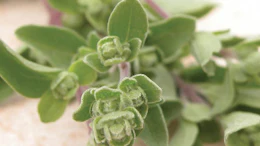
Progress in Essential Oils: Spanish Marjoram Oil
This month's column discusses the chemical composition of Spanish marjoram oil.
Ingredients
A New Method of Separation of Citral from Lemongrass Oil
Although many methods are known for the separation of citral from lemongrass (Cymbopogen flexuosus) oil, like fractional distillation, adduct formation and regeneration, the purity and the yield of citral as separated are not satisfactory. A new method for separation of citral in pure form and in near quantitative yield uses the column chromatographic technique. This method may also be adapted for large scale separation of citral and hence can be of commercial importance.
Regulatory & Research
RIFM Reports Little Concern on Cyclic and Non-Cyclic Terpene Alcohols
Full report available.
Previous Page
Next Page