When Beyoncé’s Cécred hair care brand launched in the U.K. at Space NK, the brand’s Temple Oud Hair Perfume was front-and-center. Yet there is no indication by the brand that the perfume comprises any amount of agarwood (Aquilaria/Gyrinops) oil or extract. Instead, oud serves merely as a base fragrance note descriptor. Cécred is far from alone.
 When Beyoncé’s Cécred hair care brand launched in the U.K. at Space NK, its Temple Oud Hair Perfume was front-and-center.Cécred
In recent years, oud has expanded from a signature of Middle Eastern perfumery and a shorthand for opulence to become one of fragrance's most commercially influential materials, bridging centuries of cultural heritage with modern creativity and connecting regional traditions with global consumer demand.
The ingredient is one of the defining olfactive signatures of Arabian perfumery, typically appearing alongside musk and amber in the concentrated, distinctive fragrance profiles rooted in Gulf traditions. Its influence is expanding well beyond the Middle East as consumers in markets including the United States, United Kingdom and Latin America embrace Arabian fragrance styles.
Euromonitor reports that global Arabian fragrance sales grew from $2.8 billion in 2023 to $4.9 billion in 2025, reflecting a broader appetite for rich, expressive scent profiles and creating new opportunities for oud-inspired compositions across markets and price points. While this growth does not directly measure demand for natural oud oil, it underscores the note's increasing commercial relevance.
Zohaib Ahmad, founder of Zousz, a British luxury gifting house, attributes the growth to two key factors.
“British men of Middle Eastern and South Asian background grew up with oud in the house and now have the money to buy it as a luxury rather than a tradition,” he says. “And the mainstream [is] catching up: once a few big Western houses put oud on the shelf, it became the word that signals ‘serious fragrance’ to a man who’s never worn anything but a blue sport scent. Half of our orders are gifts, usually a woman buying for a man, and ‘oud’ on the box tells her she’s bought something considered.”
From accessible fragrance collections such as Dossier's dedicated Oud Collection to the continued prominence of oud in prestige perfumery, the note is reaching broader audiences and inspiring new interpretations. (Dossier does not disclose whether the oud component is natural agarwood oil, an oud extract, a synthetic oud accord or a combination of materials.) Its appearance in products beyond traditional fine fragrance, including Cécred's Temple Oud Hair Perfume and Dior's Sauvage Extrait, further illustrates its expanding influence across beauty and fragrance categories.
But there is an important distinction between the popularity of oud as a fragrance note descriptor/accord and the use of actual oud, the precious, complex natural material derived from agarwood.
(It's important to note here that this is hardly unusual. The fragrance industry frequently leverages accords that may use descriptors borrowed from materials not actually contained within the formula (ex: leather, ambergris, musk, etc.). The purpose is most often intended to evoke, rather than deceive.)
While perfumers can recreate or reinterpret oud through sophisticated fragrance accords, natural oud oil carries its own story of botanical origins, cultivation, sourcing, quality, sustainability and supply. As demand grows, understanding both sides of oud becomes increasingly important to the fragrance industry.
“Of the 1,623 perfumes in our database, 137 (about one in 12) list oud among their notes, and ‘oud’ reads the same on a list whether it is agarwood oil, a reconstructed accord or a blend of both,” says Sebastian Dobrincu, founder and CEO of Scento, a decanter and sampler of niche and designer fragrances.
He adds, “In our data, oud is a niche and Middle Eastern story more than a designer one. The 137 oud perfumes come from 52 houses: 65 from niche houses, 42 from Middle Eastern perfume houses, 17 from designer houses and 13 from heritage and artisan houses. By the houses’ home country, the United Arab Emirates leads with 39, ahead of Italy (31) and France (29).”
He also notes, “Most use it as a foundation: 91 of the 137 place oud in the base.”
“Traditional Gulf perfumery still does oud with the most conviction,” says Ahmad, “because the customer knows what real oud smells like and won’t be fooled. Western niche does the most interesting things with the accord, taking the smoke and the resin and putting fruit or florals over them. The weakest end is mass market: ‘oud’ as a word on a box with nothing in the bottle that earns it. We [Zousz] sit between the first two. British, made in England, real oud in the compound, and we tell you what you’re buying.”
There are obvious financial reasons for some brands to pursue oud-like effects, rather than using the material itself.
Dobrincu explains, “A 2022 CITES review of agarwood cites oil ‘commanding a price of USD 40,000-50,000’ per litre;’ earlier trade quotes collected by TRAFFIC put oud oil generally at $5,000-10,000 per kg, with pure oil made to order up to $30,000. The resin only forms when Aquilaria trees are infected, wild trees are depleted, and plantation oud is cheaper but rated lower in quality.”
Consumers, of course, are bound to be confused. A brand may claim to feature oud, says Dobrincu, citing descriptors such as “dark, resinous, smoky, slightly medicinal wood with a leathery depth,” but descriptors are explicitly not, he points out, ingredient declarations: “The transparency gap is that the shopper cannot tell from the box which one they are buying.”
“The terms ‘oud' and ‘agarwood’ are presently not protected against indiscriminate use,” says Delbert Baron Lee of Philippines-based Wynbert Soapmasters Inc. “Any soap manufacturer can put the word ‘oud’ on their labels, and many consumers don't even bother to make the distinction between what's real and what's duped. We can see a parallel here in the culinary industry, where terms for luxury items like ‘truffle’ get slapped on products that don't even contain the real thing.”
“A fragrance sold at £80 to £200 can carry a small amount of the real oil for character,” says Ahmad. “It cannot be built on it. Most ‘oud’ on the Western shelf, including in niche, is an accord: a reconstruction from woods, resins, smoky and animalic materials, and synthetics that capture the facets of the real thing. That isn’t a scandal. It’s how the category works at any price a normal person pays.”
Ahmad continues, “Real oud is unstable in the best sense. It shifts on the skin over hours, it’s medicinal and barnyard at the top before it turns sweet and woody, and no two batches match. An accord is consistent, cleaner, and can be engineered to last.”
He goes on to point out, “Zousz compositions carry natural agarwood oil inside a broader accord. I won’t give a percentage, because the honest answer is that it’s a small amount and the accord does most of the work. The oil is in there for what it does to the rest: it roughens the edges and gives the drydown the thing a reconstruction can’t quite fake. For a house that has to ship the same scent in a bottle, an oil and a shampoo, that balance isn’t a compromise. It’s the brief.”
 “In Cade Black 10, oud wasn’t about chasing a trend or putting a buzzy ingredient on a label," says Emily Voth, founder of the brand Cade Black. "It was about creating depth, intrigue, and a certain exotic sensuality."Cade Black
“Oud … [has] become one of the most trendiest words in fragrance, yet I wonder how many people have actually smelled the real thing,” says Emily Voth, founder of the brand Cade Black. “Real oud is so rare and costly that most 'oud' fragrances use synthetic interpretations rather than the natural oil. The same is true of ingredients like vetiver and hinoki. Mention them and people immediately respond with reverence. But the raw materials themselves can be surprisingly intense, even challenging, to an untrained nose. What people often fall in love with is not necessarily the ingredient in its raw form, but the interpretation of it in a blended, composed fragrance.”
She adds, “More than anything, I think it speaks to the power of perfumery. The magic isn’t simply in an ingredient; it’s in what you do with it. A raw material that might seem overwhelming on its own can be extraordinary when it’s given the right companions. The art is in finding that balance, allowing an ingredient’s character to emerge without losing its edge.”
Voth notes, “In Cade Black 10, oud wasn’t about chasing a trend or putting a buzzy ingredient on a label. It was about creating depth, intrigue, and a certain exotic sensuality. Real, natural oud—like we use—brings a darker, more mysterious dimension to the fragrance, adding richness and complexity while helping balance the composition as a whole. Something has to balance that potent pink peppercorn!”
Remarkably, unlike oud-touting brands that comprise no actual oud, Cade Black has actually underplayed its use of the material.
“Perhaps we should make more of the oud from a marketing perspective,” says Voth. “But that doesn’t feel like Cade Black, because it was never about selling an ingredient. It was about creating an aura, a mood, a little magic, a scent you feel.”
As for the limitations on the use of significant amounts of oud in formulations, Ahmad adds, bluntly, “For a small house the honest position is that you can’t build a product line on a raw material whose supply depends on a tree being infected and a government issuing a permit. You use the real oil where it earns its place, and you don’t pretend the bottle is full of it.”
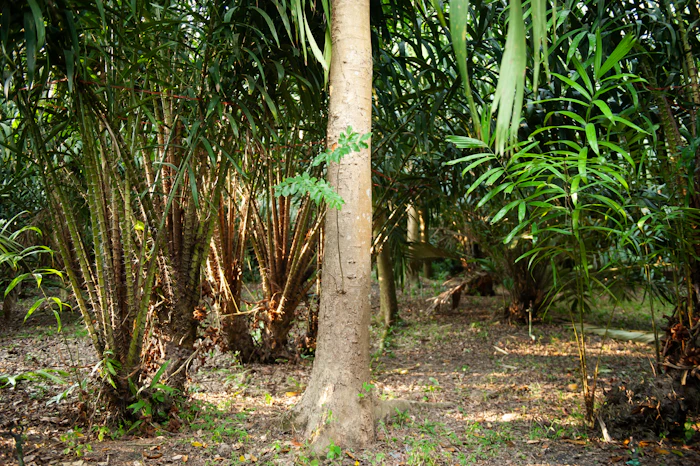
Lee advises, “To find products with genuine oud or agarwood-derived ingredients, look for the botanical fingerprint. Ideally, you should be able to see the botanical name of the ingredient, Aquilaria malaccensis, Aquilaria crassna or other Aquilaria/Gyrinops species. In most cases, terms like ‘oud oil’ and ‘agarwood extract’ refer to real derivatives from these plants.”
He adds, “[C]onsumers should put more weight on ingredient transparency than pricing. Some manufacturers use a clever hack of selling a ‘premium line’ of basically the same products that still don't contain the real thing. Because they're marketed and priced as premium, some consumers might assume it's better or contains real oud. It's best to still check the ingredients list. If there is no ingredients list, best skip it.”
He acknowledges, however, “That last point may be more tricky when it comes to artisanal creations. Most of these of course contain real oud. However, they may find it more challenging to position themselves as the real deal without the big marketing teams and budgets behind them. When buying from artisanal producers, it might be best to delve into their stories and look for other sources of reputational provenance so you can rest easy that you're putting your money into the real stuff.”
Lee concludes that the lack of transparency around implied oud notes rather than real oud can be a negative for more than just consumers.
“At the end of the day,” he says, “it's the oud producers who suffer the most from this gap. As dupes proliferate and essentially dominate the market, it becomes harder and harder for legitimate producers to set themselves apart or even just defend their provenance. What makes it worse is that legitimate producers almost always find themselves competing with larger, more established brands with large marketing budgets. They simply cannot capture the wider market. They will ultimately be forced to stay niche. That in itself can be a good thing because it somewhat gatekeeps the real stuff for the few consumers who really know and appreciate it, but it also poses challenges to business growth, expansion and maybe even longevity.”
Oud may be everywhere, but genuine agarwood remains rare. As brands capitalize on the appeal of the name, the fragrance industry faces a balancing act: making the note accessible through creative reconstructions while preserving the value, provenance and identity of the natural material. There is room for both approaches in modern perfumery. What matters is knowing the difference—and giving the real thing the recognition it deserves.