The beauty and personal care industry stands at a demographic crossroads that will fundamentally reshape consumer markets by 2040, driven by unprecedented population aging, shrinking household sizes and shifting generational dynamics that will redefine who buys beauty products and why. Euromonitor has examined how these three critical demographic drivers are transforming the beauty and personal care landscape. Beauty brands that respond to these demographic shifts now will remain relevant and thrive in tomorrow’s market, or risk being left behind.
This article is only available to registered users.
Log In to View the Full Article
The beauty and personal care industry stands at a demographic crossroads that will fundamentally reshape consumer markets by 2040, driven by unprecedented population aging, shrinking household sizes and shifting generational dynamics that will redefine who buys beauty products and why. Euromonitor has examined how these three critical demographic drivers are transforming the beauty and personal care landscape. Beauty brands that respond to these demographic shifts now will remain relevant and thrive in tomorrow’s market, or risk being left behind.
Silver Surge: Beauty’s Next Growth Market Is 65+
The world is older, especially in North America, Europe and Australasia.
Due to mortality rates and declining fertility, the global population is aging. The proportion of the population aged 65-plus globally is expected to increase to 15% by 2040 (F-1 and F-2).
 F-1. Population by age, year and cohort, 1995-2040Euromonitor
 F-2. U.S. population projections through 2040Euromonitor
The implications of a large aging demographic are clearly visible in the top beauty and personal care markets. In the United States, where beauty and personal care sales are projected to reach $156.6 billion (current terms) in 2030, one in five Americans will be retirement age by 2030a (per the U.S. Census Bureau).
By 2034, older adults will outnumber children for the first time in U.S. history. Declining populations under 18 and rising life expectancy will drive this aging trend. Older consumers also spend more money on healthcare and medication expenses which increase with age, creating a challenge for the beauty industry that must compete for discretionary spending.
To attract older beauty consumers, beauty brands should provide solutions-oriented products with accessible packaging and clear benefits for mature skin and hair, while carefully selecting advertising platforms that reach this demographic effectively.
For instance, Japan-based Domohorn Wrinkle (by Saishunkan) utilizes direct marketing, free samples and telephone orders, which resonates with how their target female baby boomer and Silent Generation cohorts prefer to learn about beauty.
Why Millennials & Gen Z Still Run the Beauty Economy
Younger consumers purchase beauty more frequently than older consumers.
Although the global population is getting older, younger generations will remain a sizeable force. Younger generations remain the largest cohort worldwide until 2040, driving key trends in beauty and personal care, such as sustainability and social selling.
Although baby boomers have the highest income globally and have had more years to accrue wealth, they purchase beauty least frequently compared to younger consumers, according to Euromonitor’s Voice of the Consumer: Beauty Survey, 2025 (F-3).
 F-3. Purchase frequency across generations and categoriesEuromonitor
Millennials made the most frequent beauty purchases across categories. Out of consumers who purchased these select beauty products at least once a month, 51.9% were millennials, followed by 45.1% of Gen Z, 44.7% of Generation X and 29.7% of baby boomers. Millennials are entering their prime earning years after facing significant economic challenges during their formative years, which bodes well to sustain their frequent beauty purchases in the future.
To attract millennial beauty consumers, beauty brands should offer preventative, clinically backed solutions that address concerns early, while combining skin care benefits with inclusive shade ranges that meet this generation's expectations for both efficacy and representation.
Success requires embracing format innovation—hair glosses, scalp scrubs pre/post-wash treatments—that allows Millennials to expand their routines without replacing core staples like shampoos and conditioners. Leverage e-commerce channels and authentic influencer partnerships to reach this demographic, the most frequent beauty purchasers across all generations.
 Bliss embraces elder millennials with a playful, no-nonsense approach to adult skin.Bliss
To attract Gen X beauty consumers: Beauty brands should balance digital and traditional marketing touchpoints to reach Gen X, who sit between digitally native Millennials and pre-digital Baby Boomers, relying equally on user reviews and brand communications. Lead with age-positive messaging and direct language about maturity rather than euphemistic anti-aging claims, empowering Gen X consumers to embrace their age while providing solutions-based portfolios that address specific concerns.
Gen Z's beauty purchase frequency is similarly high; their heavy reliance on social media has made them early adopters of livestreaming and online marketplaces. At the global level and across a sample of markets, Generation Z lacks the purchasing power of other generations. Because of this, they are highly value-conscious, seeking dupes, deals, and affordable pricing in their purchase patterns.
 To attract Generation Z beauty consumers, beauty brands should prioritize gentle, preventative formulas backed by ingredient transparency and authentic brand values. Pictured is Pour Tous, a dermatologist-tested skin care brand aimed at Gen Alpha and Gen Z.Pour Tous
To attract Generation Z beauty consumers, beauty brands should prioritize gentle, preventative formulas backed by ingredient transparency and authentic brand values—including unretouched imagery and clear ethical/environmental commitments that resonate with Gen Z's social consciousness. Brands should also build strong digital presence on TikTok and leverage influencer partnerships.
Solo & Stylish: How Single-Person Households Are Shaping Beauty’s Future
Shrinking households to impact pack sizes, genderless positioning and private label.
Single person households are the fastest growing household type globally and, in every region, driven by urbanization, delayed marriage and declining birth and fertility rates.
The impact of majority households without children on the beauty industry is substantial. As family size shrinks, demand for bulk/large sizes of daily consumables (e.g., shampoo and hand soap) may slow, while demand for smaller pack sizes increases.
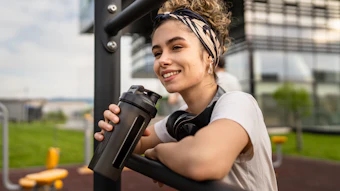
 Due to smaller household sizes and more households without children, future beauty consumers will have more time for themselves—time they will spend at salons, spas and gyms, pursuing self-care, wellness, and active lifestyles.Pixel-Shot at Adobe Stock
Living solo also means a higher proportion of income goes to food, lodging and utilities without other adults to split bills. Private label beauty and personal care may become more attractive to single-person households. Unisex fragrances, shaving, skin care or hair care that can be shared with a partner will hold greater appeal due to cost-savings.
Due to smaller household sizes and more households without children, future beauty consumers will have more time for themselves—time they will spend at salons, spas and gyms, pursuing self-care, wellness, and active lifestyles. Childless/child-free households may be willing to invest more time and money on health and wellness-oriented beauty items.
Winning Loyalty Through Demographic Smarts
How can brands tap into the changing beauty consumer?
Beauty brands have unprecedented opportunities to build lasting loyalty by deeply understanding and authentically serving their target consumers' unique needs.
Population shifts are opening new avenues for growth as purchasing power redistributes across age cohorts, rewarding brands that strategically embrace these demographic transformations.
Successful strategies span the full consumer journey—from inspiring playful exploration and prevention-focused innovation among younger audiences to delivering clinical efficacy and empowering age-positive messaging for mature consumers.
The beauty landscape offers abundant opportunities across all age groups for brands that thoughtfully tailor their approaches with precision, authenticity and genuine commitment to meeting specific consumer needs.
FOOTNOTE
ahttps://www.census.gov/library/stories/2019/12/by-2030-all-baby-boomers-will-be-age-65-or-older.html