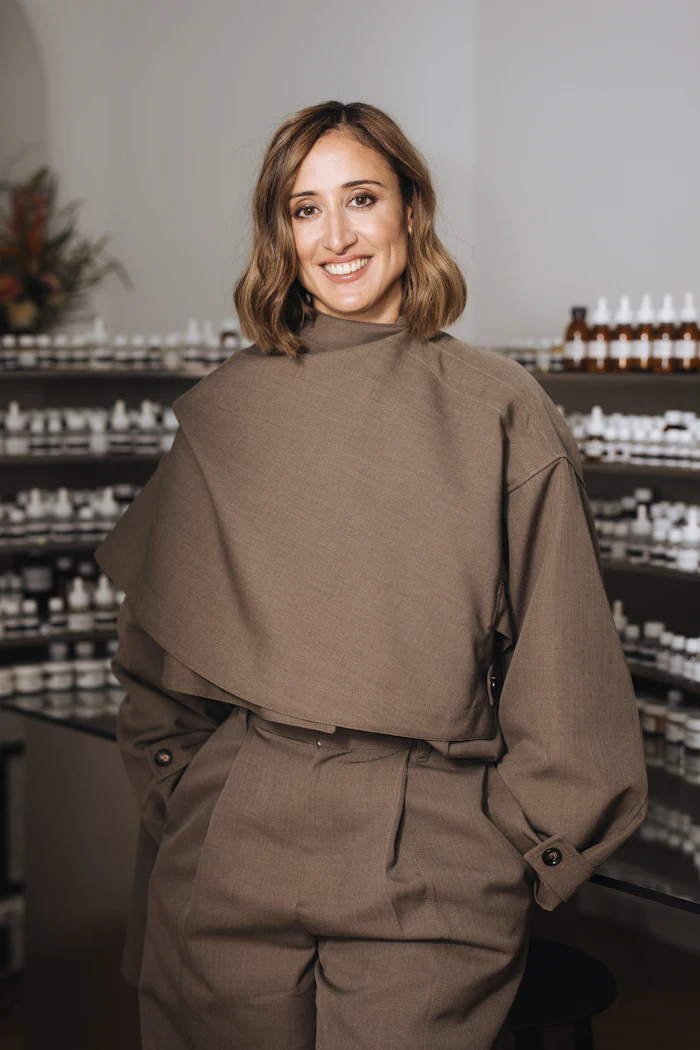
Perfumer Cécile Zarokian has created two fragrances, Ojai and Alento, inspired by California’s landscapes, warmth and sense of place, in collaboration with designer Elad Yifrach's brand, L'Objet.
The fragrances explore contrasting expressions of this inspiration. Ojai captures the golden light and sun-drenched landscapes of California’s Ojai Valley through a vibrant blend of mango, citrus and amber notes. Alento takes a more intimate approach, drawing on the concept of breath and vital energy with orange, vanilla, white musks and ambergris.
 Ojai captures the golden light and sun-drenched landscapes of California’s Ojai Valley through a vibrant blend of mango, citrus and amber notes. Alento takes a more intimate approach, drawing on the concept of breath and vital energy with orange, vanilla, white musks and ambergris.L'Objet
Together, the fragrances reflect Zarokian’s approach to translating places and sensations into olfactive experiences. For Alento, she sought to recreate the feeling of skin warmed by the sun, using lactones, vanilla, ambergris and white musks to evoke a soft, luminous warmth.
The two creations offer complementary interpretations of California, moving from the brightness of an open landscape to the warmth and intimacy of a living, breathing body.
Perfumer & Flavorist+ recently checked in with Zarokian to discuss the translation of sensation to scent, the life of an independent perfumer and much more.
 "I believe that creating something distinctive doesn't necessarily mean creating something radically different or deliberately unconventional," says Zarokian. "Originality alone is not enough. What matters to me is creating a fragrance with a strong, recognizable olfactory signature that can also appeal to a broad audience."Cécile Zarokian
When you start a new creation, how do you translate an abstract idea—such as the warmth of sunlit skin or the sensation of breath—into a concrete olfactive structure? How do you know when the fragrance has captured the original feeling?
Zarokian: This is really what a perfumer’s work is all about: translating an idea, an emotion, a visual atmosphere, a piece of music or a sensation into an olfactory composition. It takes both intuition and a deep understanding of raw materials.
For the fragrance Alento, Elad Yifrach, founder and creative director of L’Objet, invited me to interpret this Portuguese and Spanish word, associated with breath, spirit, encouragement and vital energy. He wanted to capture the feeling of taking a deep breath, a fleeting pause between two moments, a sense of suspended time.
I explored this idea of vital energy throughout the composition. In the top notes, I combined the juicy brightness of orange with the lift of aldehydes to bring a sparkling, airy freshness. At the heart, orange blossom blends with fresh floral notes to express a sense of blooming vitality. In the base notes, I wanted to evoke the feeling of skin warmed by the sun, using lactones, vanilla, ambergris and white musks to create a soft, radiant warmth.
I know I’ve captured the feeling the brand had in mind when the fragrance conveys it naturally, without needing an explanation. It has to feel right, both to me and to the brand.
With Ojai and Alento, you translate the California landscape into two distinct olfactive expressions, from the vibrancy of mango, citrus and amber to the intimate warmth of vanilla, white musks and ambergris. How did you approach these contrasting briefs, and what role do unexpected combinations or tensions between materials play in developing your signature?
Zarokian: The briefs shared by L’Objet were indeed quite different. Ojai was inspired by the light and atmosphere of the Californian valley, while Alento focused on the meaning and evocative power of the word itself.
I chose to explore these two ideas through two very distinct olfactory interpretations, which I then presented to L’Objet. Ojai became a radiant, vibrant composition, while Alento took a more sensual, intimate direction.
I don’t necessarily seek unexpected combinations or contrasts just for the sake of originality. My priority is always to understand the brand’s identity and translate its vision into a fragrance that feels both distinctive and coherent.
Of course, contrasts between raw materials can bring depth, texture and character to a composition, but they should always serve the overall idea rather than become an end in themselves. I worked that way for Ojai with a luminous sunny mango contrasting a darker anchor with patchouli and frankincense. For Alento, you have a sunlit skin opening turning to a deeper sensuality.
As an independent perfumer, you occupy a different position from those working within large fragrance houses, with potentially greater creative autonomy but also different commercial and operational pressures. How does independence shape your creative process, your relationships with brands and your ability to take olfactive risks?
Zarokian: Independence allows me to build very close, direct relationships with the brands I work with. I am involved throughout the entire process, from understanding the initial brief and the brand's positioning to developing the fragrance and supporting its launch. Over the years, I have built a team that supports me and enables me to provide the same range of services as a larger fragrance house, while remaining flexible, responsive and highly focused. This structure makes the creative process particularly efficient.
As I am the only perfumer in my studio, I prefer to present a limited number of strong, carefully considered proposals rather than dozens of different directions. I invest time upfront in understanding the brand, its DNA, its markets and its ambitions, so that each proposal is relevant from the beginning.
Independence gives me the freedom to explore bold olfactory directions, but I always keep the brand and its audience in mind. I don't believe artistic expression and commercial performance should be opposed. My ambition is to create fragrances with a strong olfactory signature that are also appealing enough to reach a broad audience and become lasting commercial successes.
Fragrance is experiencing a boom, with growing consumer interest, new niche brands and an increasingly crowded market. How has this expansion changed the opportunities and challenges for independent perfumers? In a landscape where new launches are constant, what makes a fragrance genuinely distinctive and enduring rather than simply timely?
The growth of the fragrance market has certainly created more opportunities for independent perfumers. Consumers are increasingly curious, knowledgeable and open to discovering new brands and olfactory expressions.
At the same time, competition has intensified considerably. Major fragrance houses are now increasingly working with niche brands, a segment that was once more closely associated with independent perfumers. So, while the market is expanding, standing out has become more challenging for everyone. Yet I also think that’s what allowed me to access to bigger brands, seeking for a different signature and way of working, a new business model.
I believe that creating something distinctive doesn't necessarily mean creating something radically different or deliberately unconventional. Originality alone is not enough. What matters to me is creating a fragrance with a strong, recognizable olfactory signature that can also appeal to a broad audience.
Trends come and go, but a fragrance that truly connects with people can remain desirable long after its launch. That is what I always aim for: creating something with character and identity, but also the potential to become a lasting commercial success.
How do collaborations with creatives outside perfumery influence your work, and how do you preserve your own artistic identity while responding to a brand’s aesthetic and commercial vision?
Zarokian: Collaborating with creatives from other disciplines is a great source of inspiration for me. I find it fascinating to discover how a creative director, a fashion designer or a photographer approaches an idea, expresses an emotion or tells a story. These exchanges often bring new perspectives and inspire me to explore different olfactory directions.
I have always been interested in building bridges between perfumery and other creative fields, and it is something I actively seek to develop through my work.
When working with a brand, my priority is to understand and bring its vision to life through scent, using my own experience, sensitivity and knowledge of raw materials.
I believe my artistic identity lies precisely in this personal interpretation. It is not about imposing a recognizable style on every creation, but about bringing my own creative approach to each project while remaining true to the brand's identity.