Log In/Register
Facebook icon
Instagram icon
LinkedIn icon
Twitter X icon
Flavor
Fragrance
News
Events
Leaders
Multimedia
Home
Search
Search Perfumer & Flavorist
Article
Company
Document
Event
News
Podcast
Video
Webcast
Flavor
Fragrance
Multimedia
Enter search phrase
Search
Ingredients
Progress in Essential Oils: Celery Seed and Leaf Oils
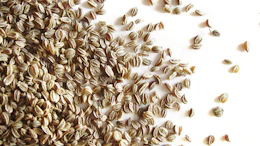
This month's column discusses the chemical compositions of celery seed leaf and oil.
Ingredients
Progress in Essential Oils: Basil Oil, Part 1
The present article is part one in a series of two that provides the findings of various researchers on the chemical constituents in basil oil. Part 2 appears in the June 2014 edition.
Ingredients
Progress in Essential Oils: Coriander Seed Oil and Extract
This edition features the chemical composition of coriander seed oil and extract, and lemon thyme oil.
Ingredients
Progress in Essential Oils: Mentha Citrate and Ajowan Oils
This edition discusses the chemical composition of Ajowan oil and Mentha citrata oil.
Fragrance
Progress in Essential Oils: Basil Oil, Part 2
The present article is part two in a series of two that provides the findings of various researchers on the chemical constituents in basil oil. Part 1 appeared in the May 2014 edition of Perfumer & Flavorist.
Ingredients
Progress in Essential Oils: Armoise Oil, Part 2
Part two of this two-part series discusses the chemical composition of armoise oil.
Ingredients
Progress in Essential Oils: Bitter Fennel Oil and Extract
In this edition, Brian Lawrence discusses the composition of bitter fennel oil and extract.
Ingredients
The Composition of the Volatile Fraction of the Italian Citrus Essential Oils
The annual production of citrus fruits in Italy amounts to about 3,500,000 tons, 31% of which goes to the transformation industries
Calendar
FFDC Online Essential Oils, Perfumery and Aromatherapy Training
Feb 9th, 2022
Feb 11th, 2022
Ingredients
HAWS and HEB—Two New Essential Oils from Spent Agarwood and Bursera Husk
In the present article, we describe the process of isolation of HAWS and HEB oils along with their physiochemical properties.
Personal Care/Beauty
Fragrance with Antiaging Benefits
Traditional aromatherapy has claimed that essential oils have activity on the skin but only recently has research substantiated that essential oils can act as actives in cosmetic products.
Ingredients
Detection of new trace constituents in the essential oils of Cymbopogon flexuosus
The essential oil of lemongrass is derived chiefly from two important species of Cymbopogon, C. flexuosus, which has been the subject of numerous investigations, and C. citratus, C. flexuosus (Stend.) Wats (sym. Andropogon nardus var. flexuosus Hack), is native to India. Its two strains, SD-68 and OD-19, which have been cultivated at our Kukrail Research Farm, Lucknow, were examined by gas chromatography and the presence of new trace constituents was established for the first time.
Ingredients
Gas chromatography as an industrial process operation—application to essential oils
Chromatography now belongs to the group of industrial processes of separation, This is proven by its successful application to many mixtures, including high boiling and thermolabile compounds. The process is easy and rapid to start up. This process makes possible a significant reduction in processing costs for many specialty chemicals and intermediates as well as the production of new compounds.
Ingredients
Progress in Essential Oils: Silver Fir or Abies alba oil
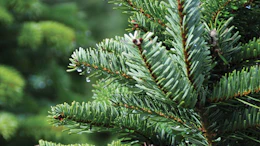
This month's column discusses the chemical composition of silver fir oil.
Ingredients
Progress in Essential Oils: Rosewood or Bois-de-Rose Oil
This month's column discusses the chemical composition of rosewood oil.
Ingredients
OQEMA adds Oud to its Naturals and Essential Oils Range
With its traditional roots and expanding popularity, oud oil is becoming a common ingredient in cosmetics, personal care and fine fragrance products.
Oral Care
Enantiomeric Distribution of Oxygenated Monoterpenes in Some Mentha Essential Oils
In this research we analyzed chiral oxgenated monoterpenes, which are the predominant and most valuable monoterpenes in Mentha oils.This technique enables us to determine the enantiomeric purities of other components in the oils, such as monoterpene hydrocarbons and sesquiterpenes
Calendar
WFFC Fall Seminar: Saving Essential Oils Around the World
Oct 21st, 2010
Oct 21st, 2010
Previous Page
Next Page